|
|
|
|
| home railway pages TRB extracts |
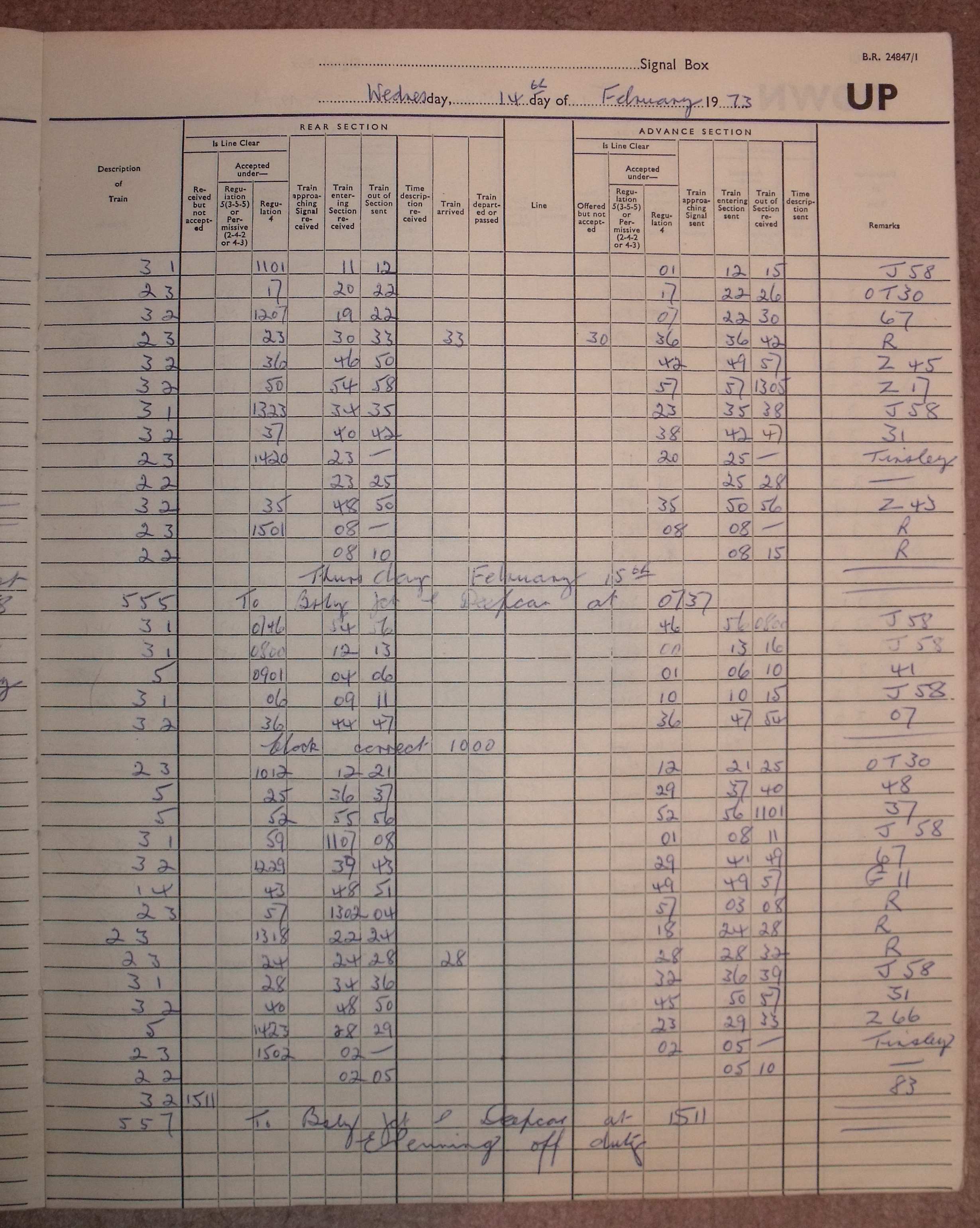
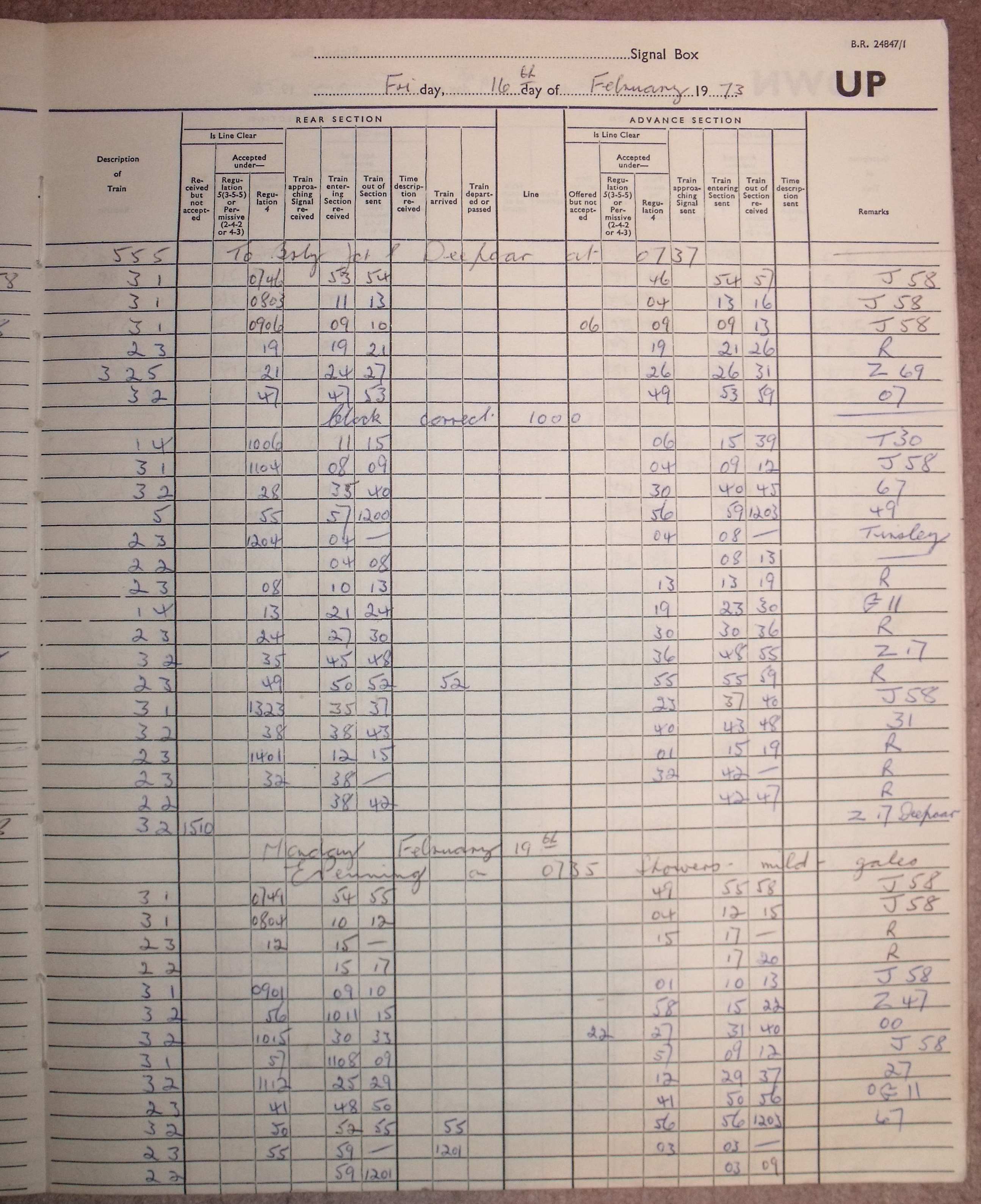
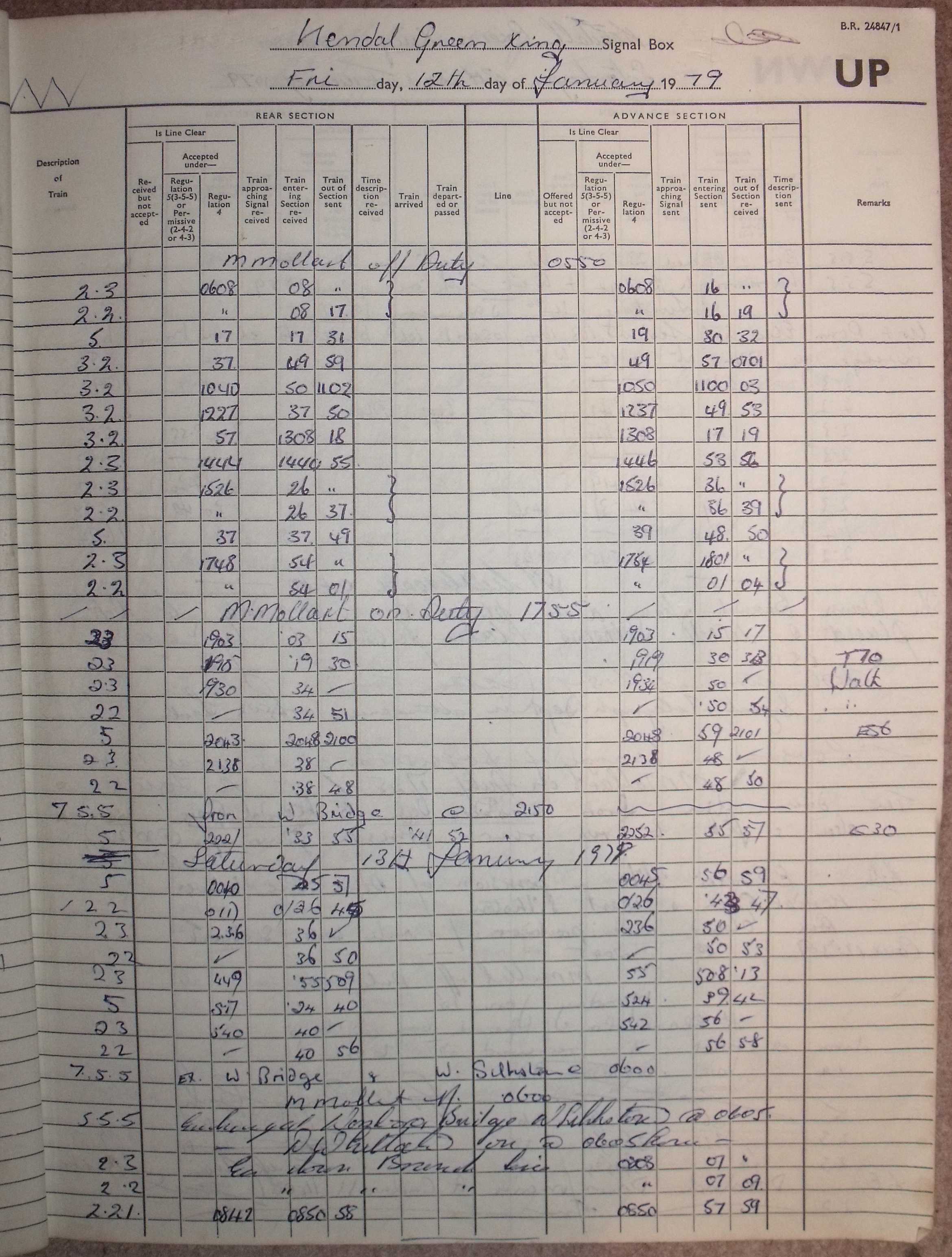
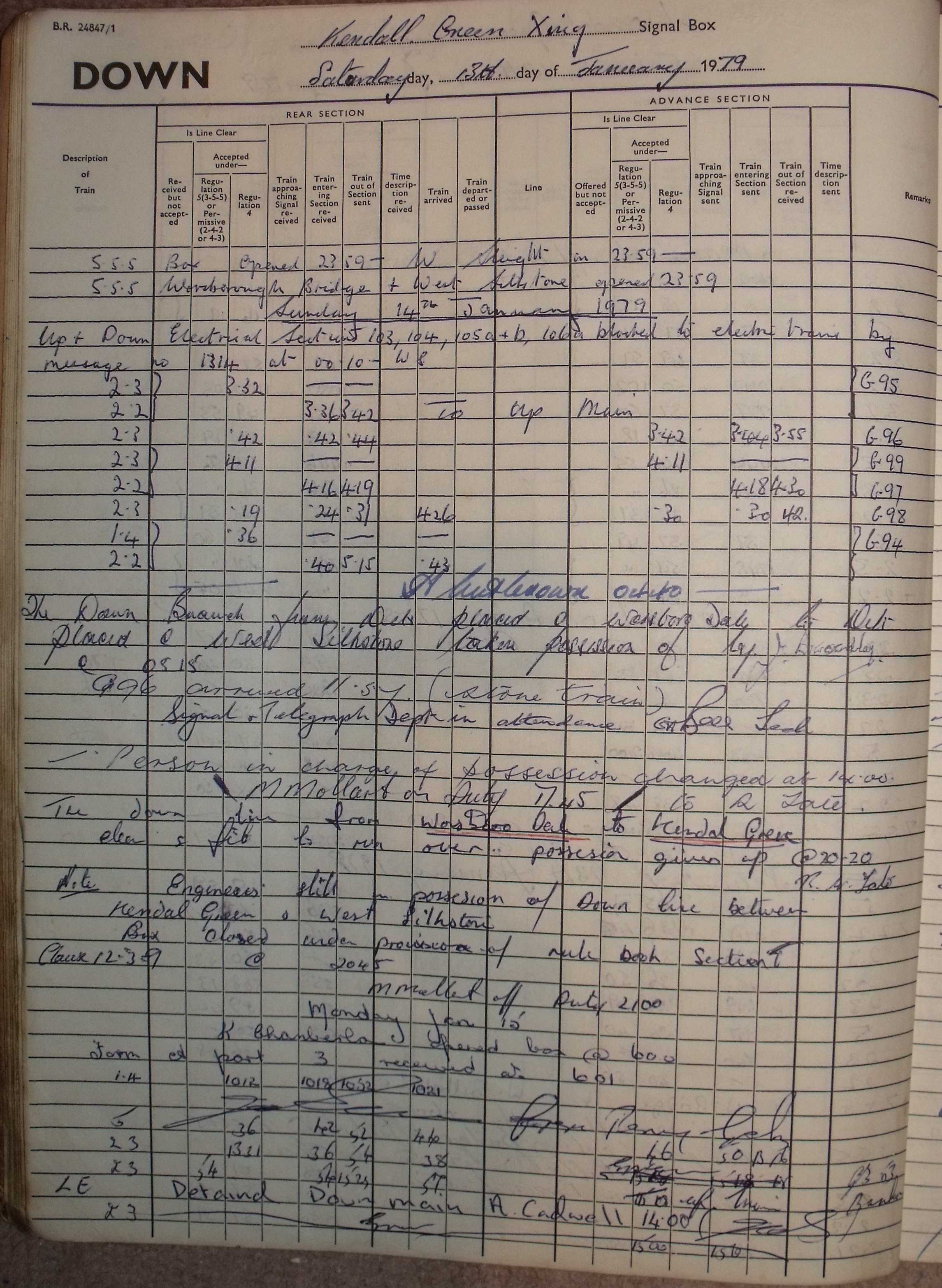
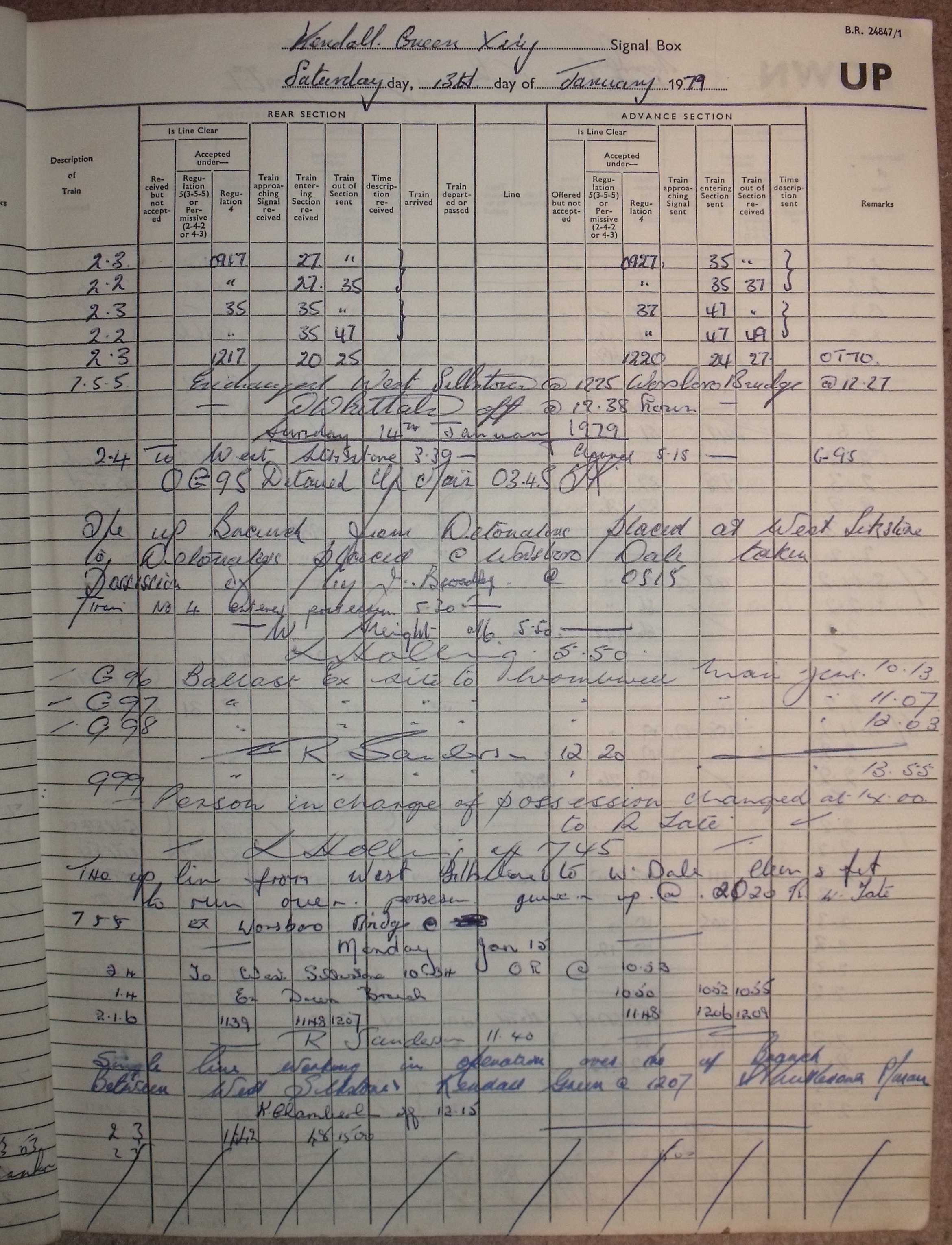
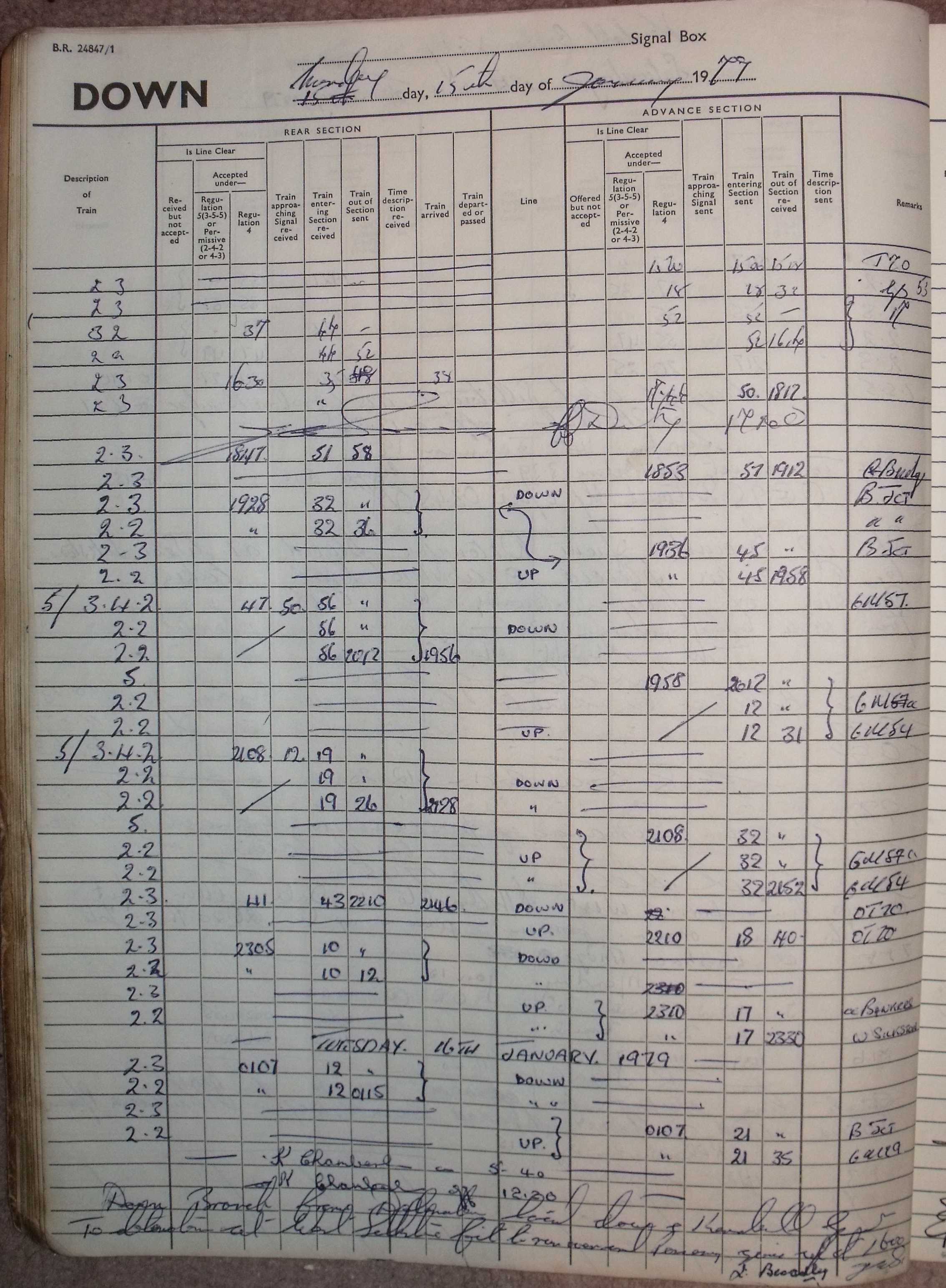
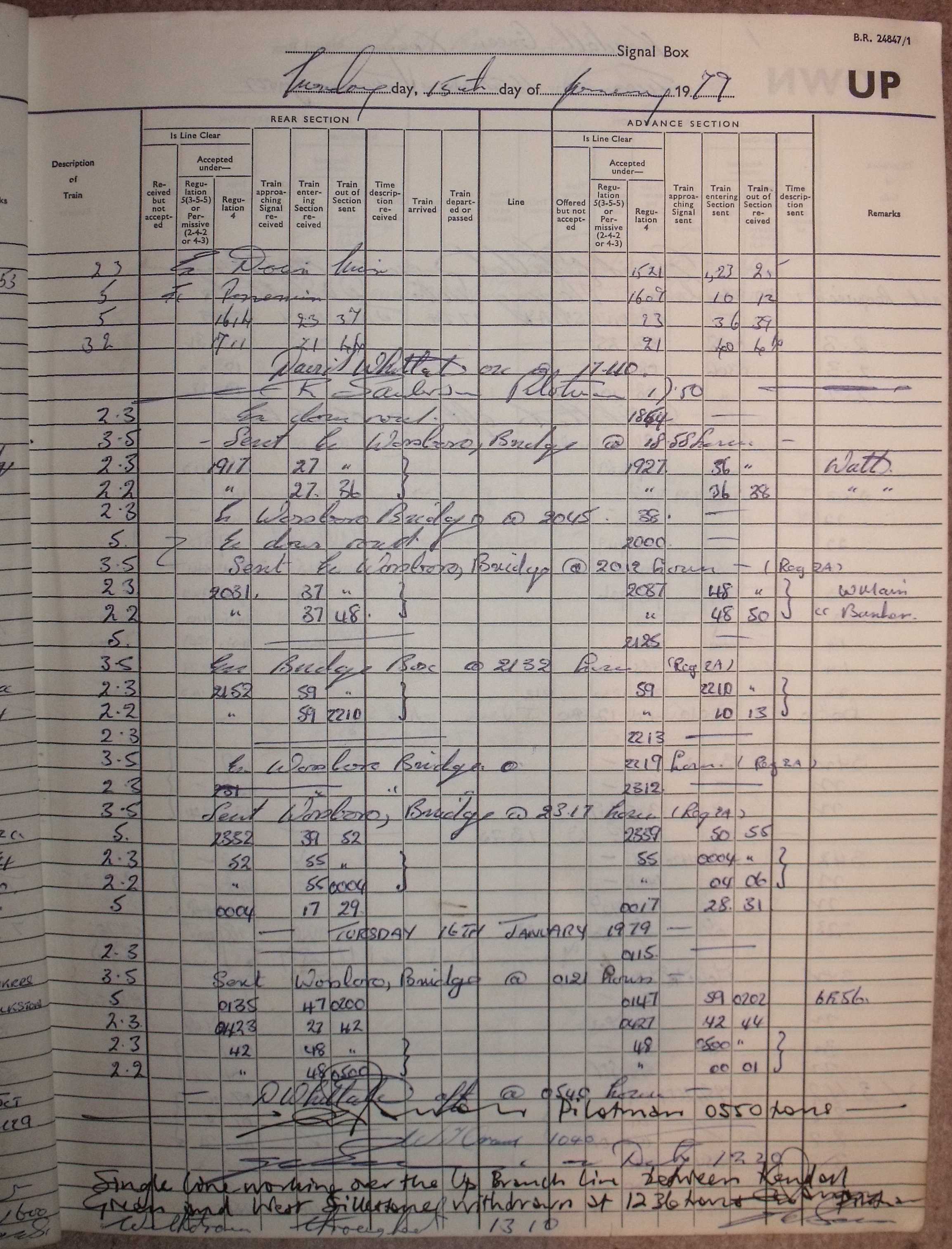
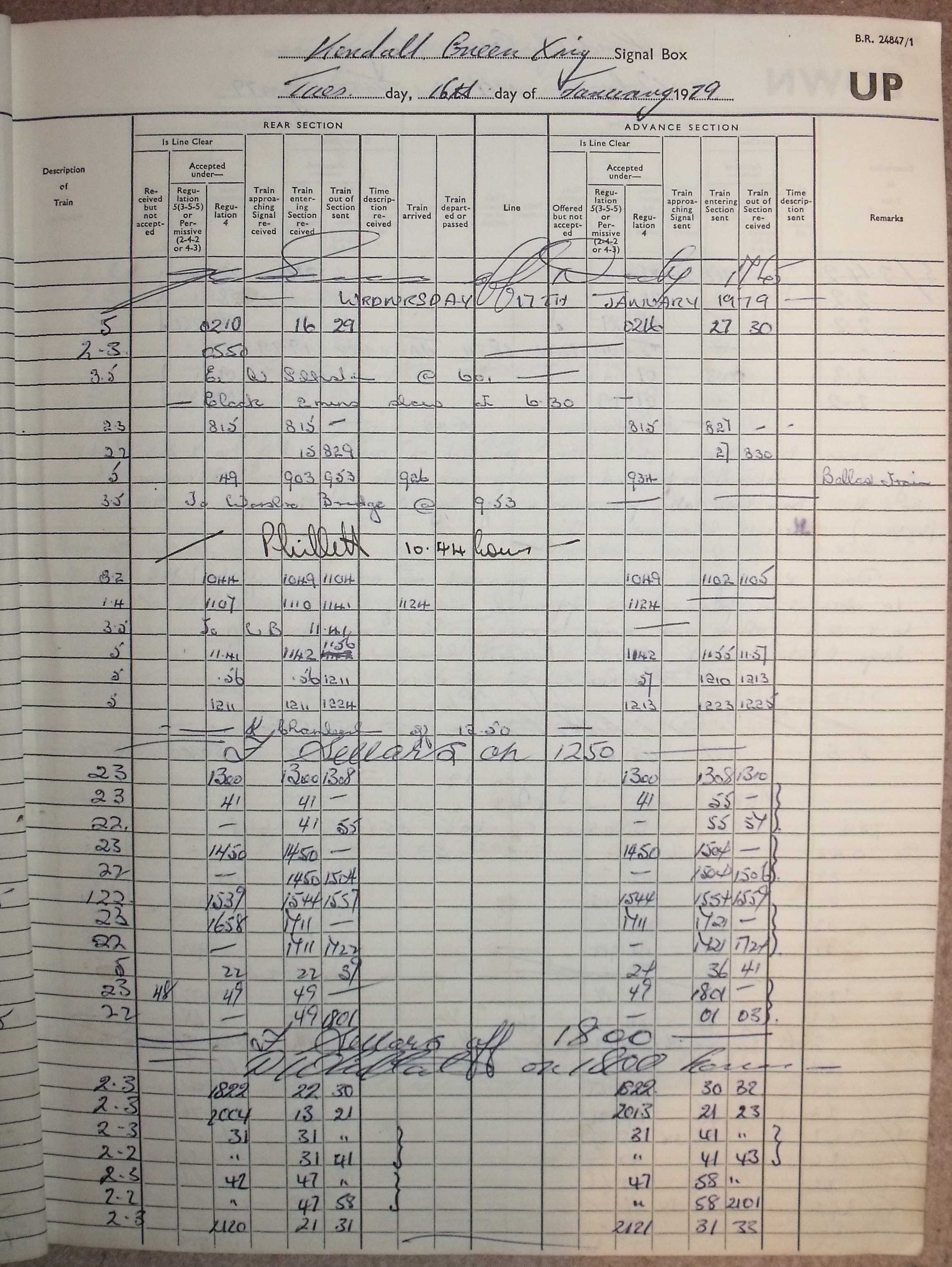
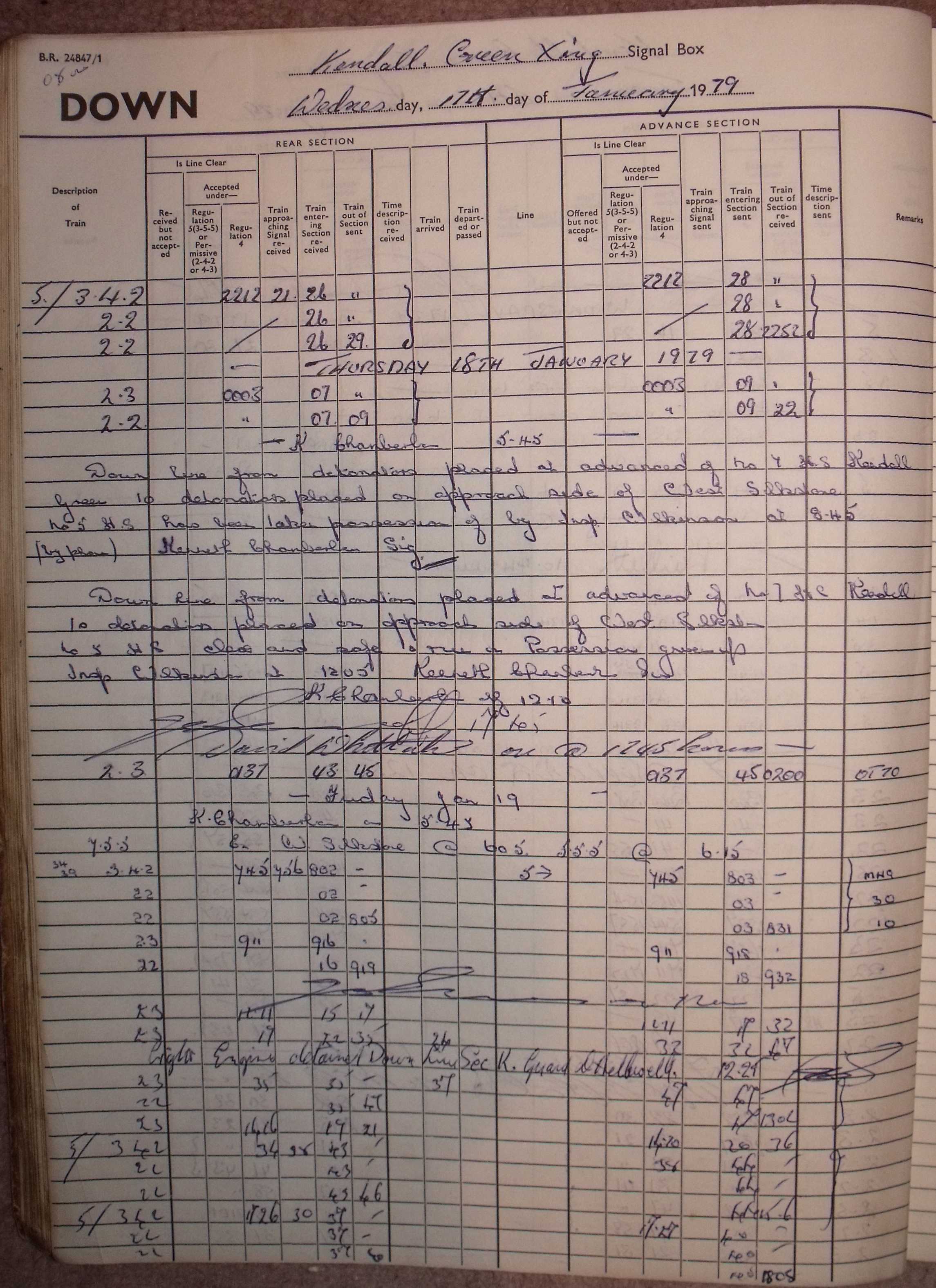
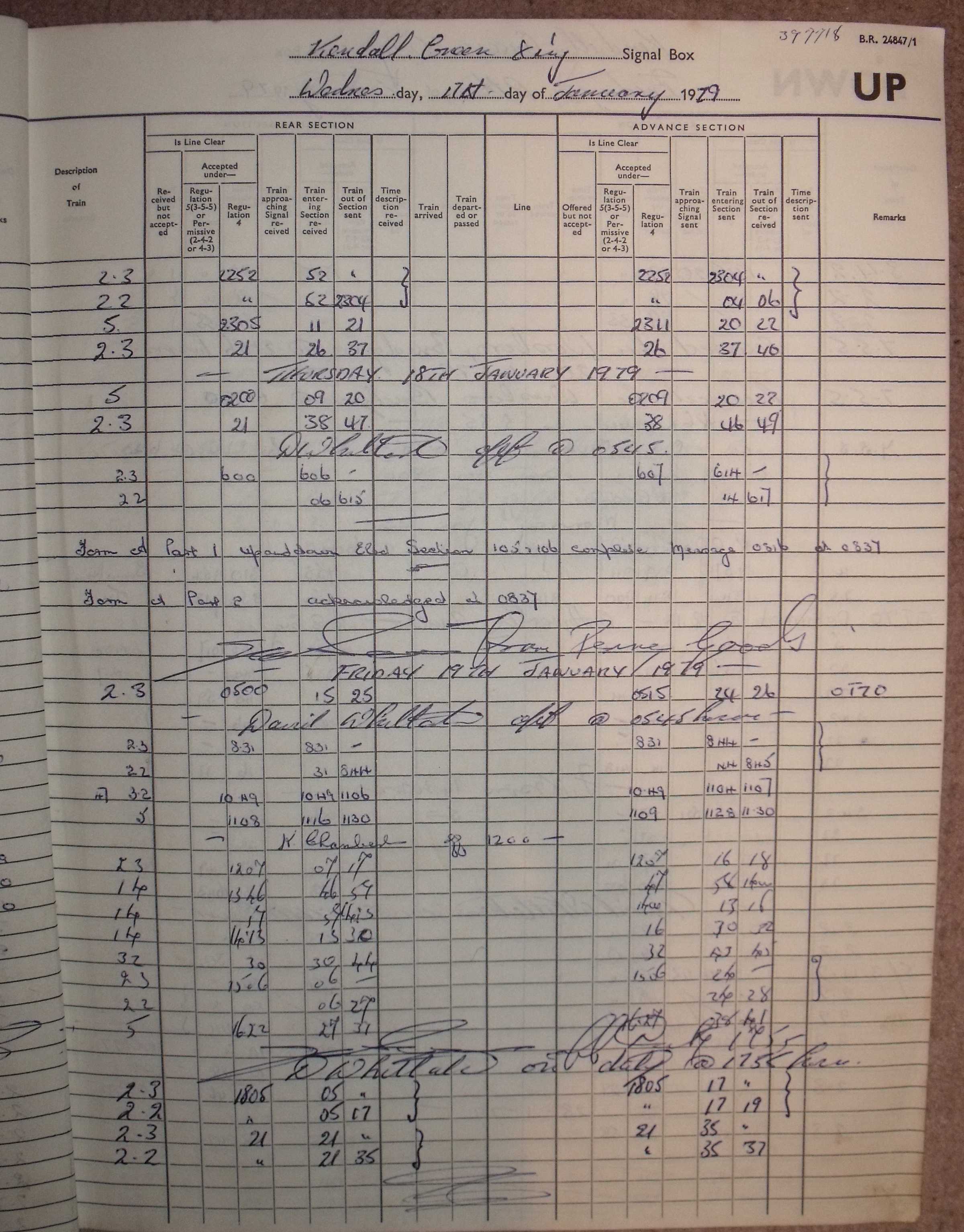
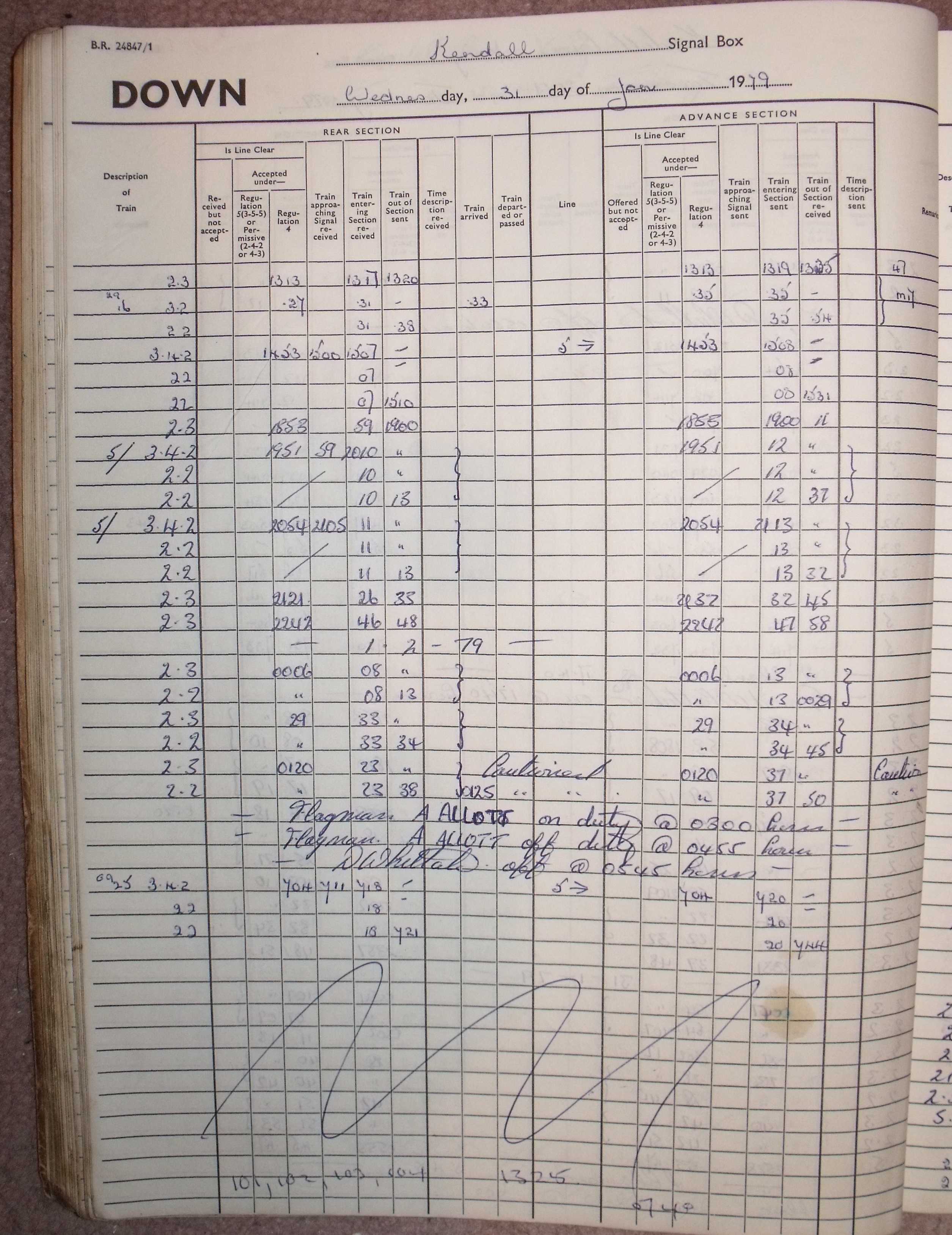
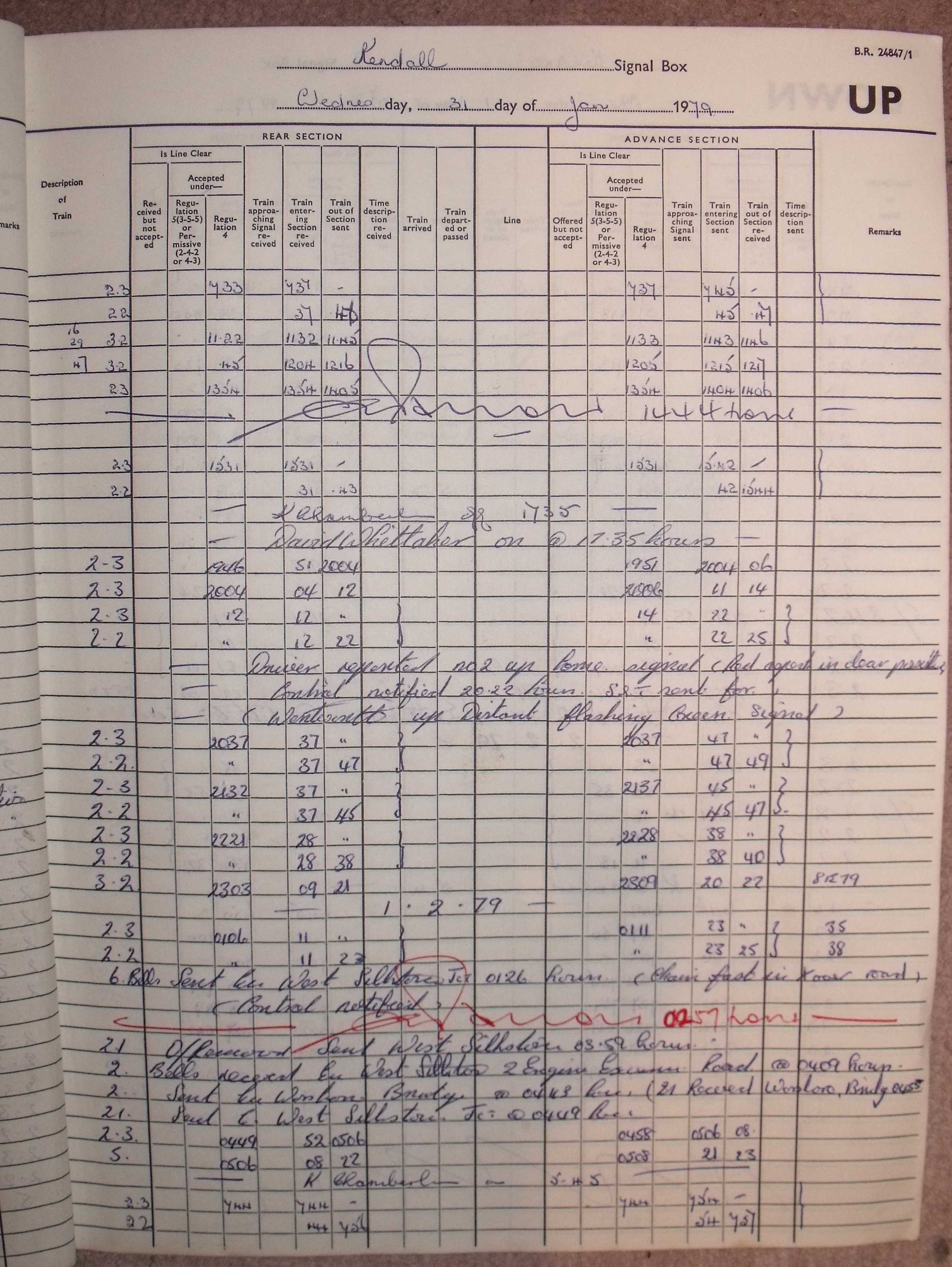
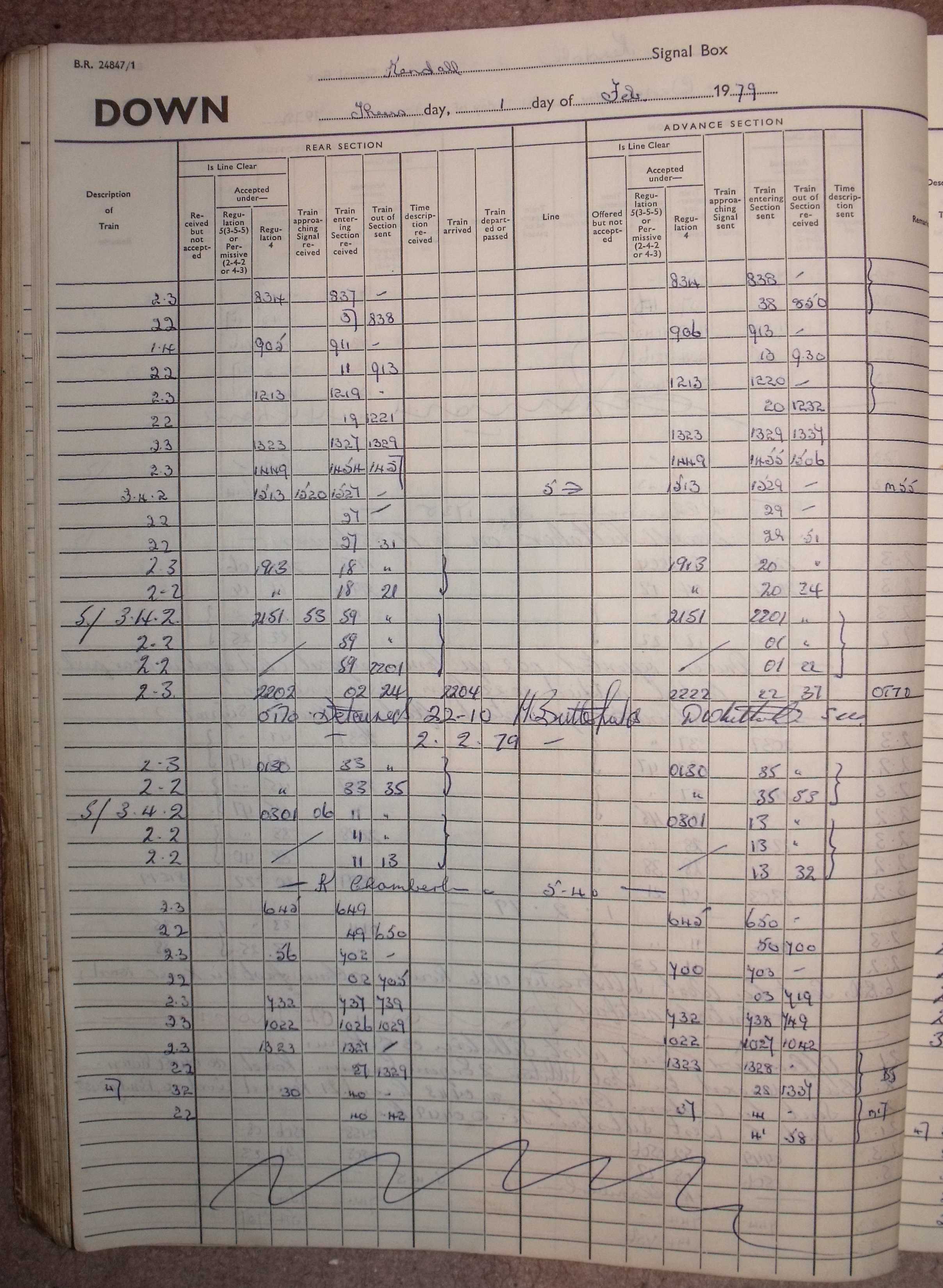
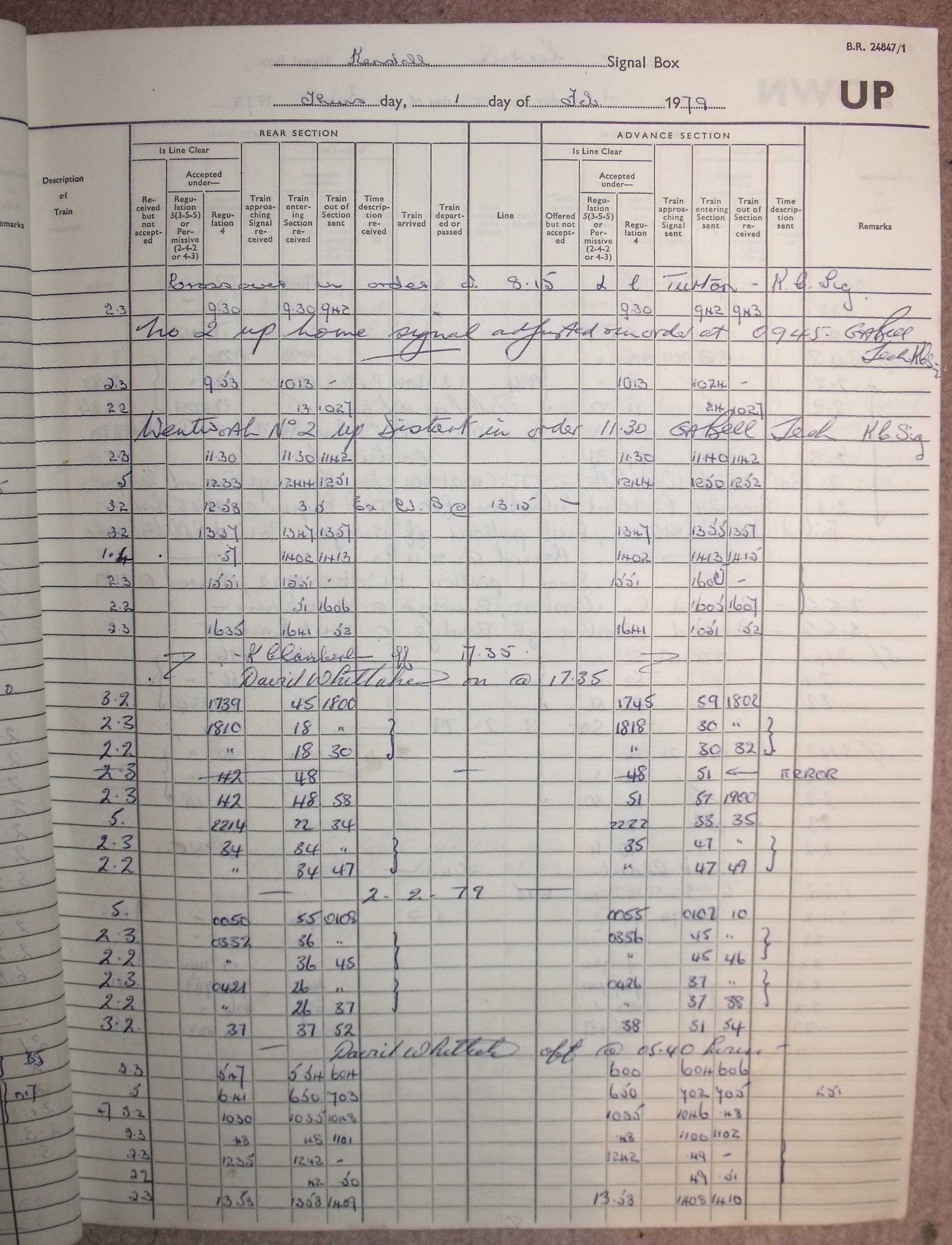
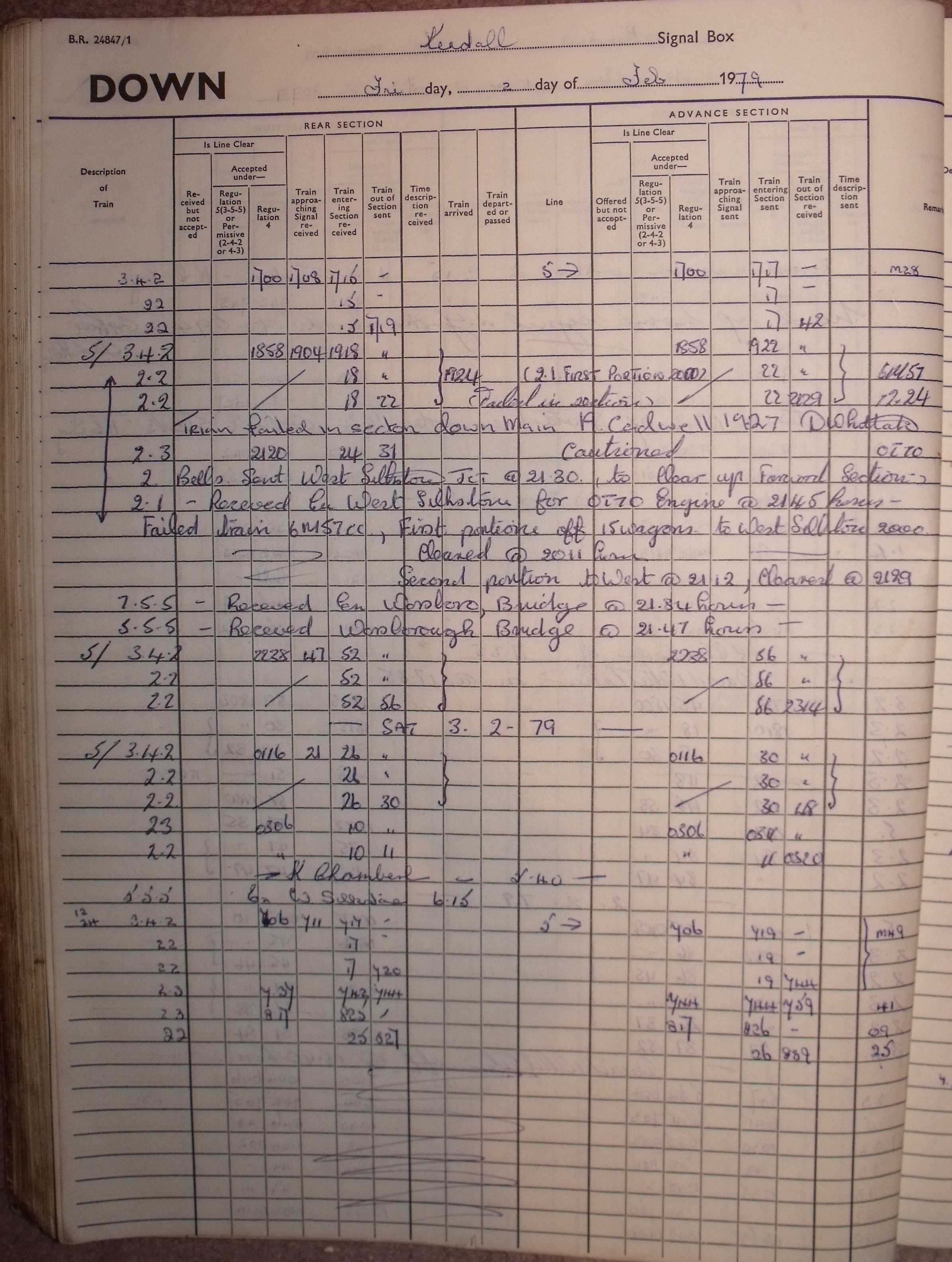
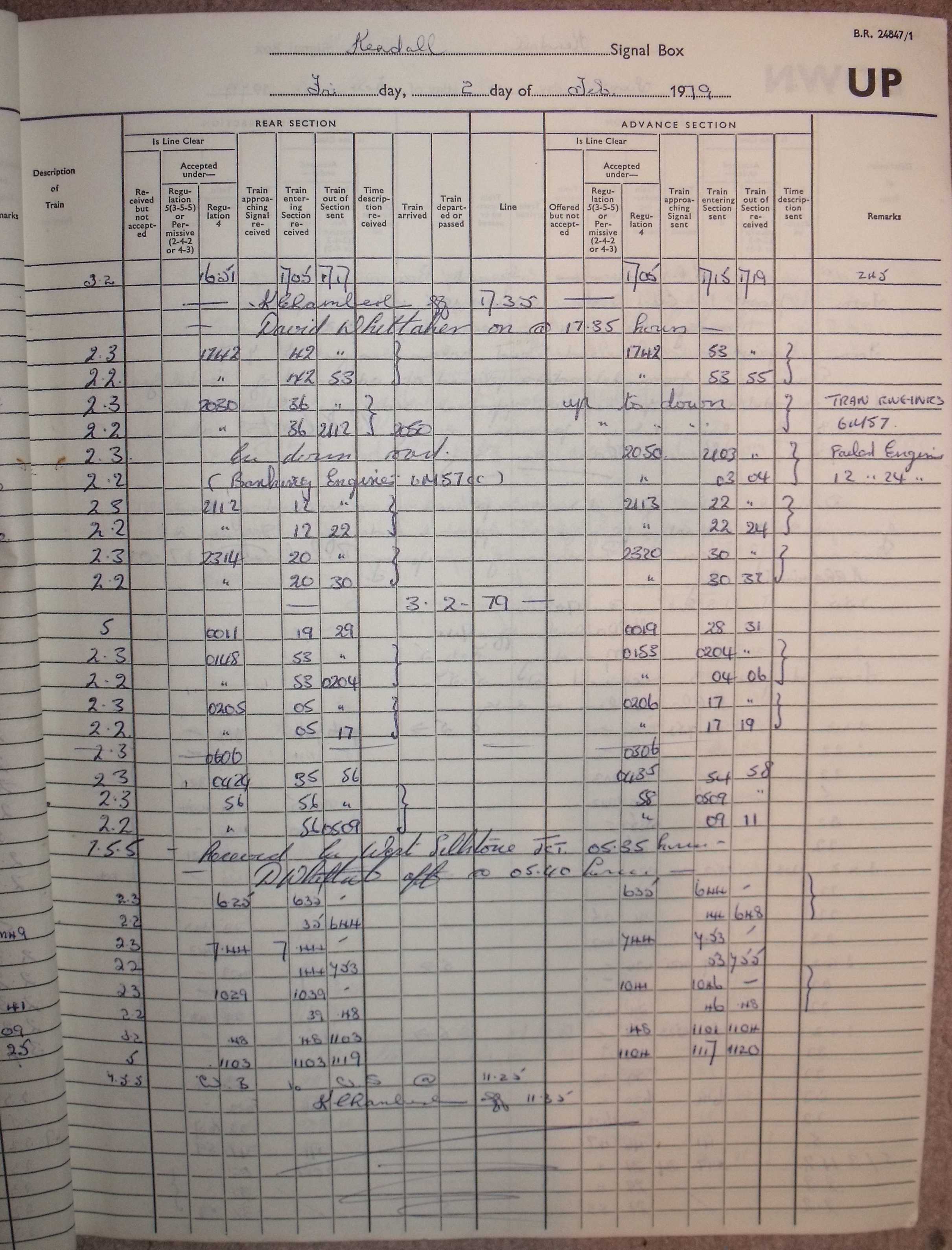
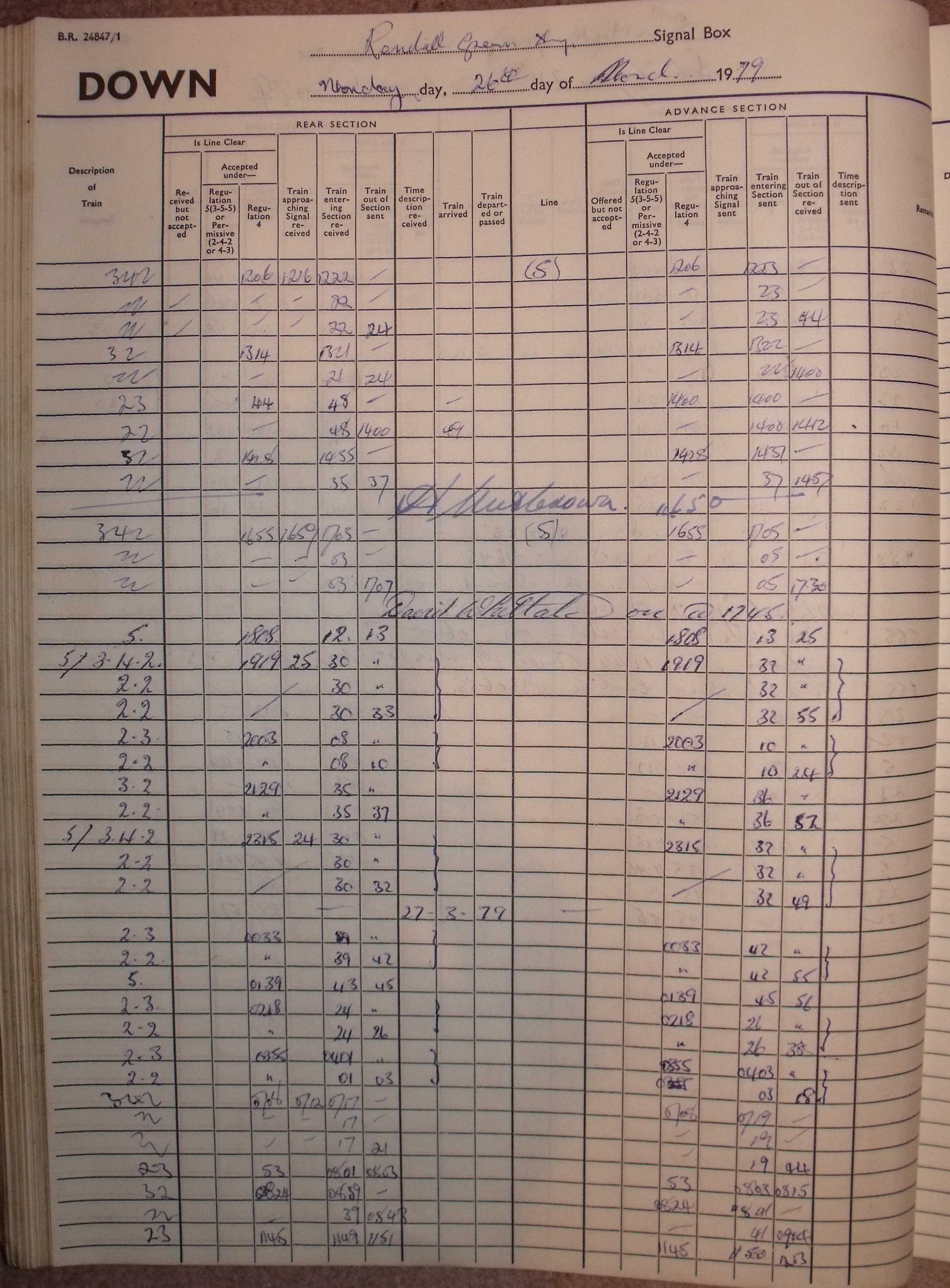
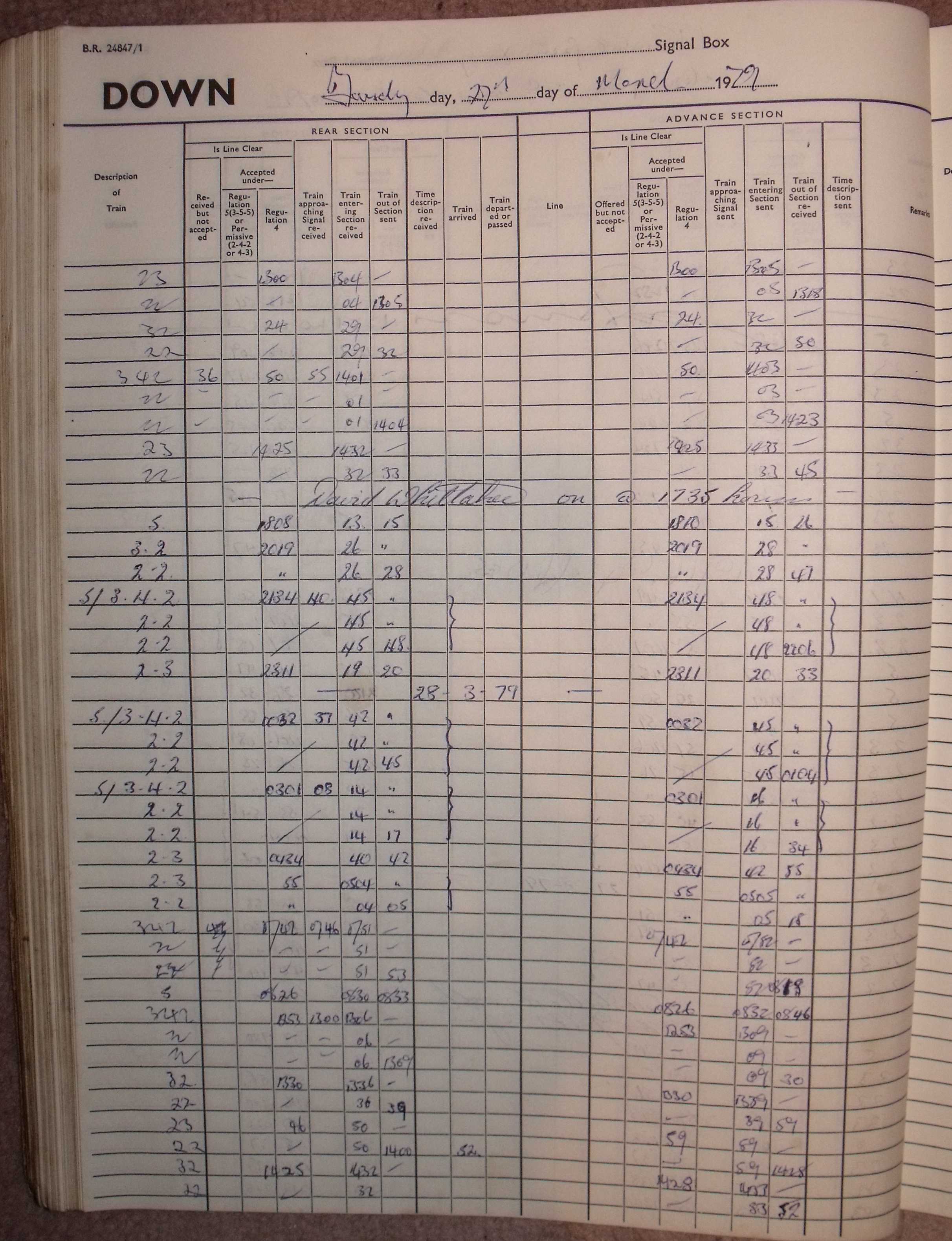
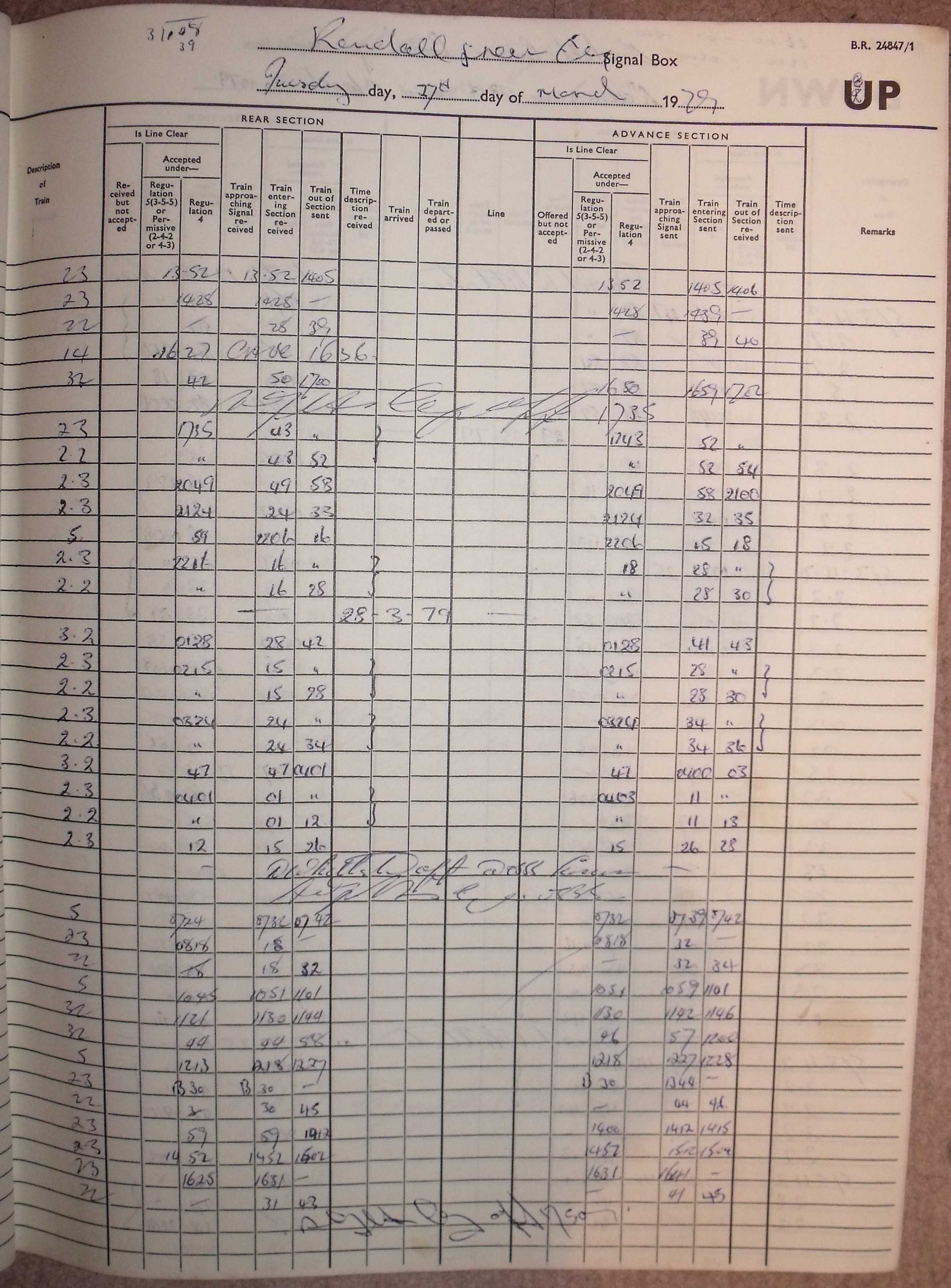
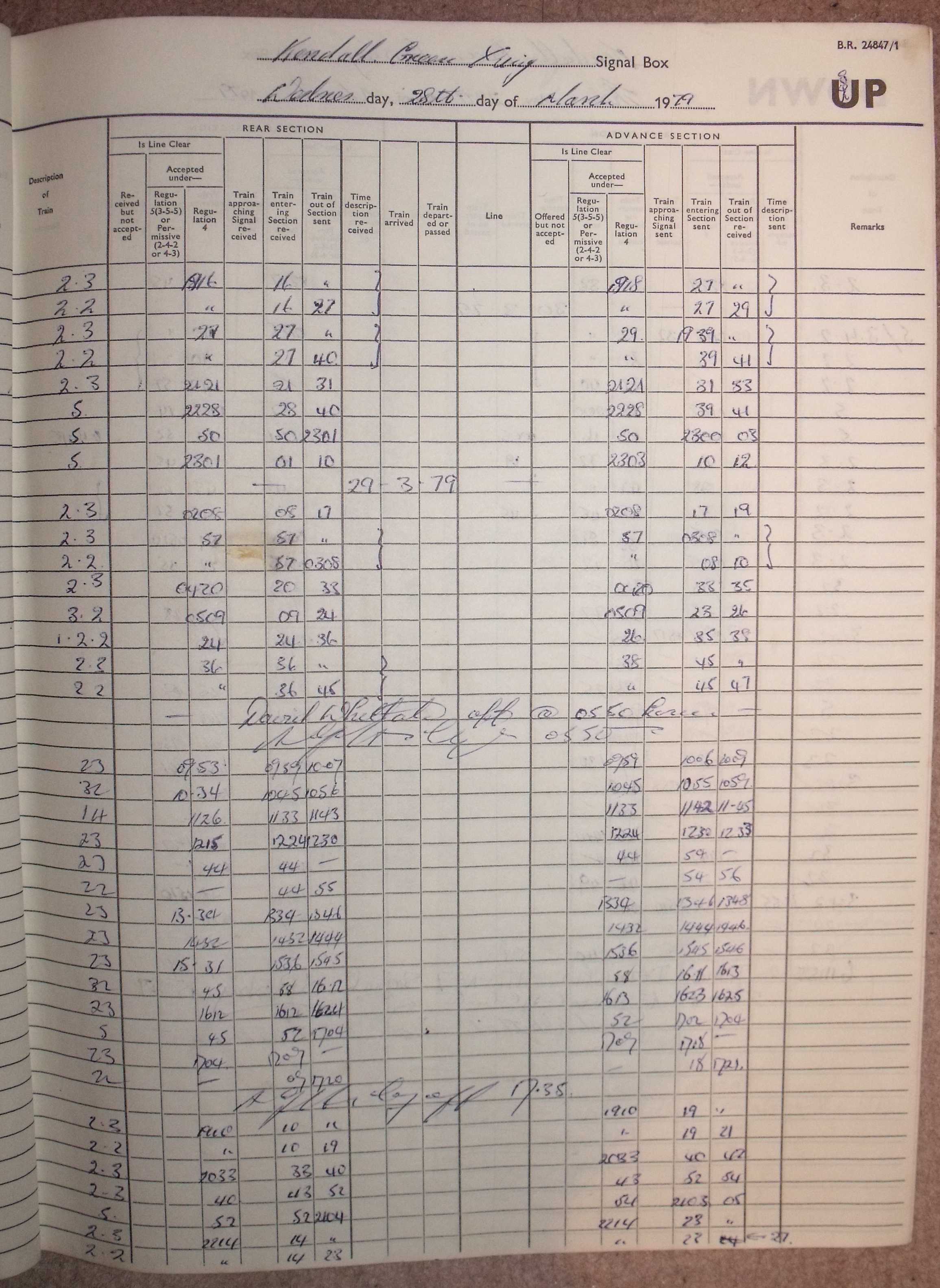
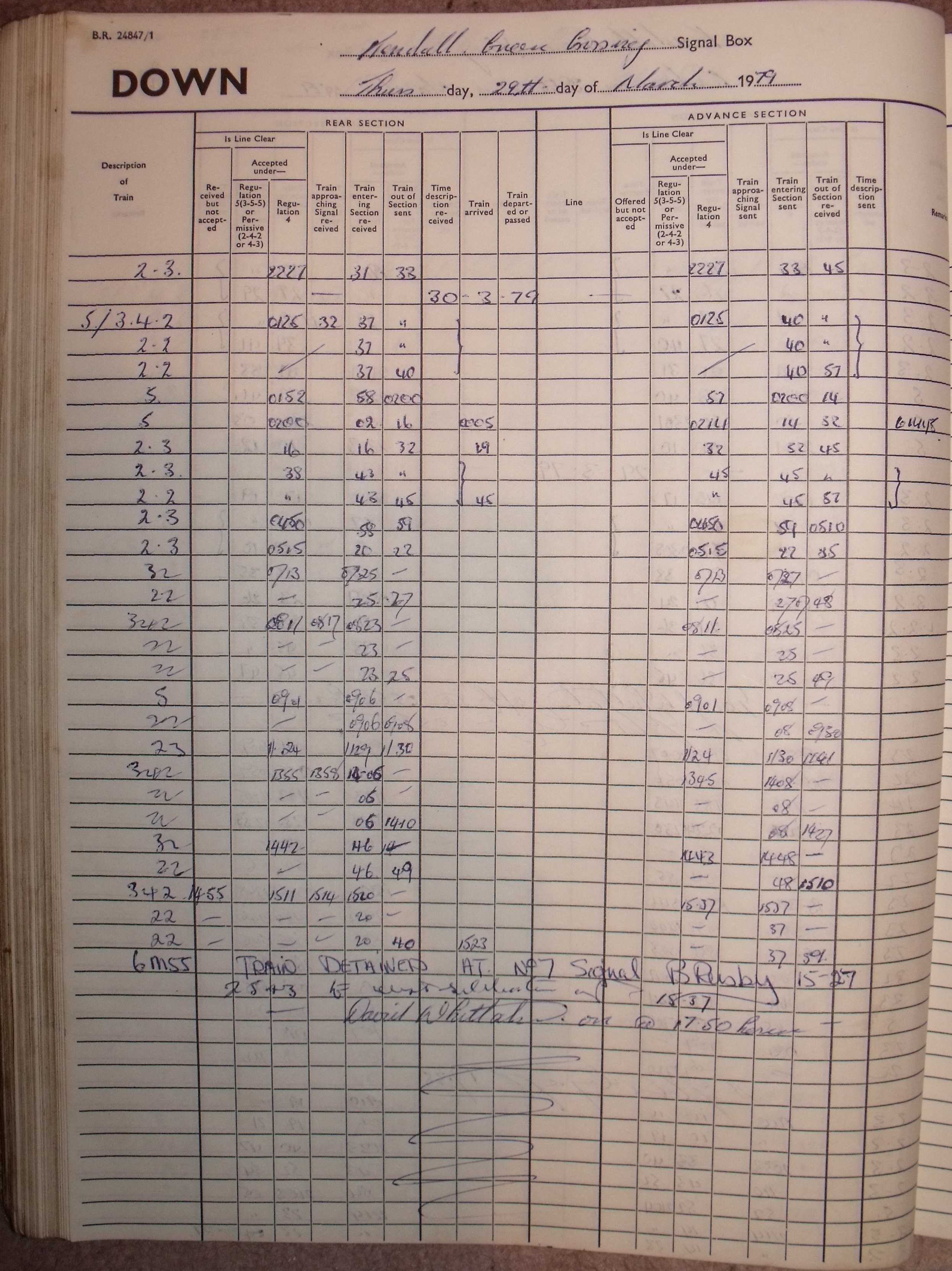
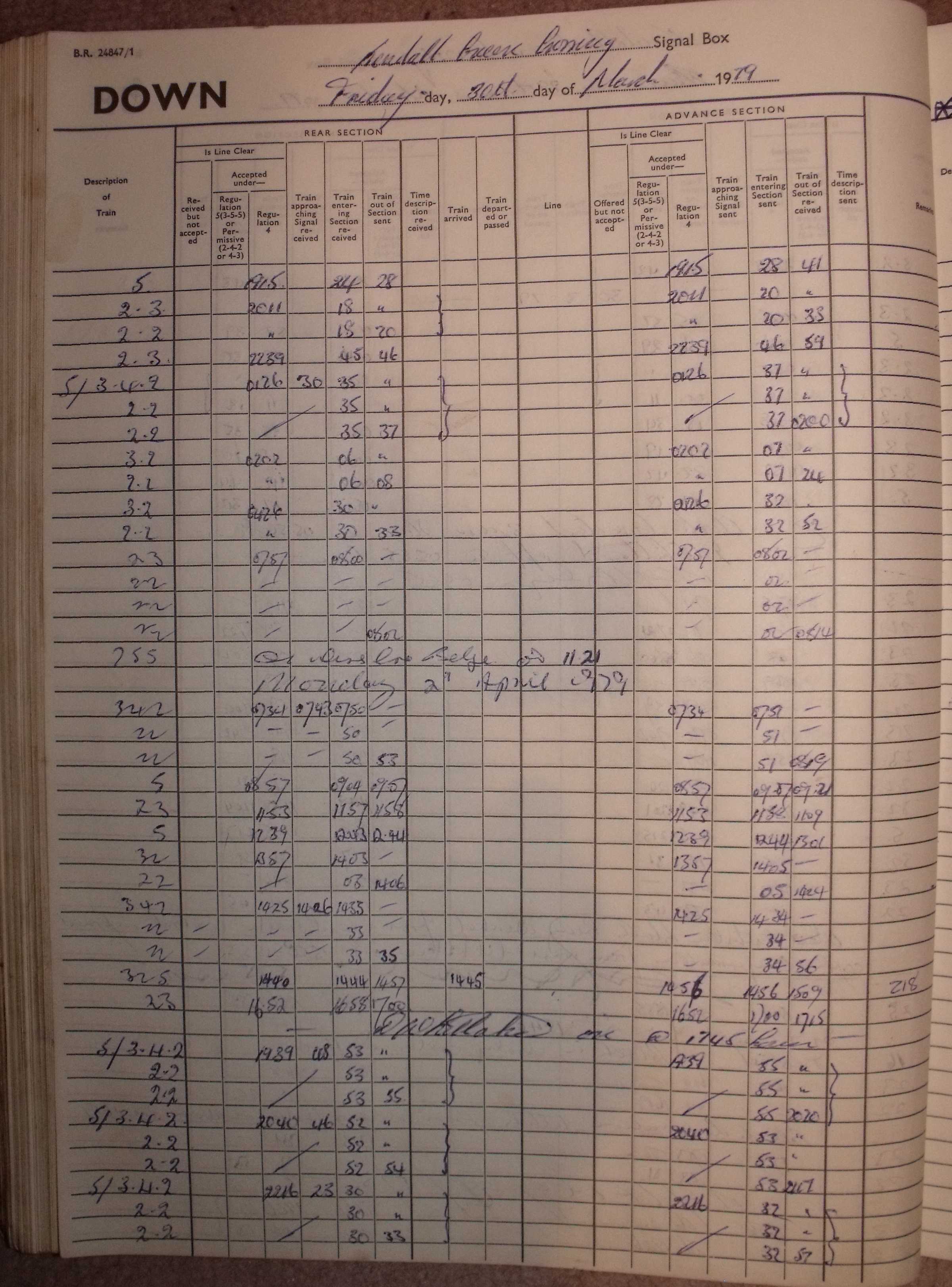
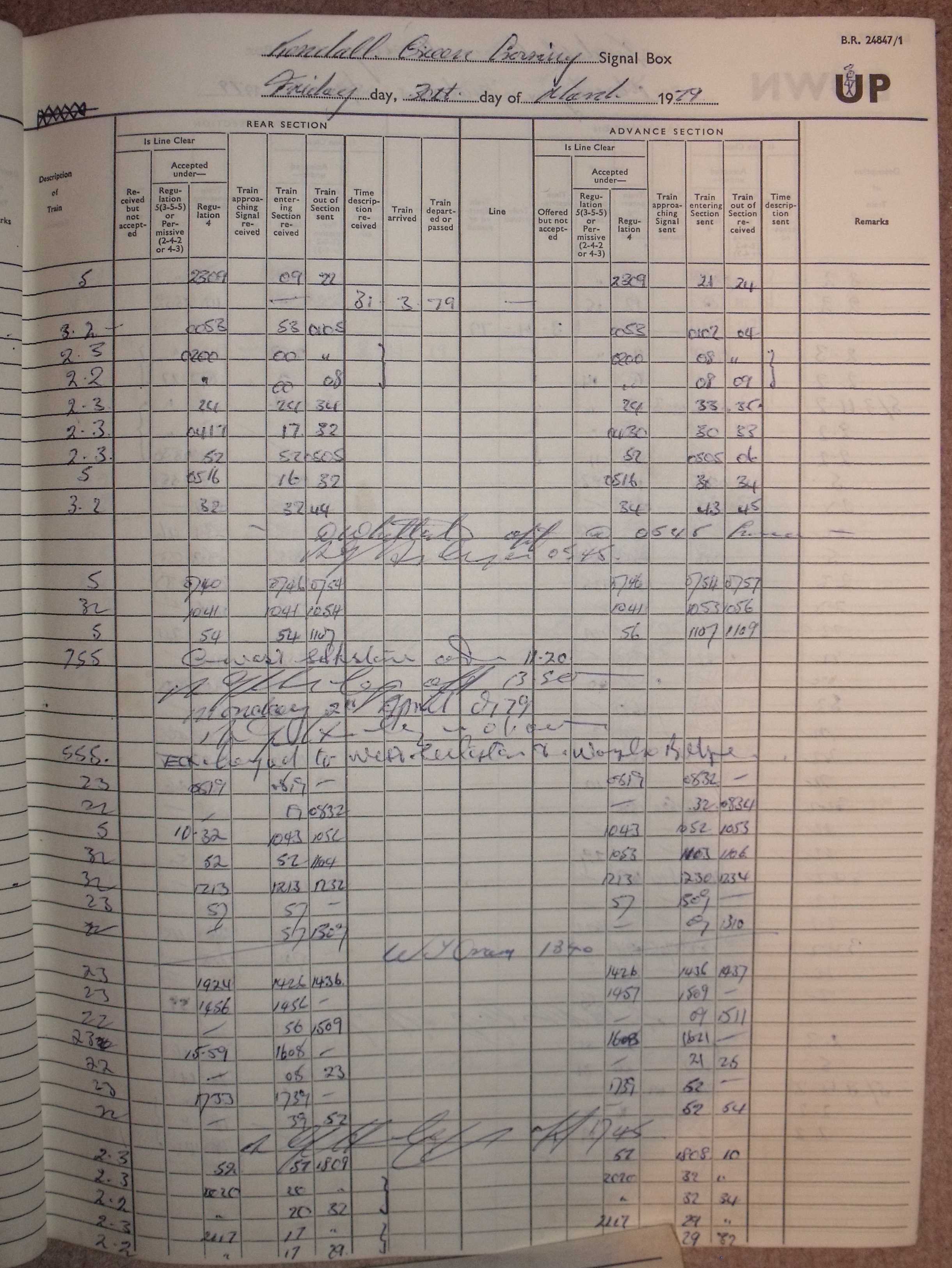
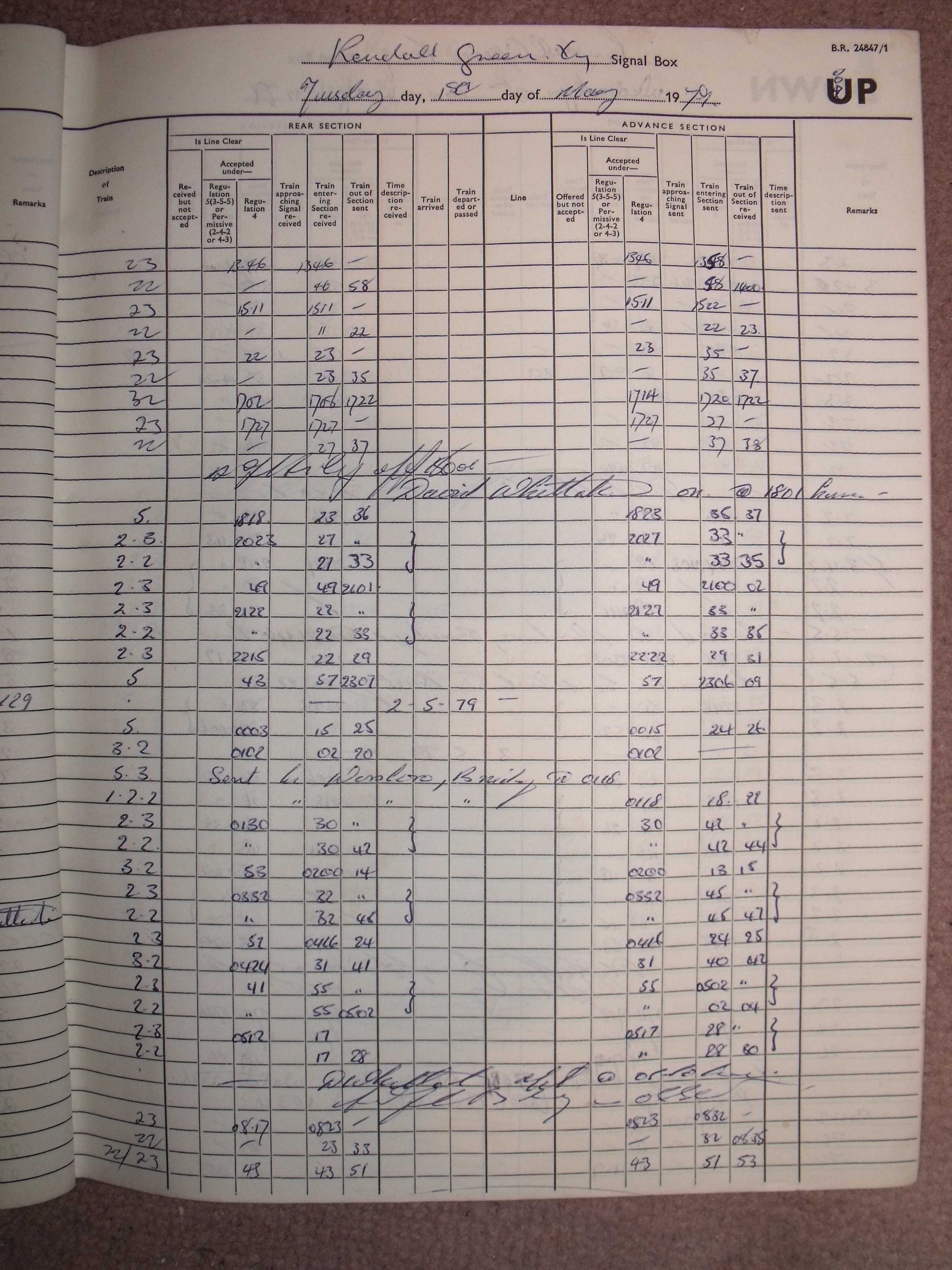
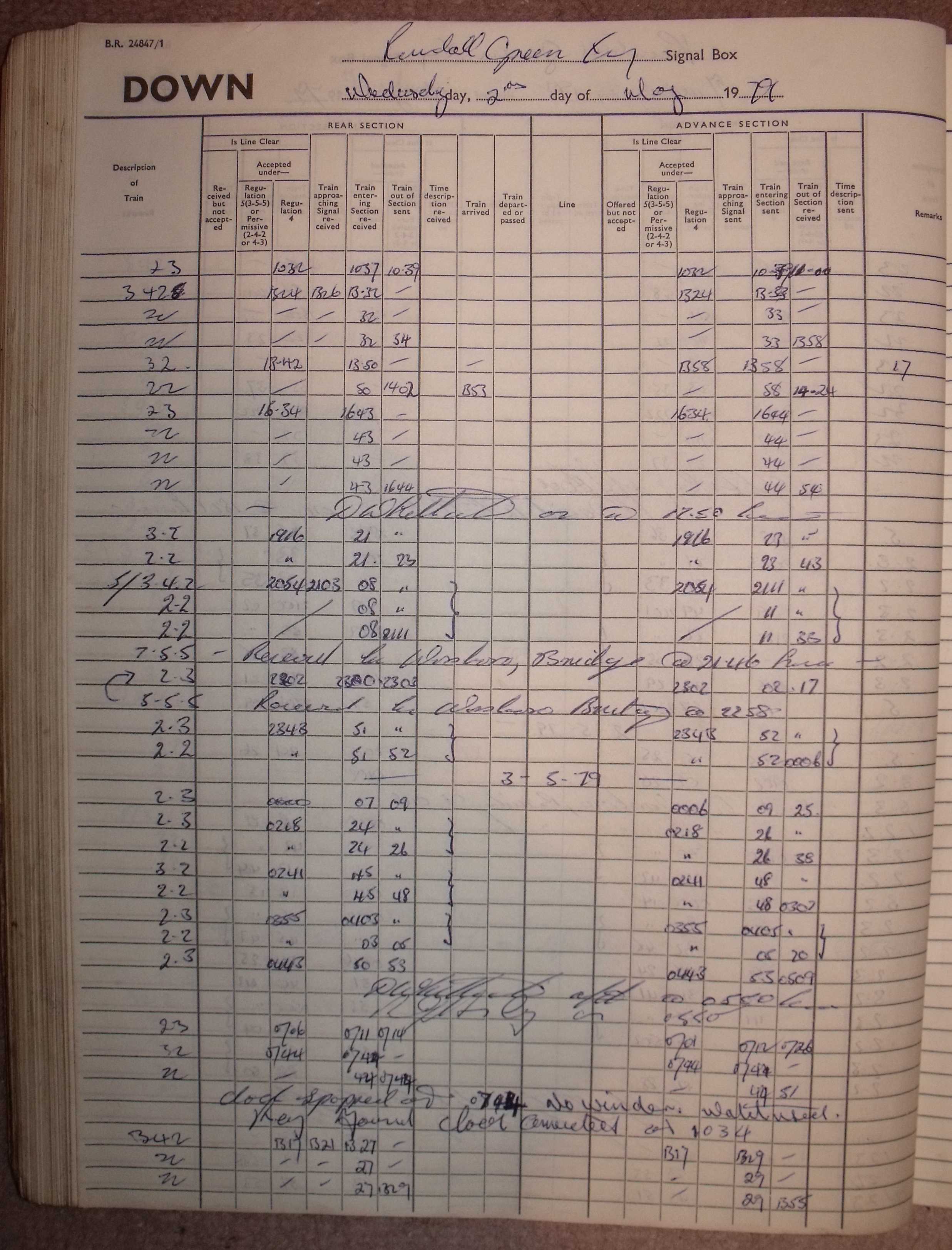
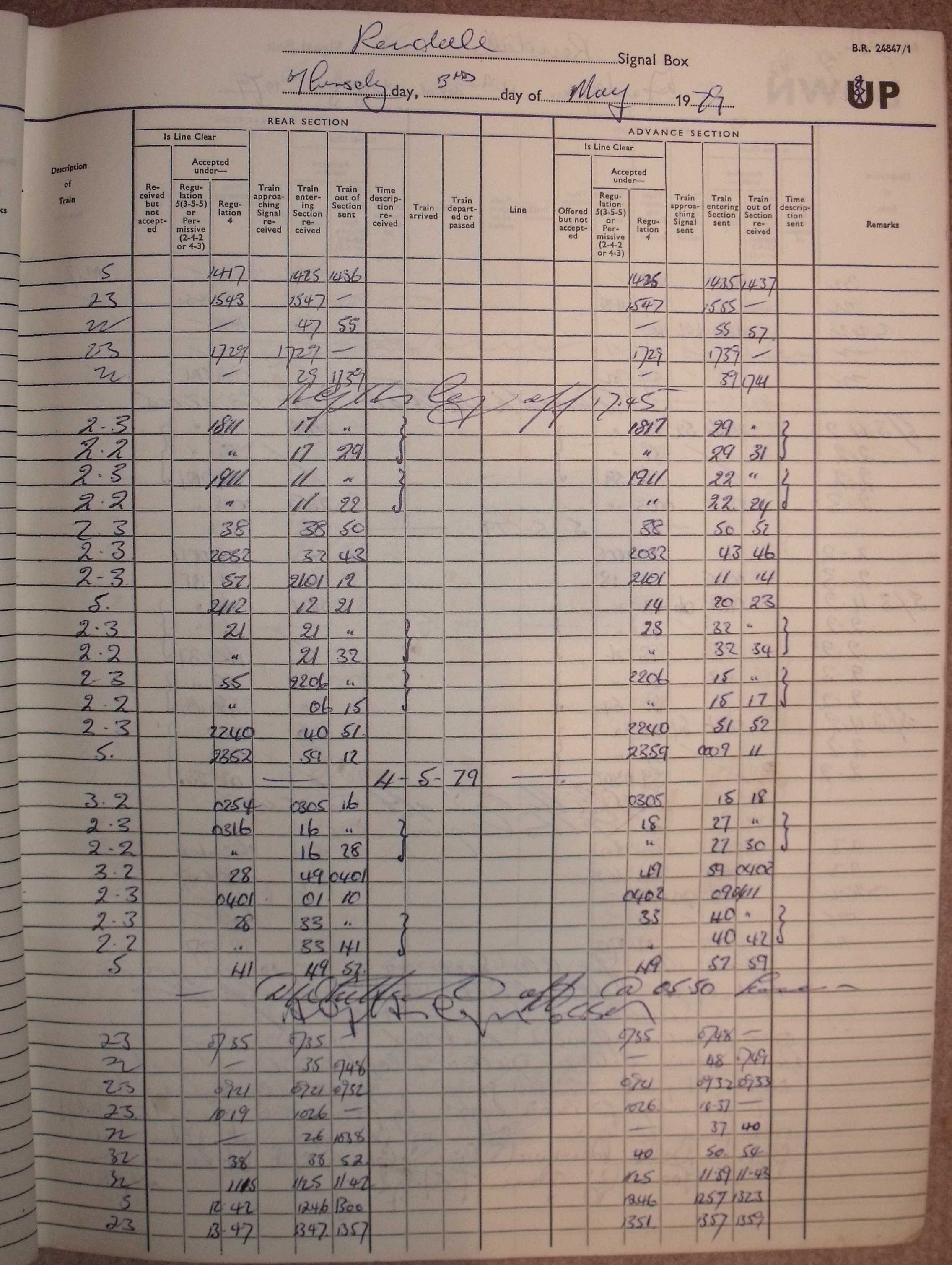
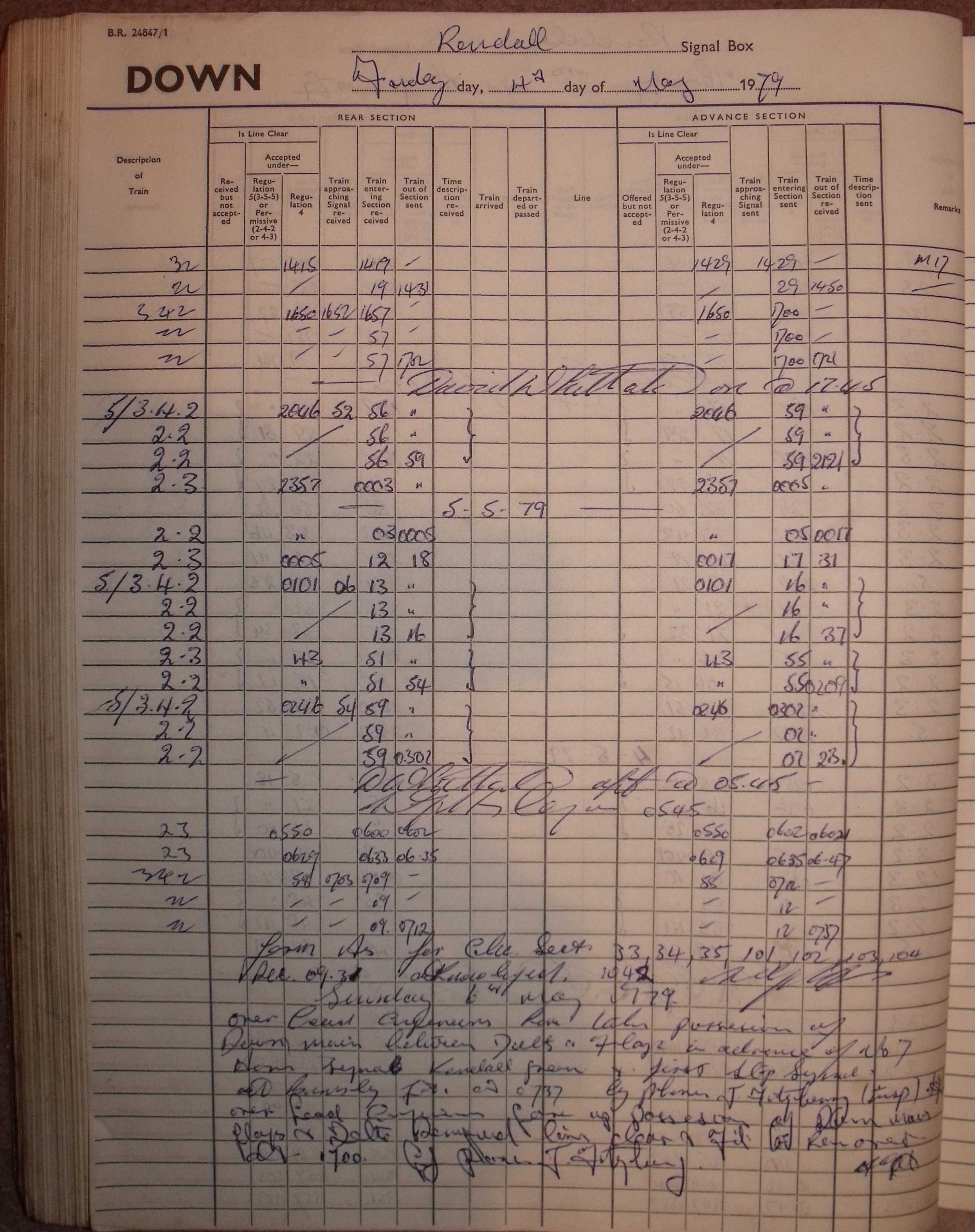
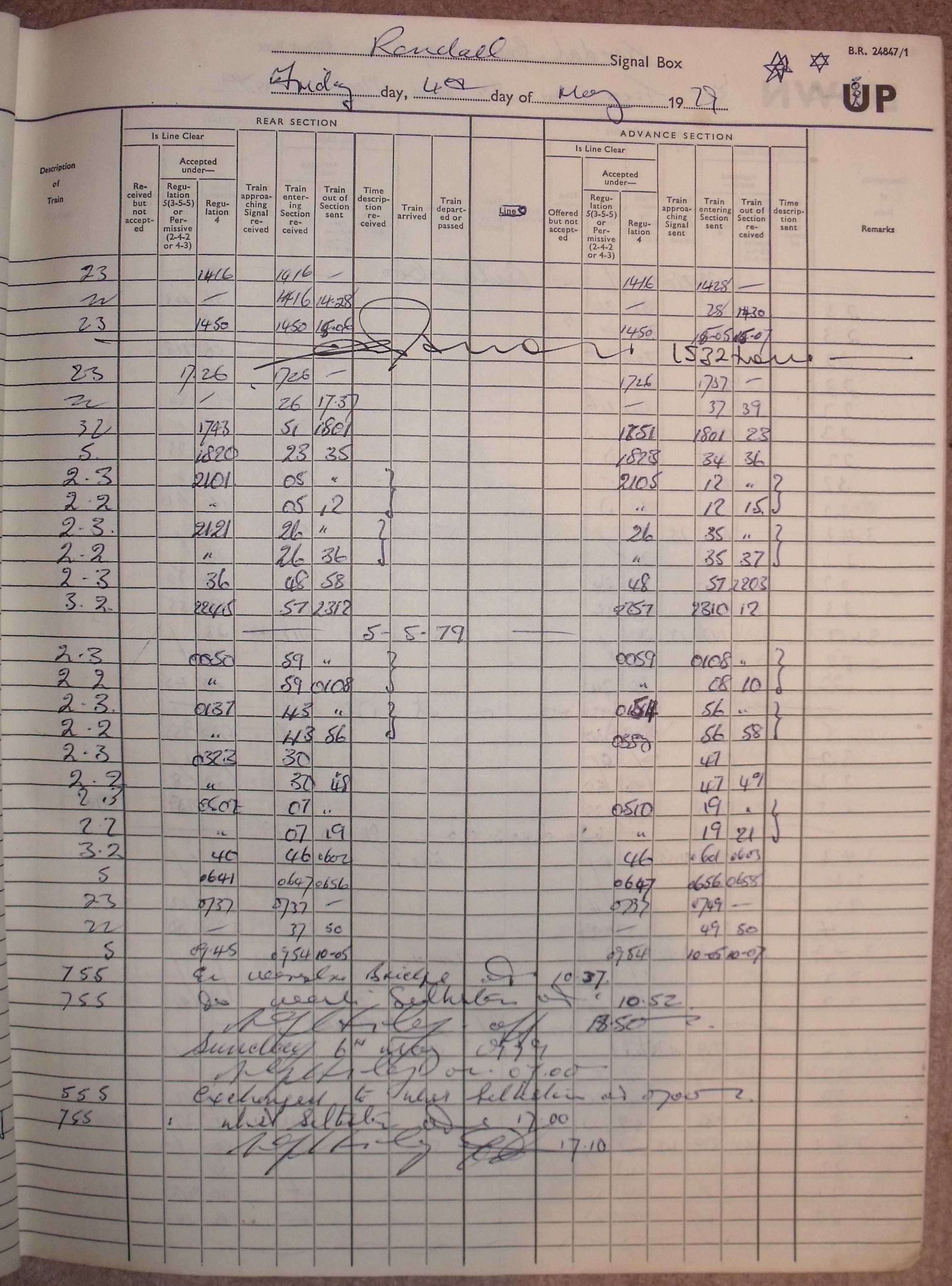
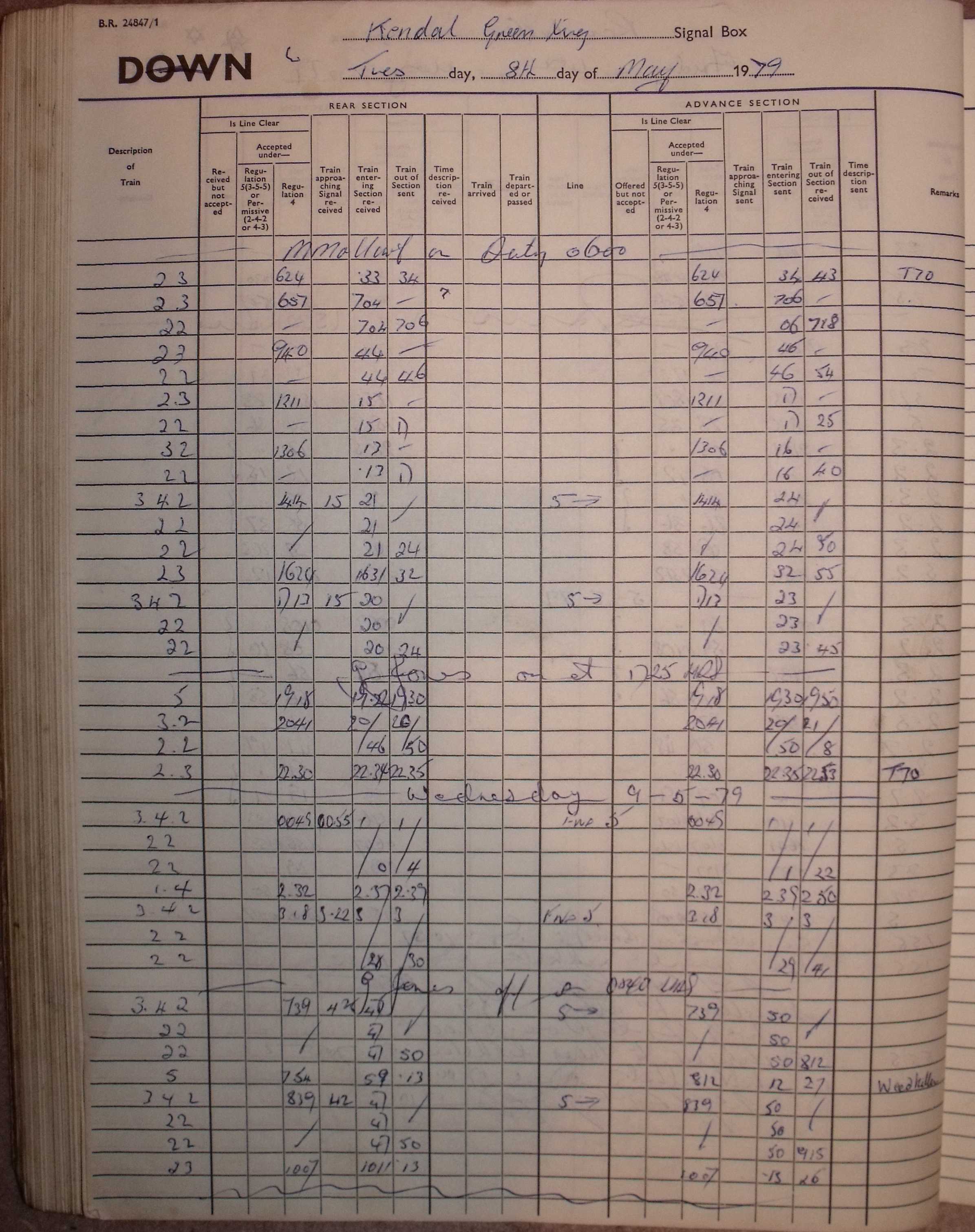
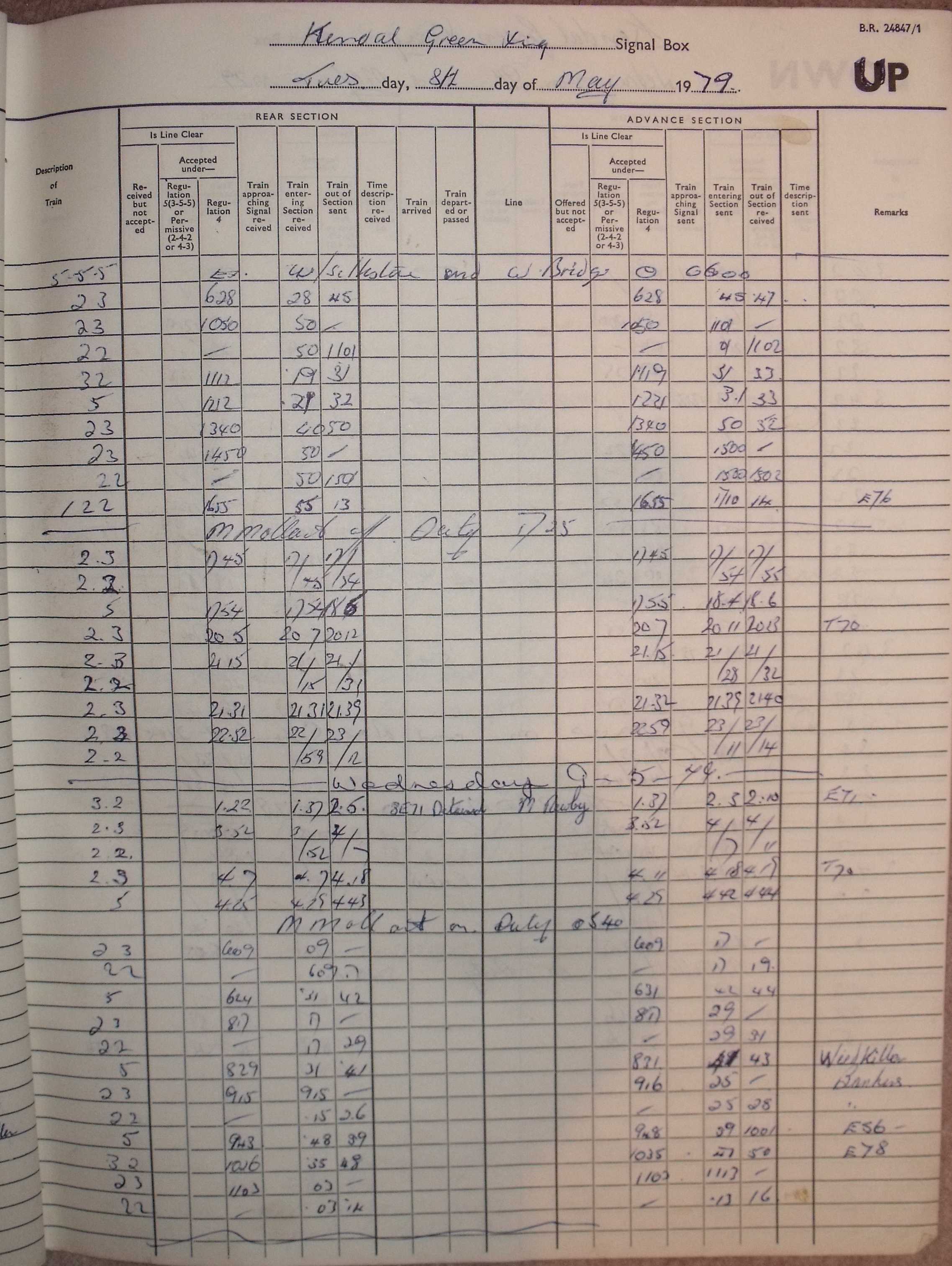
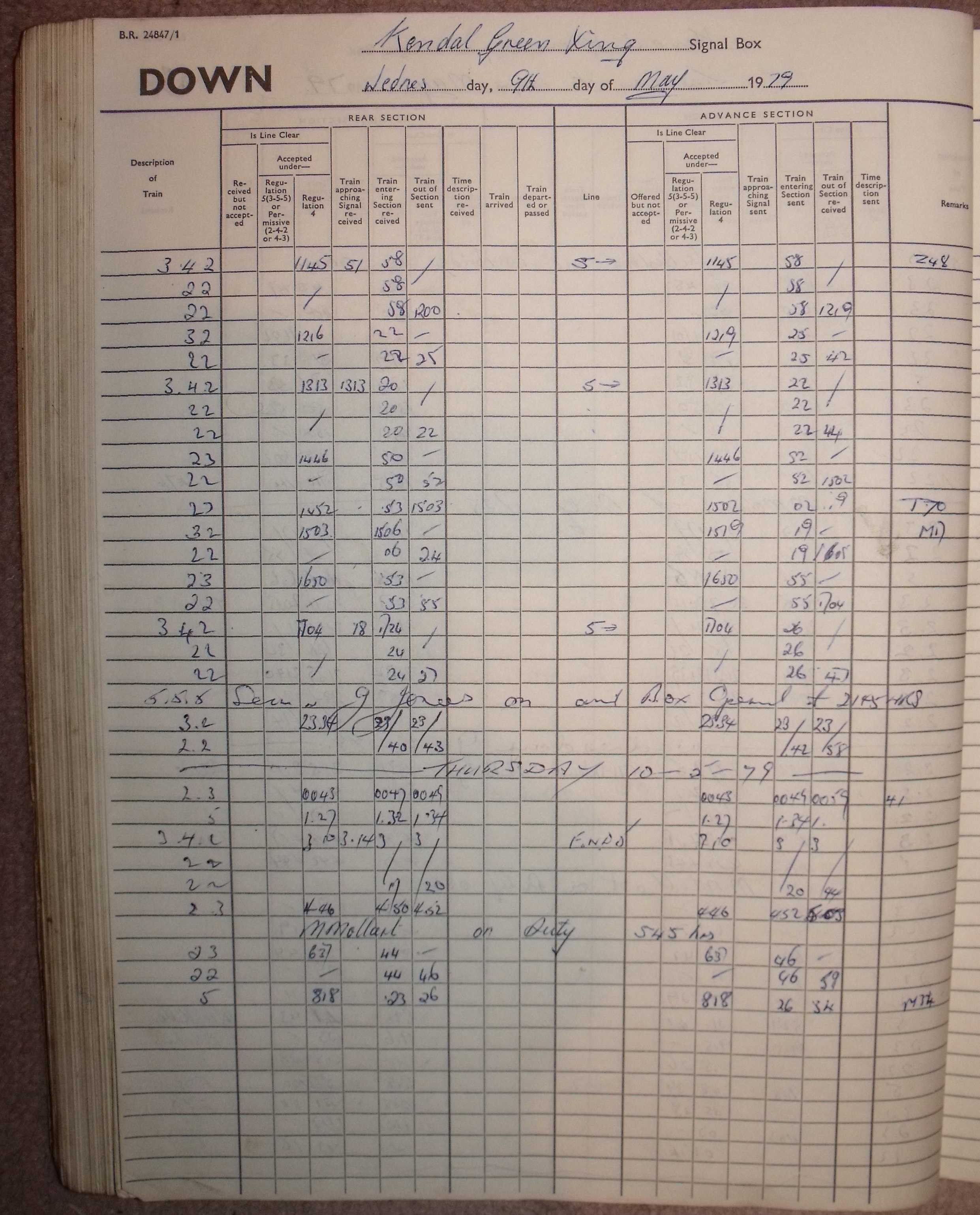
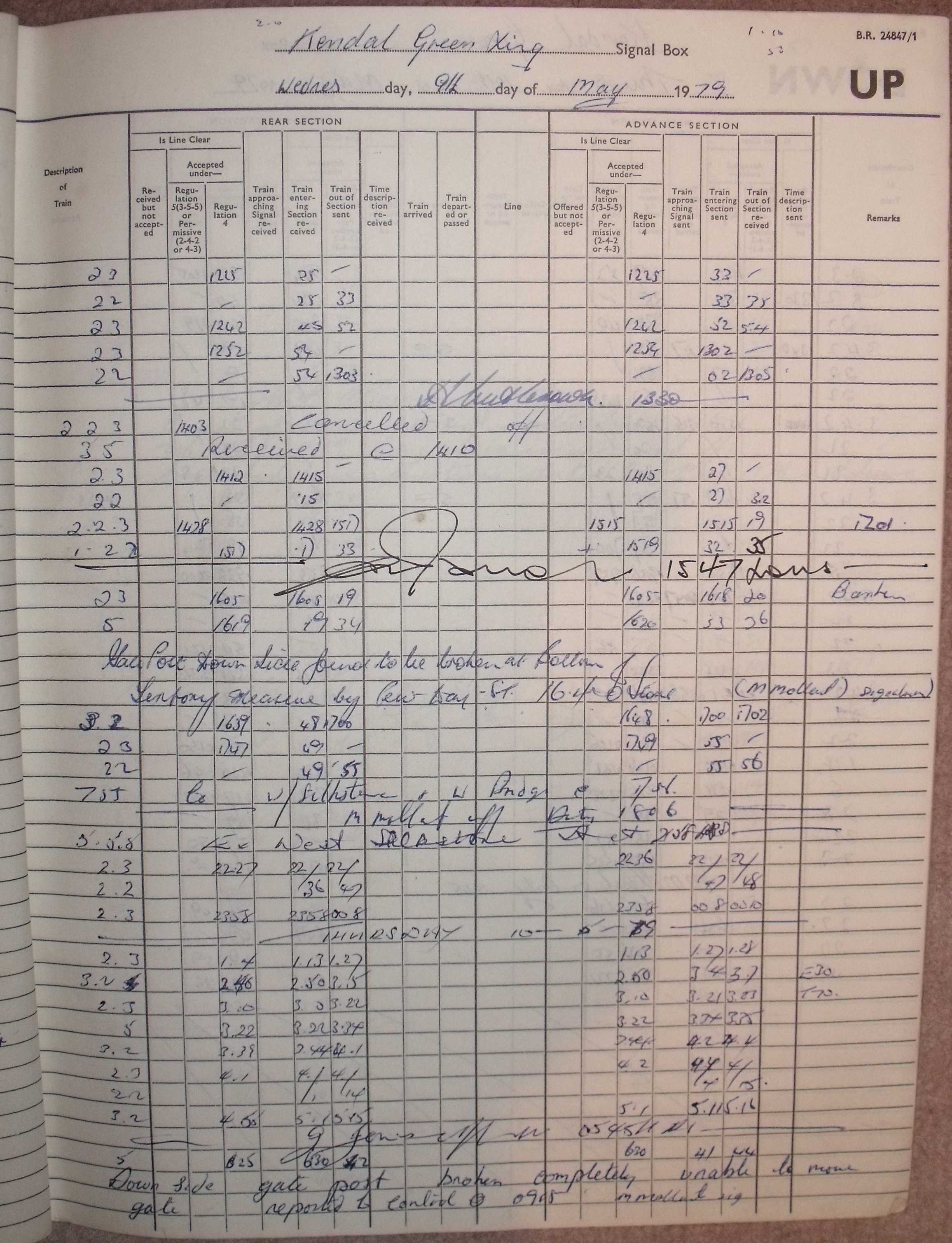
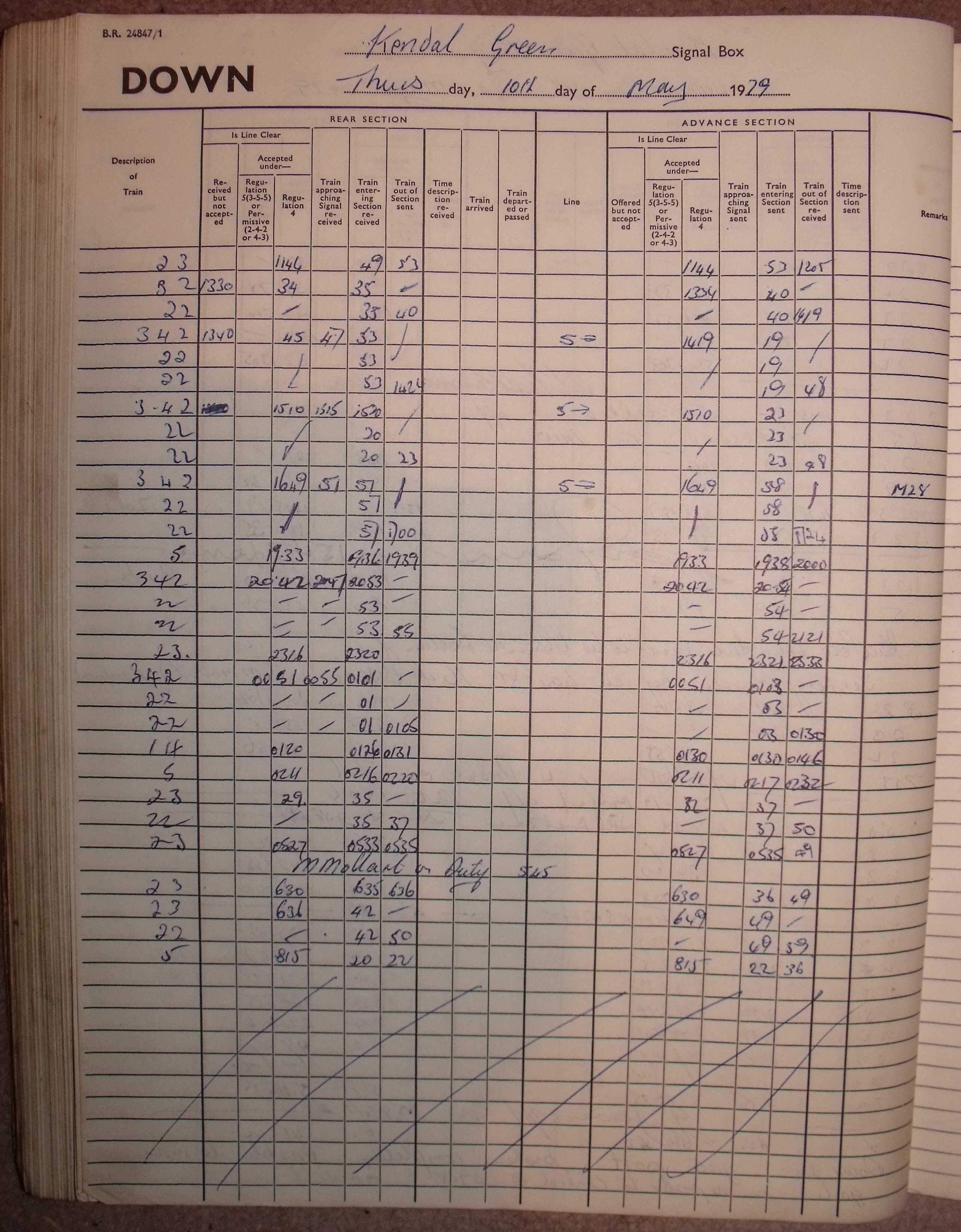
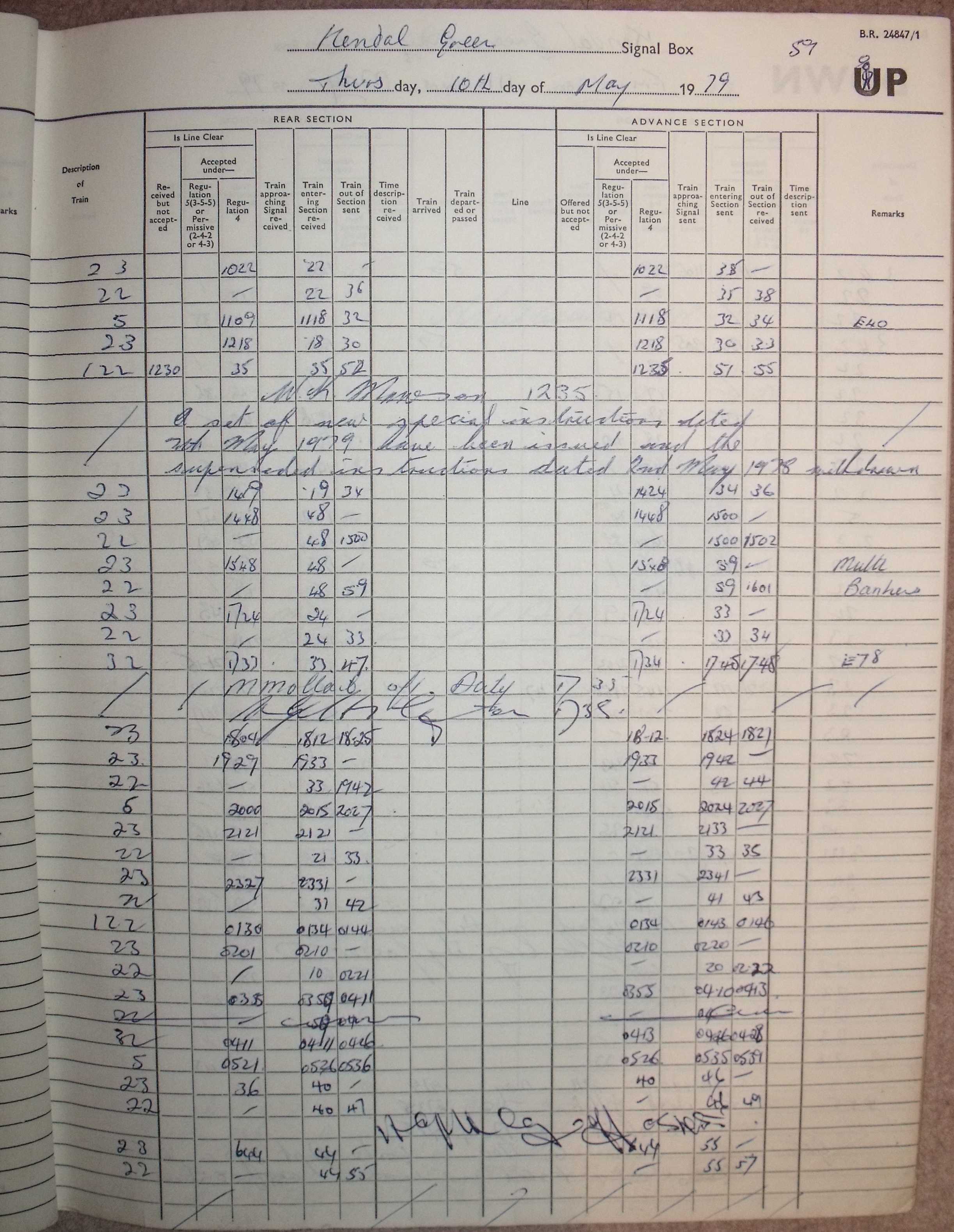
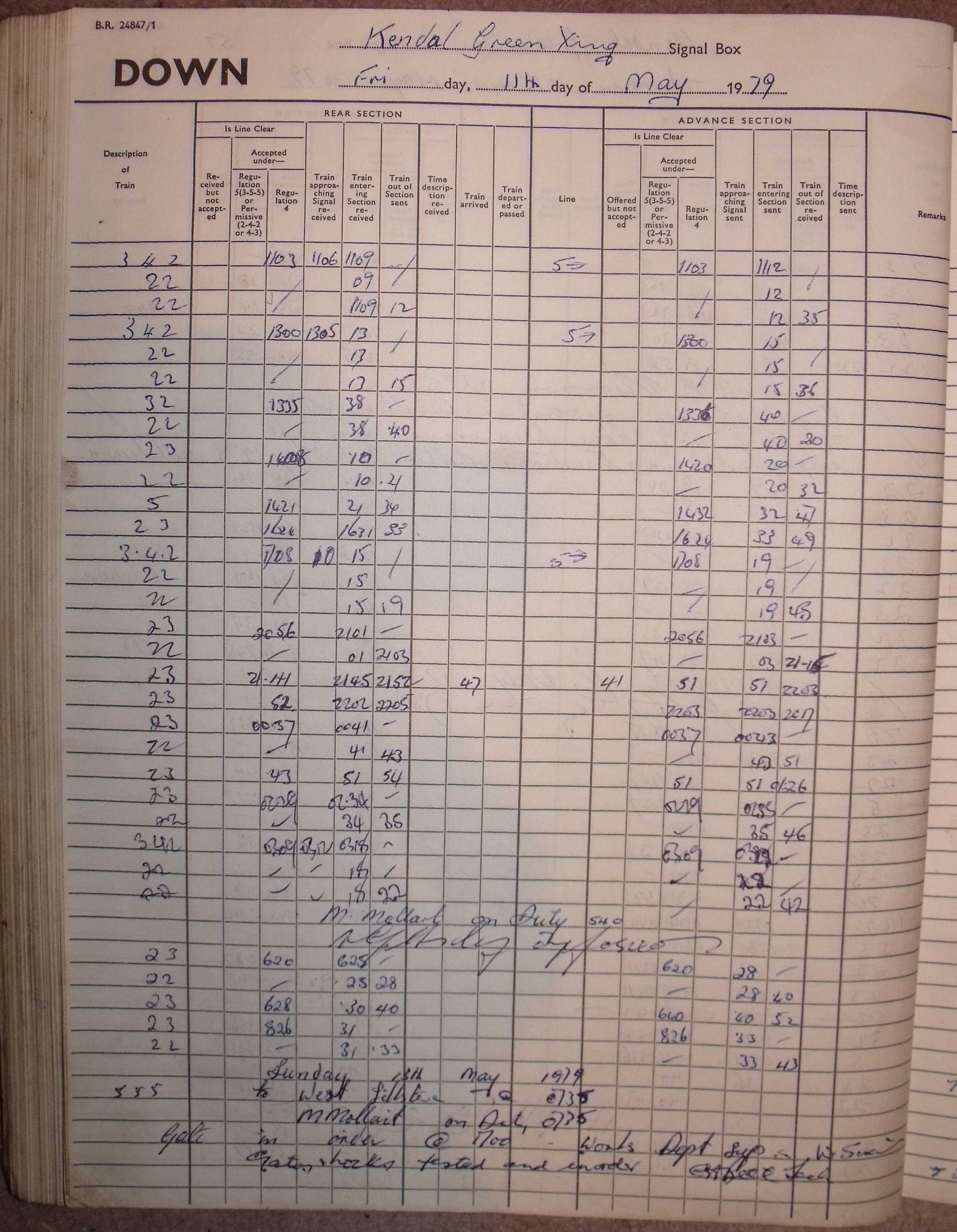
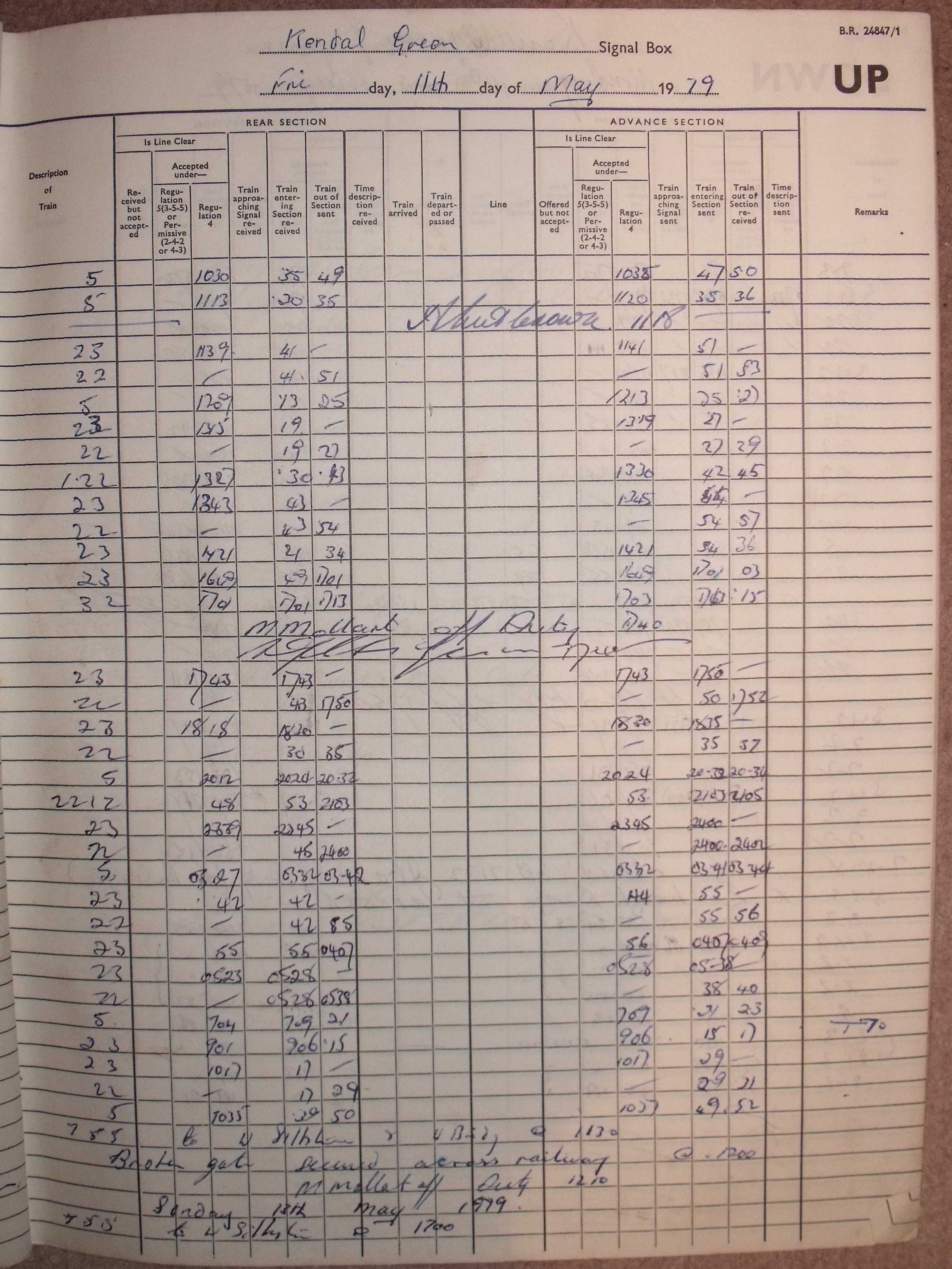
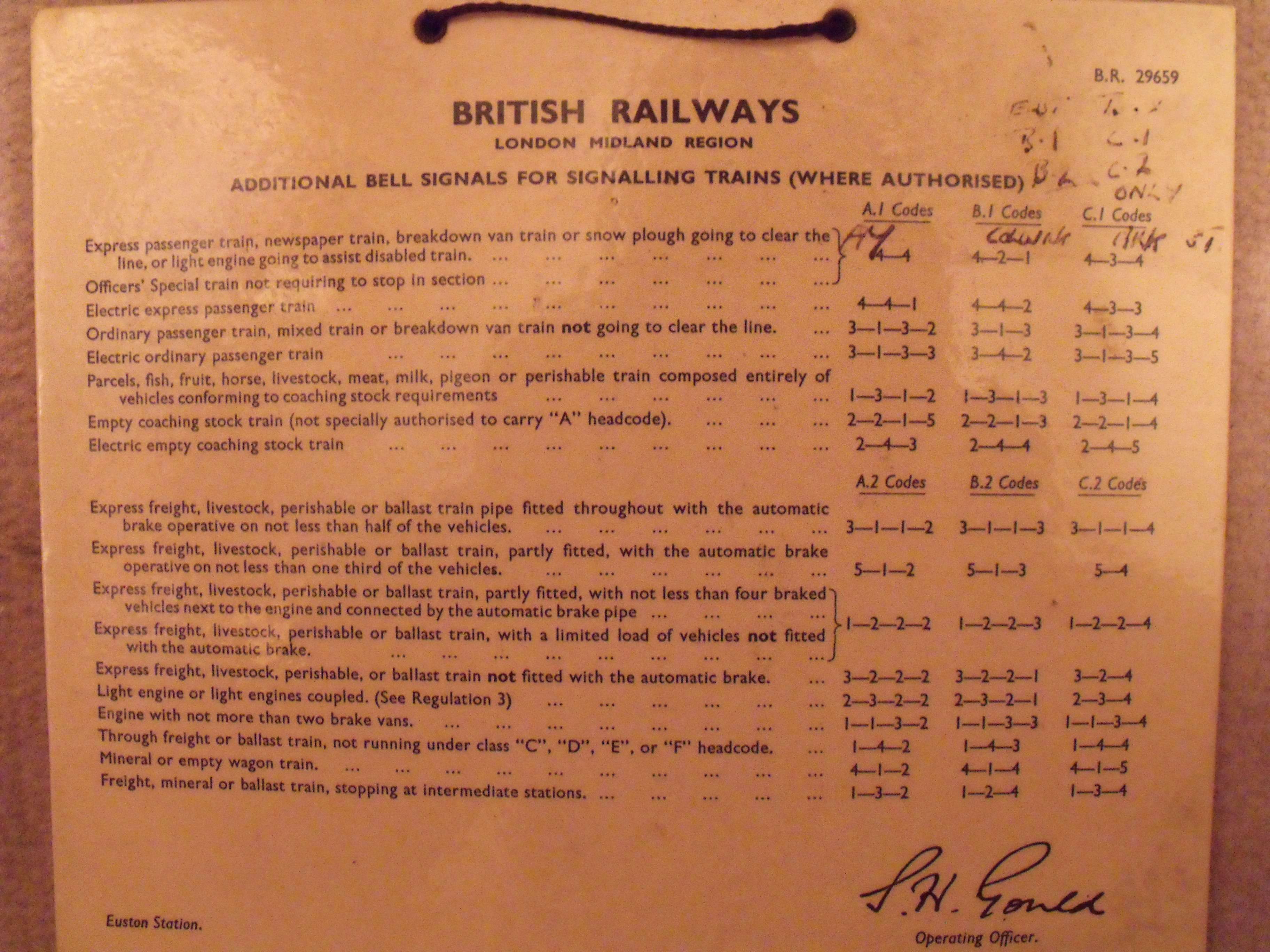
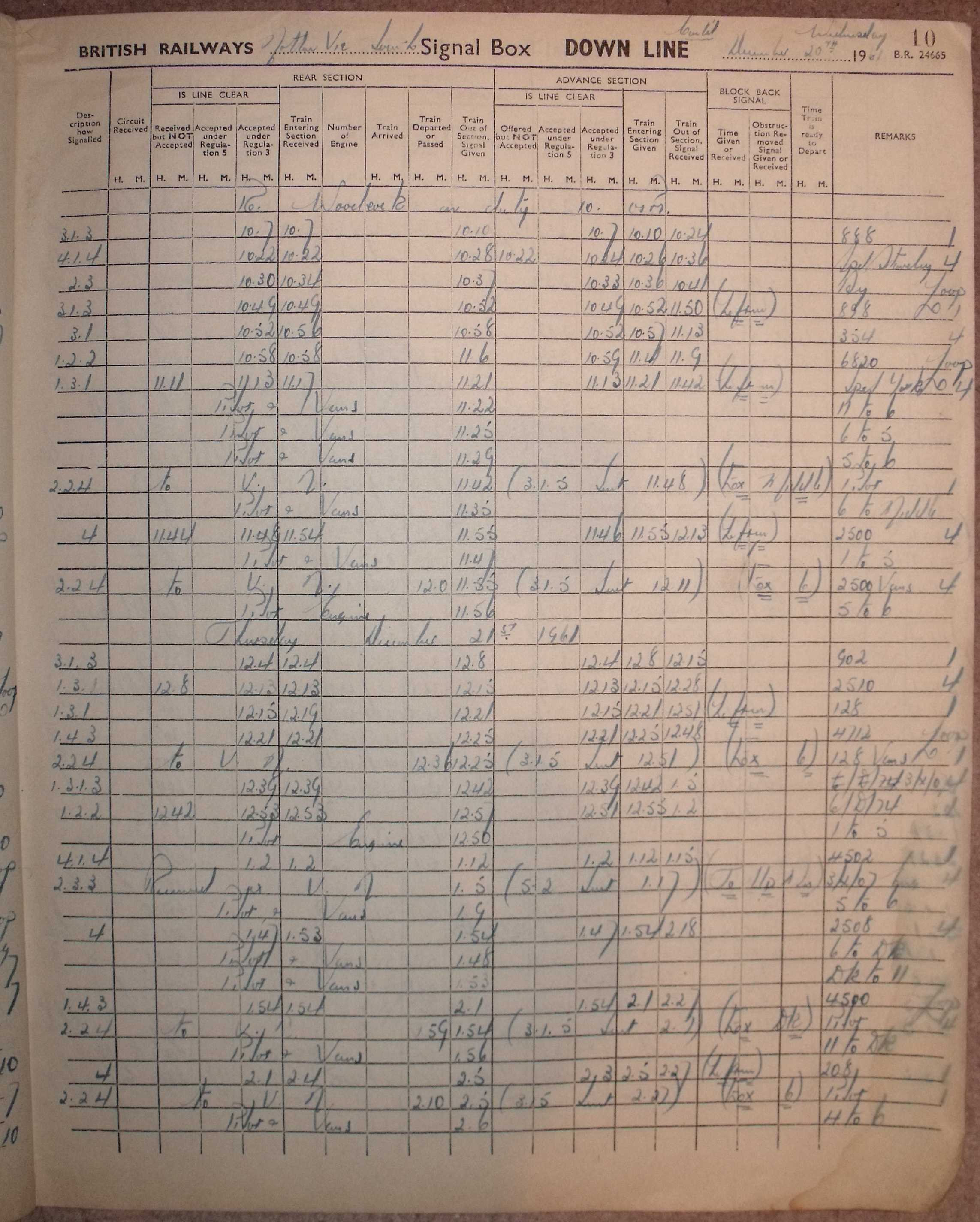
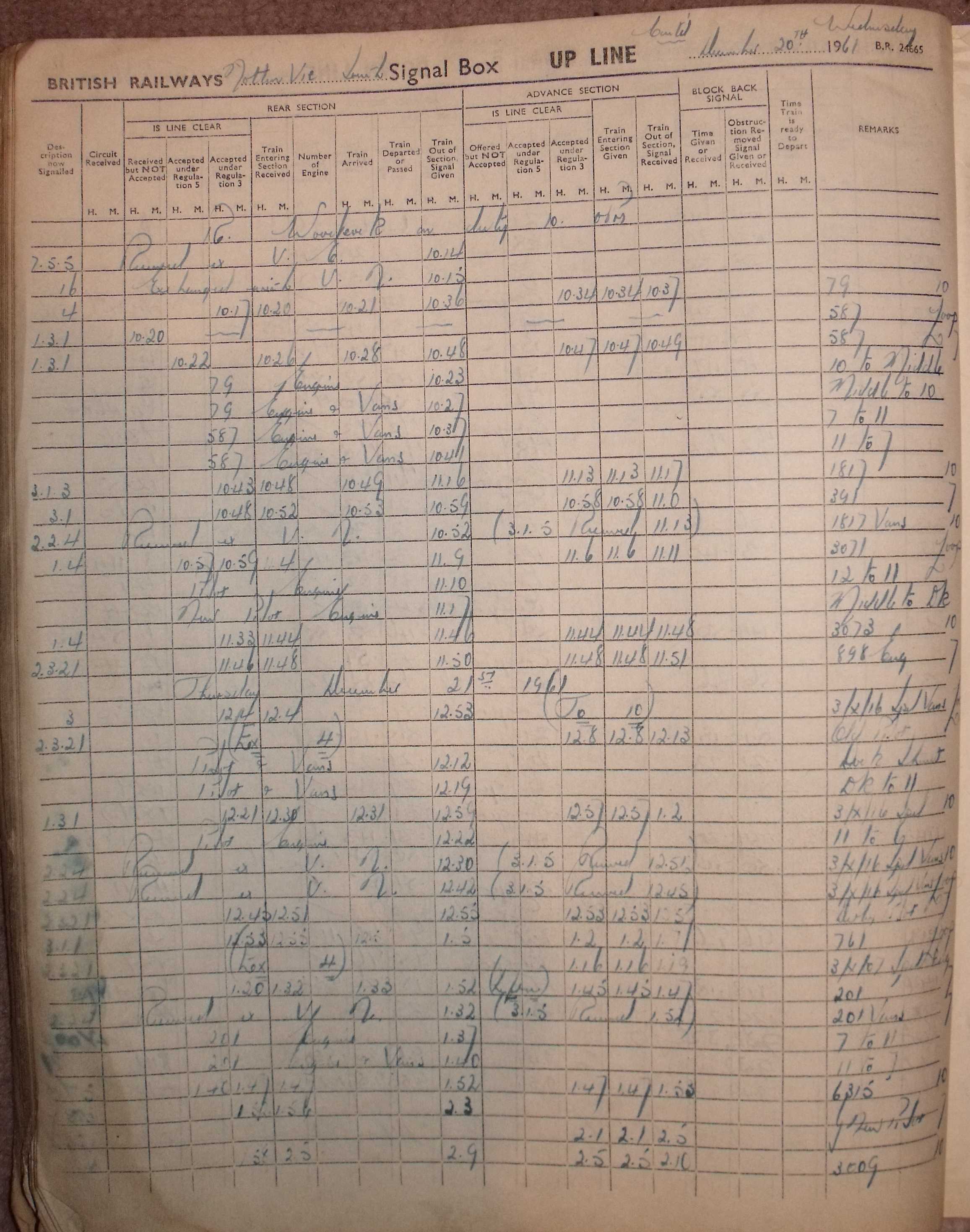
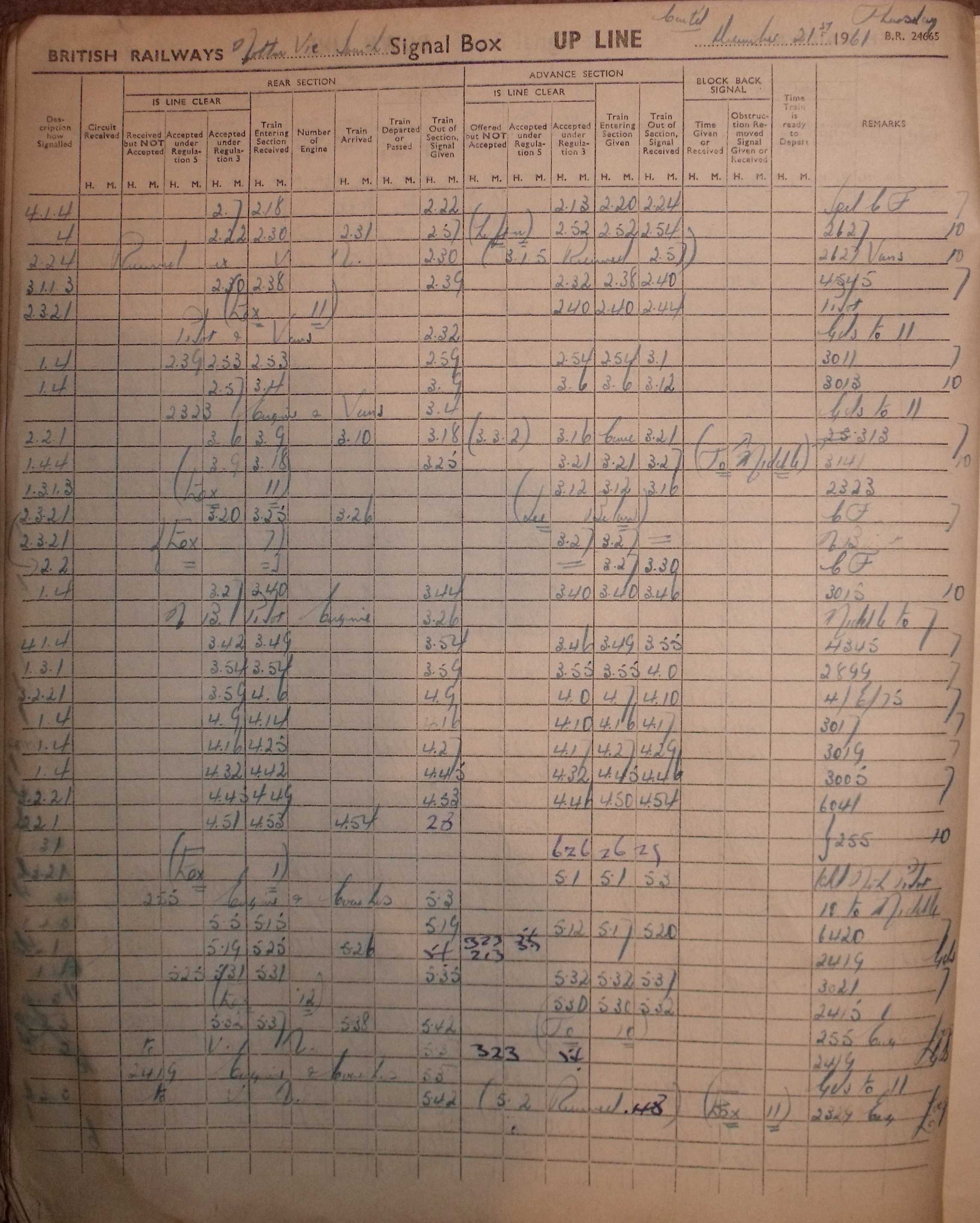
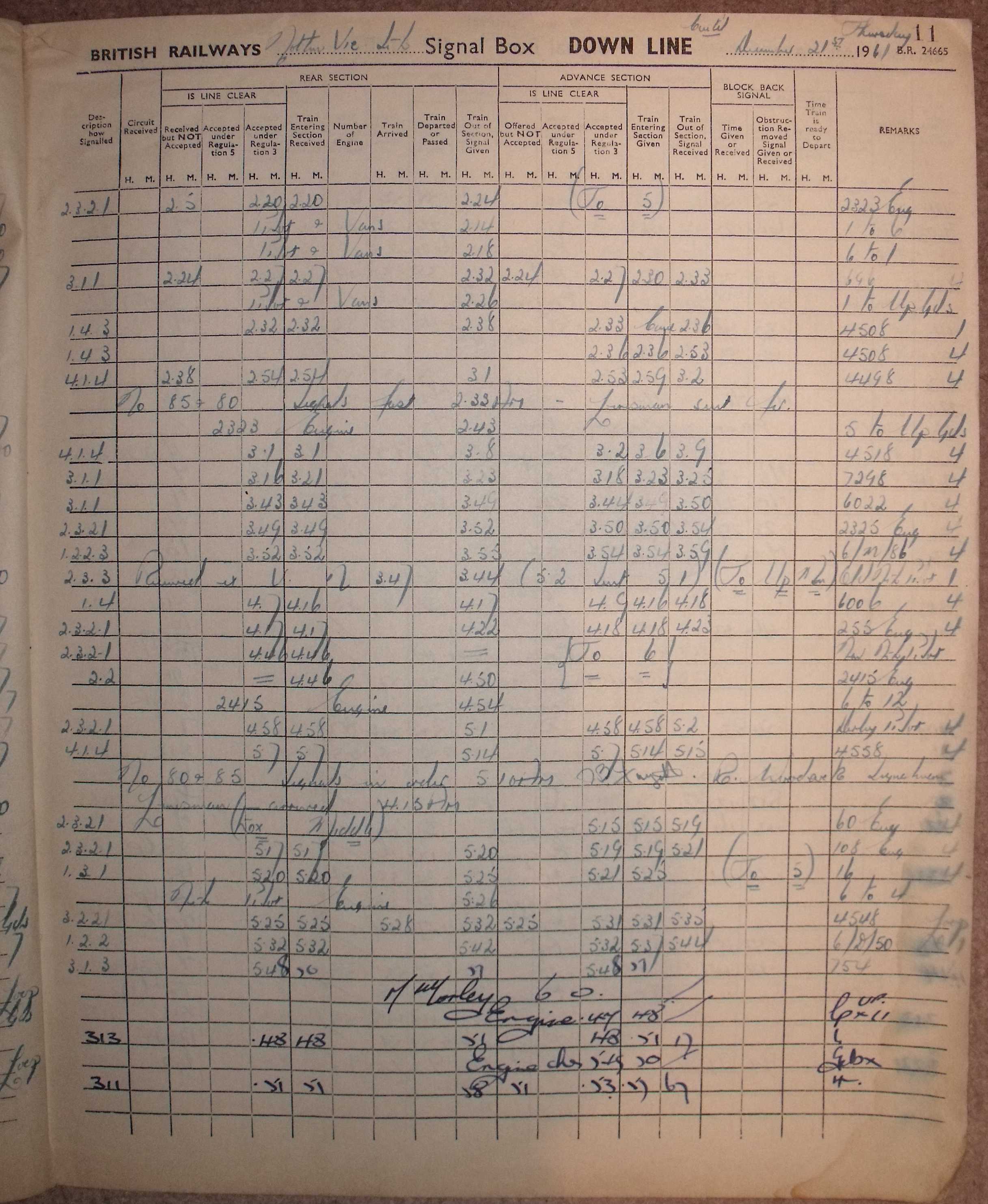
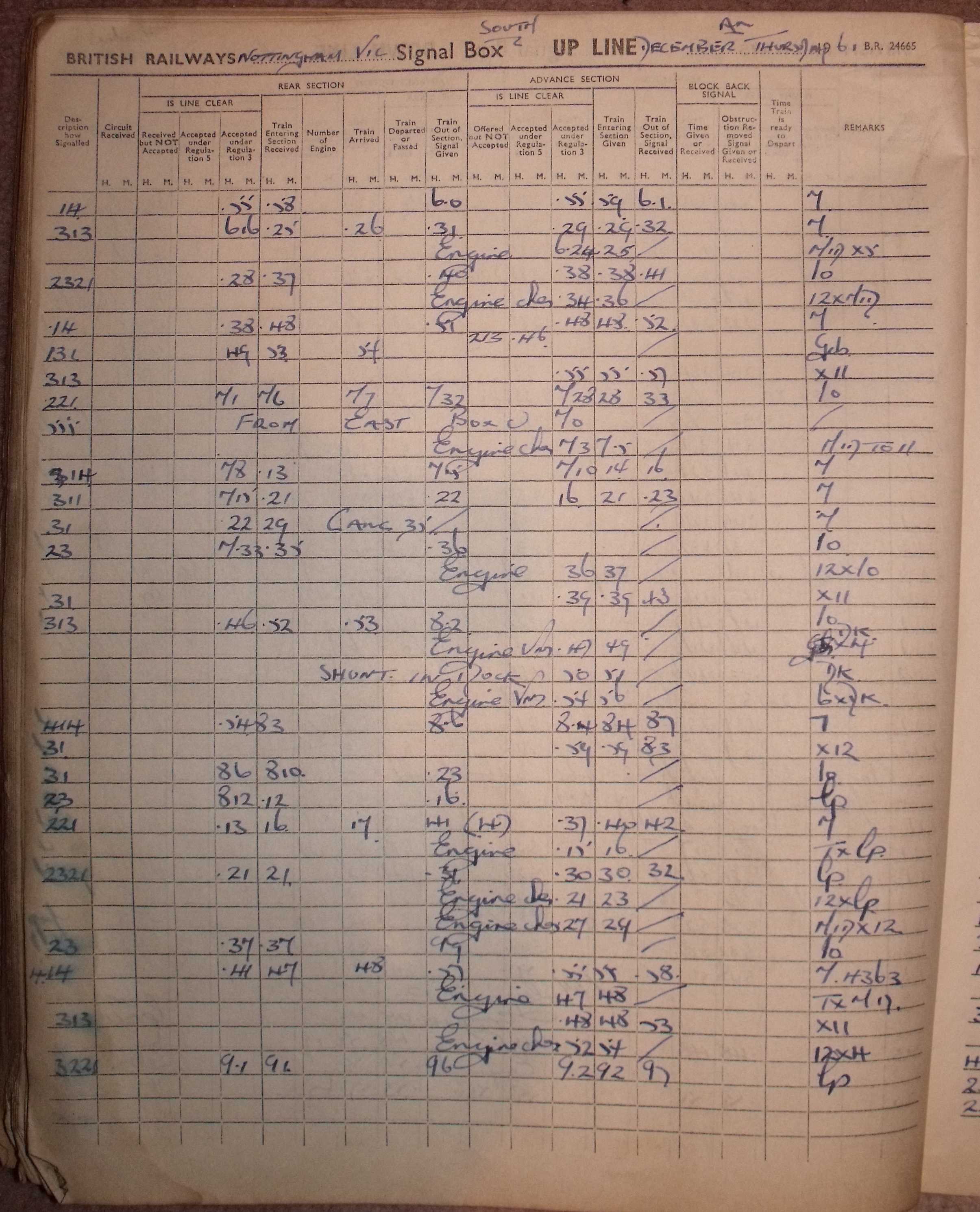
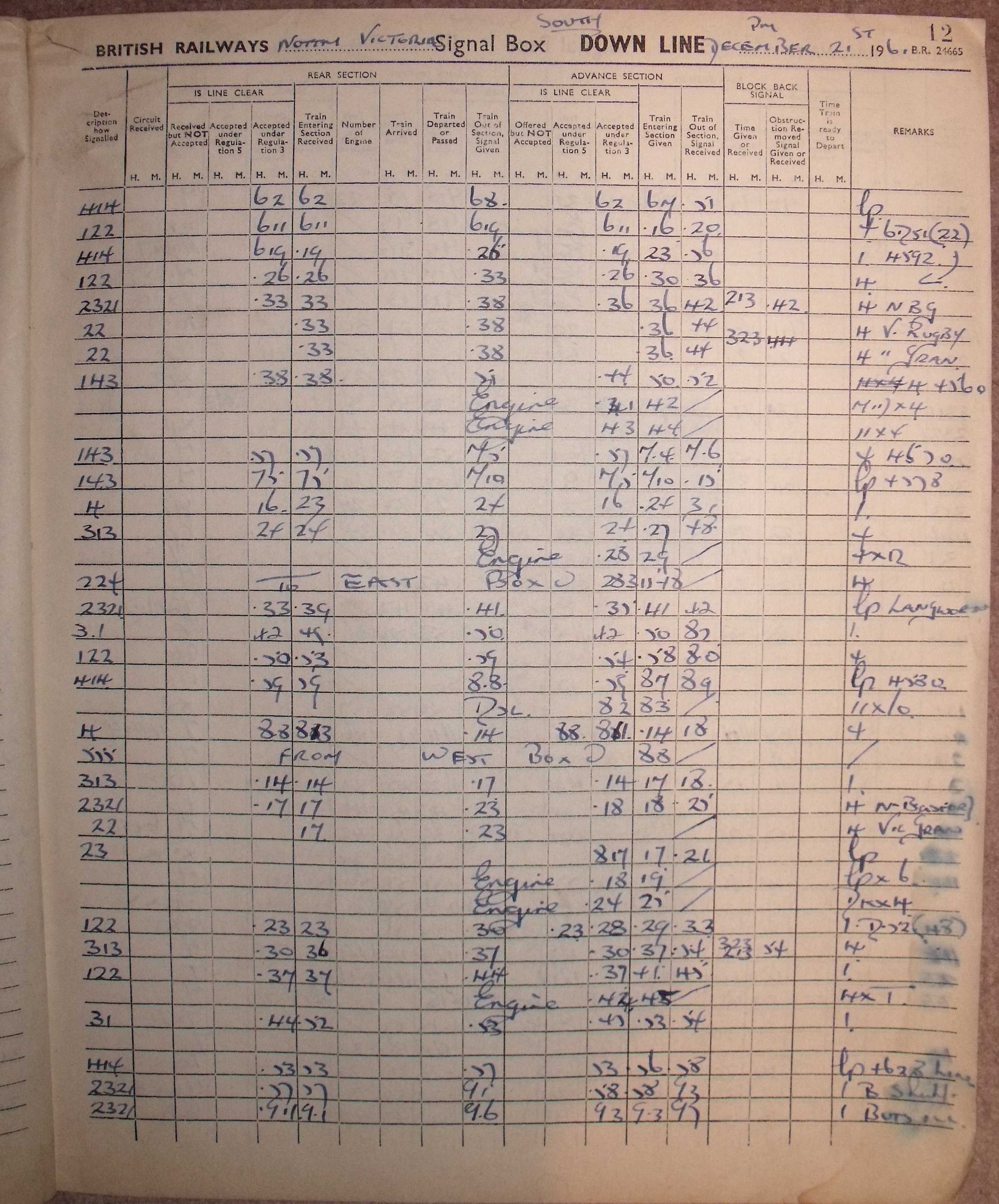
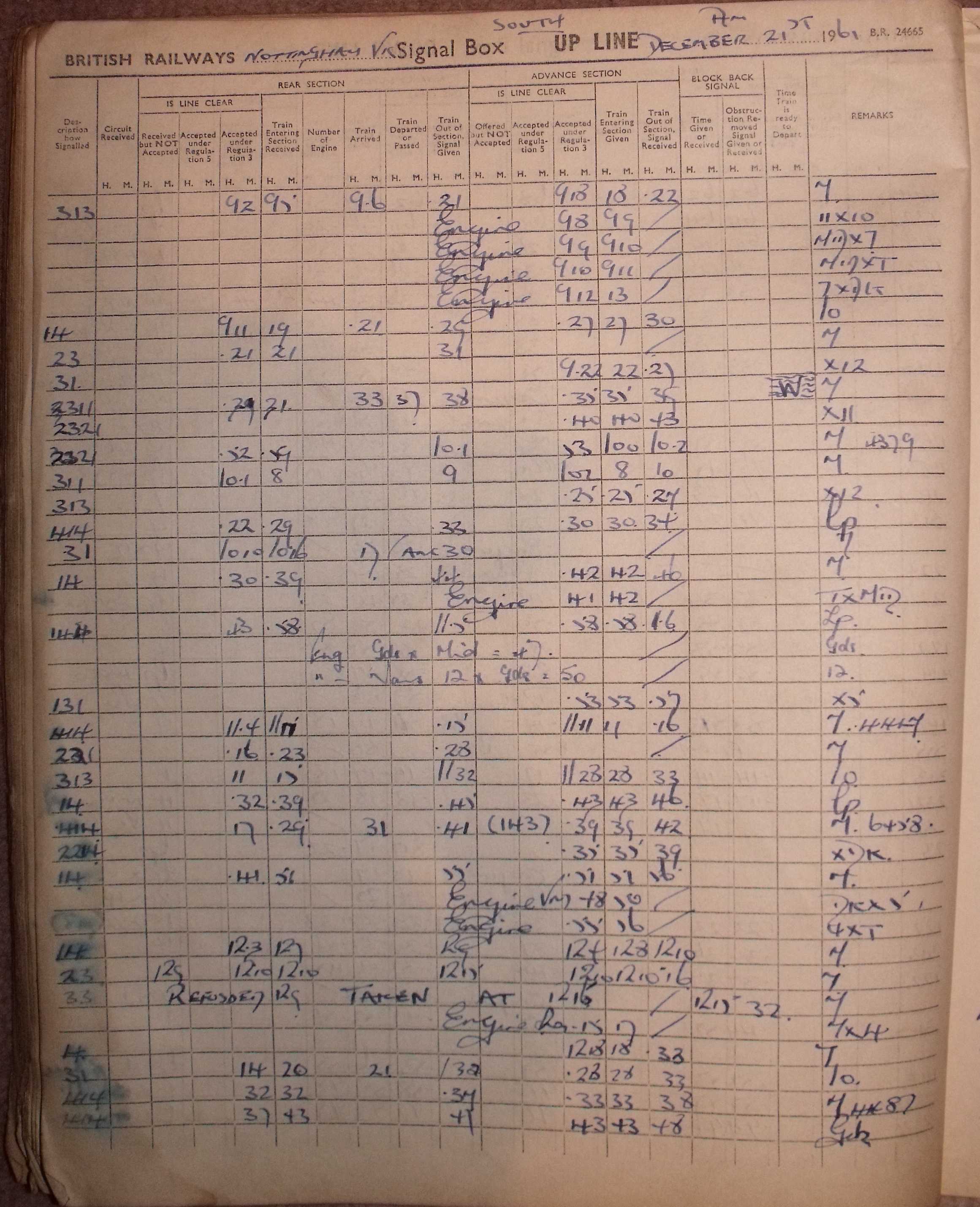
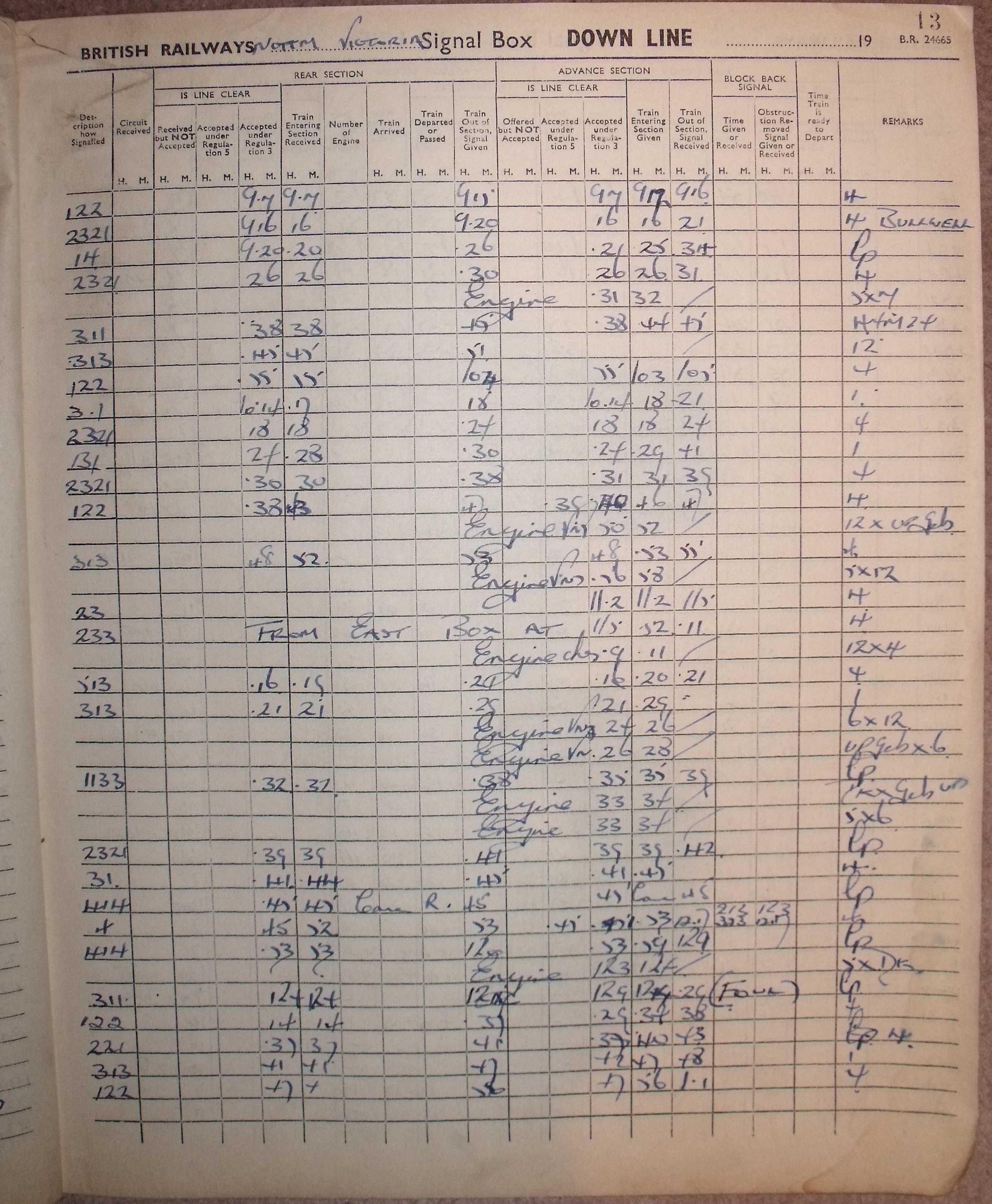
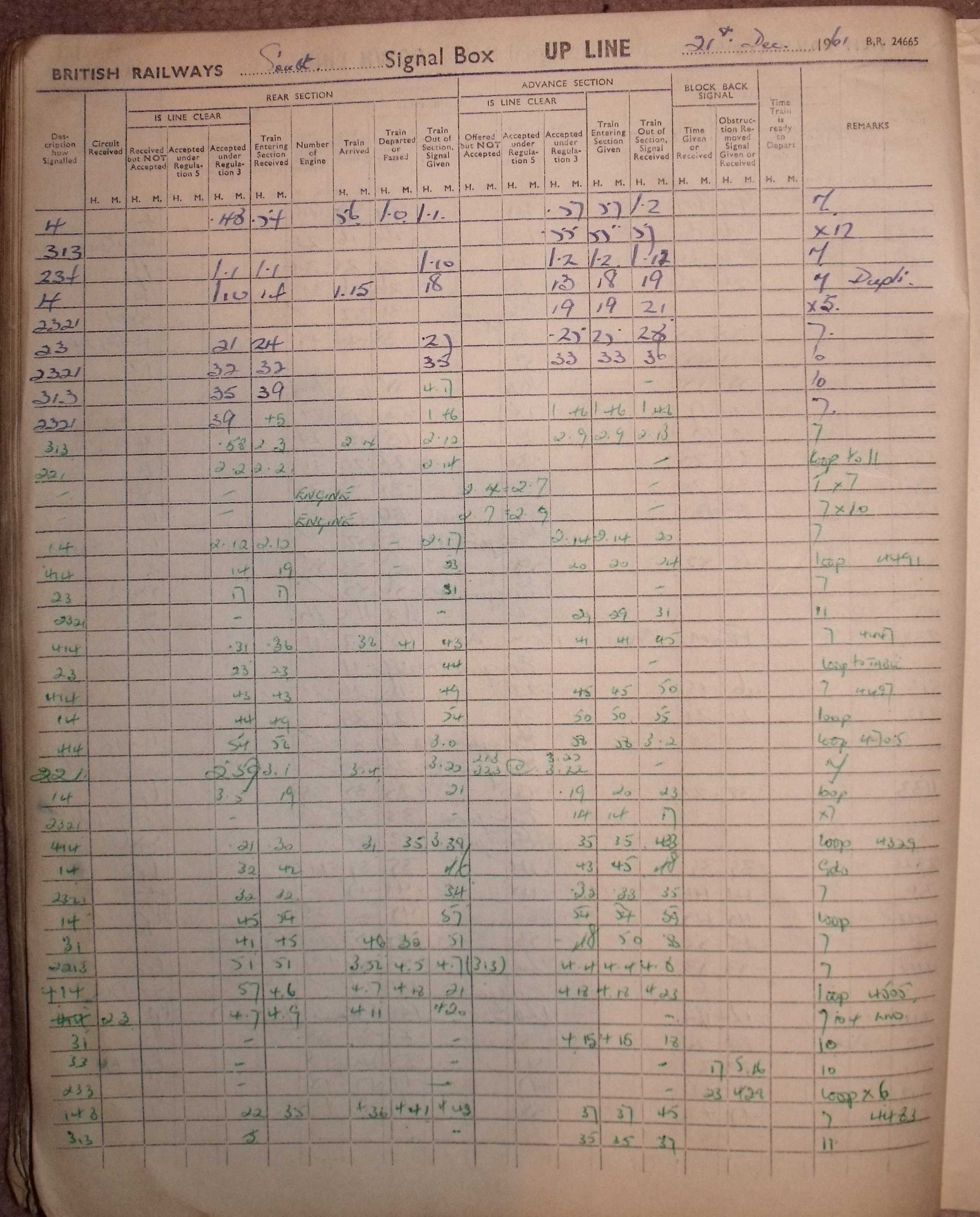
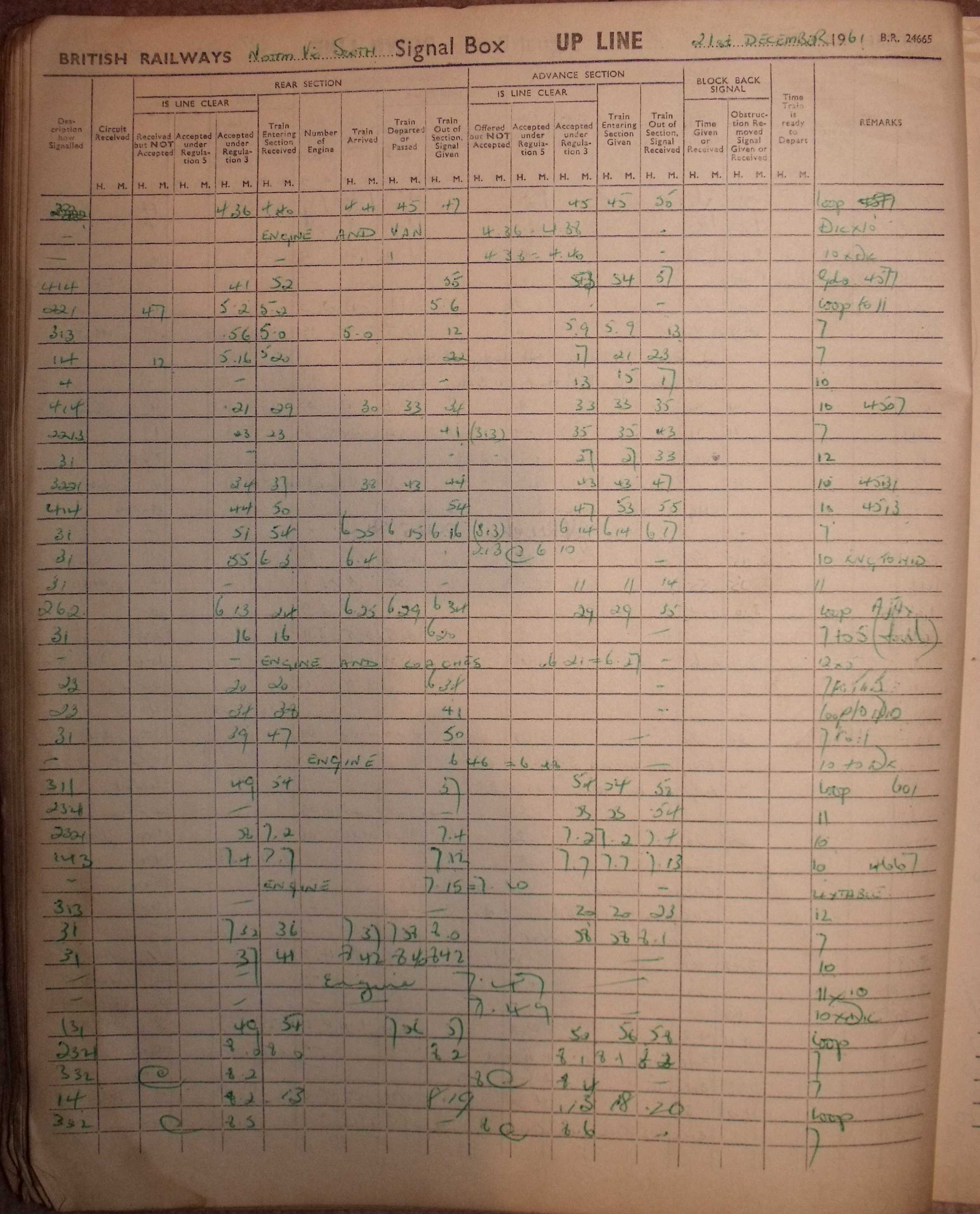
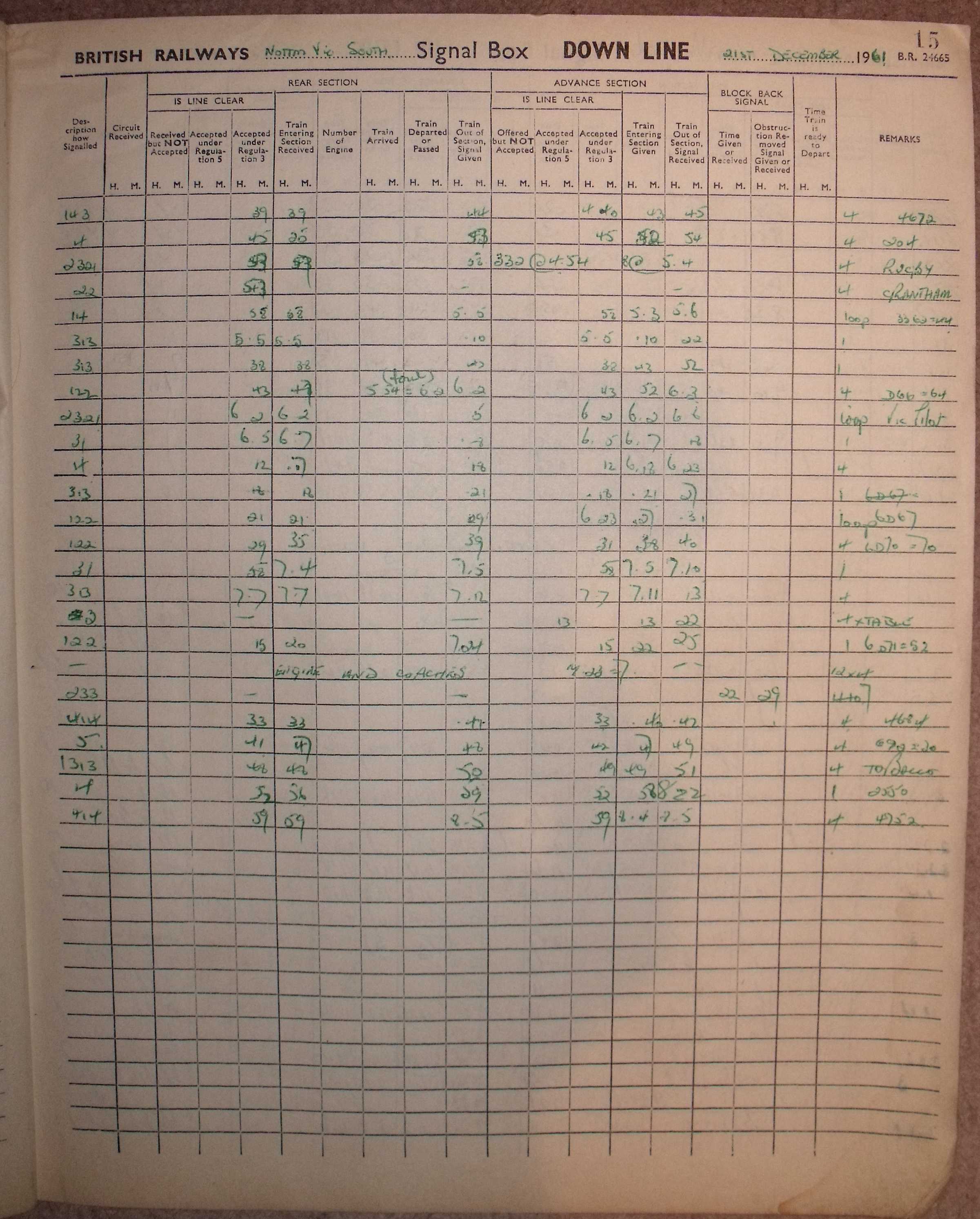
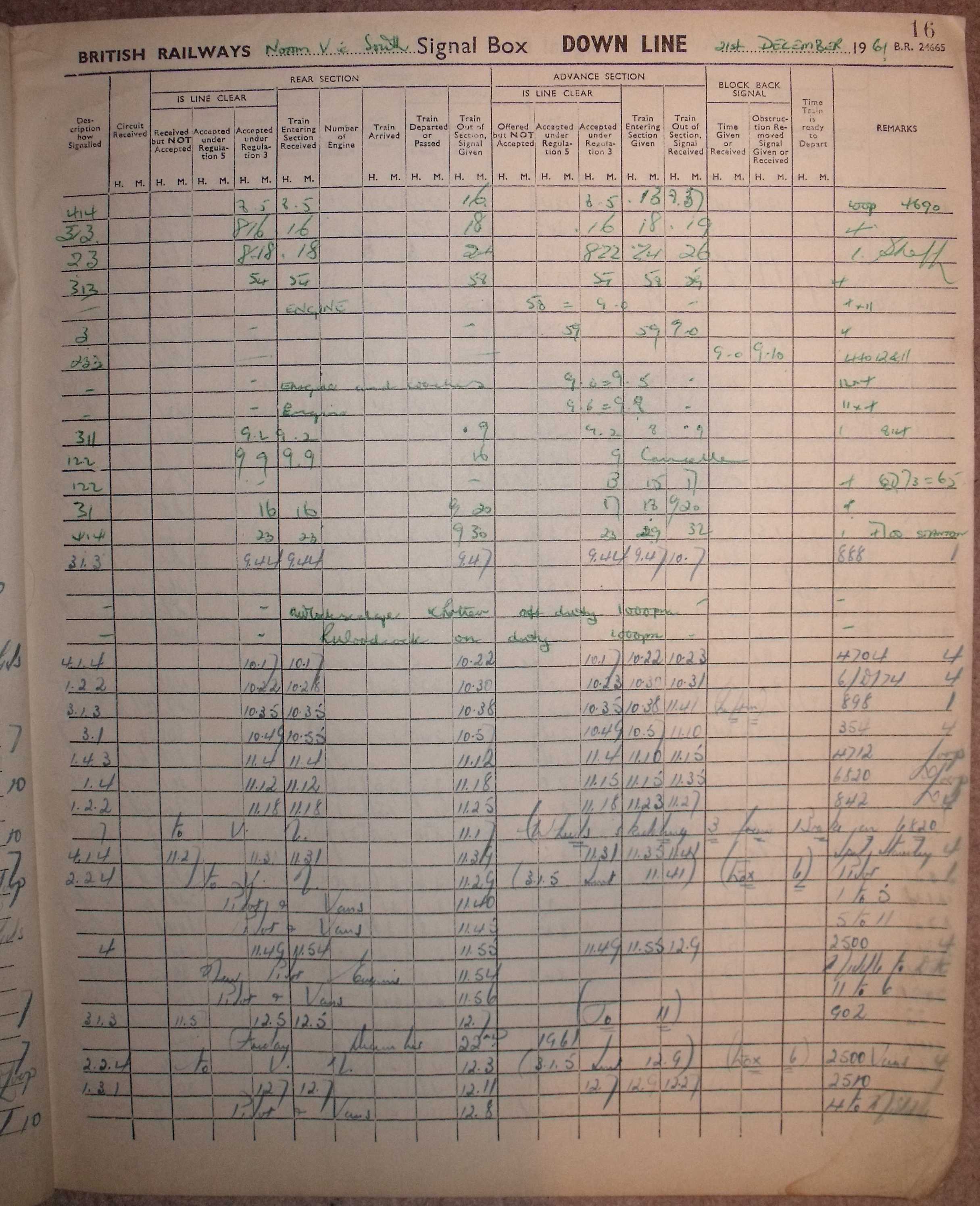
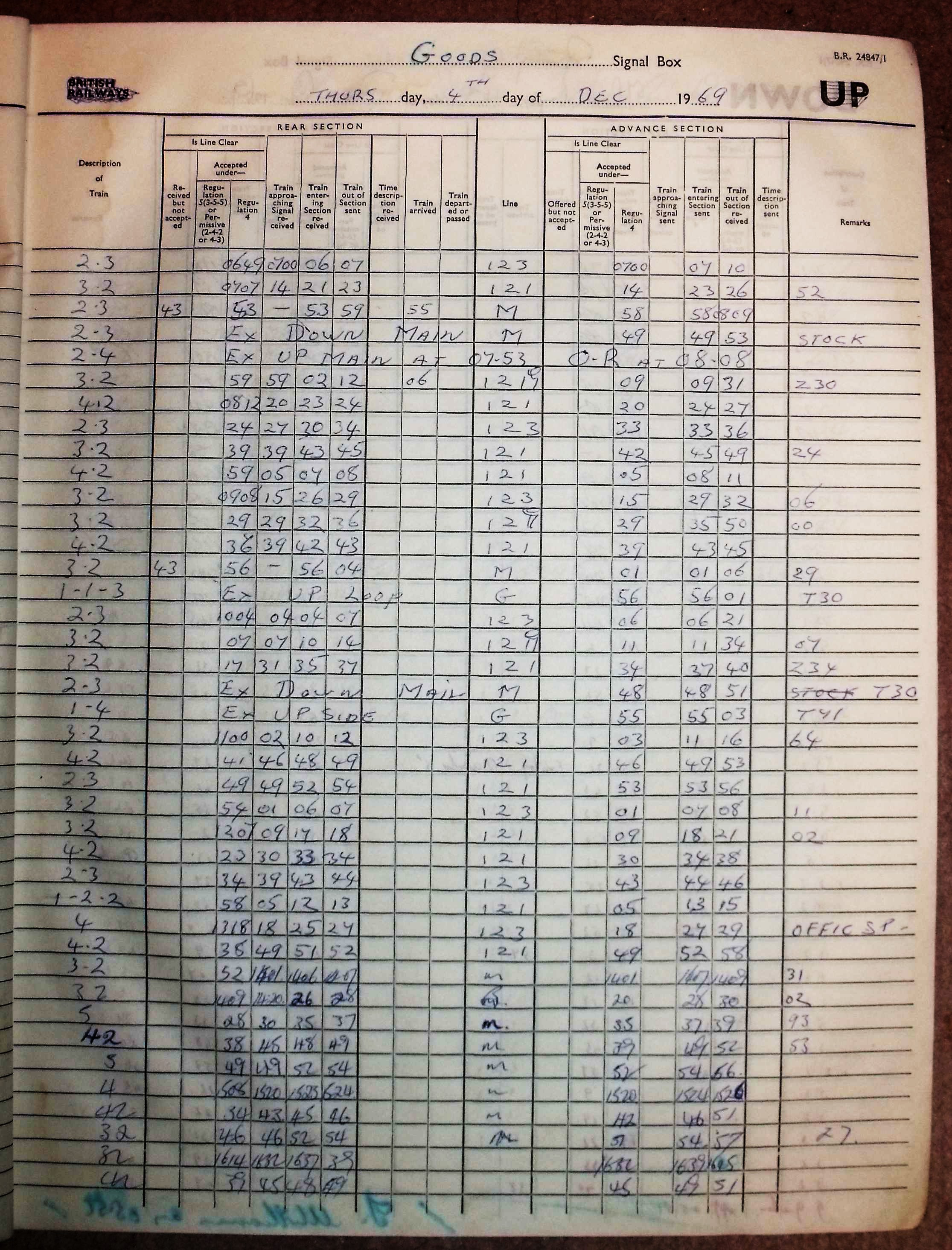
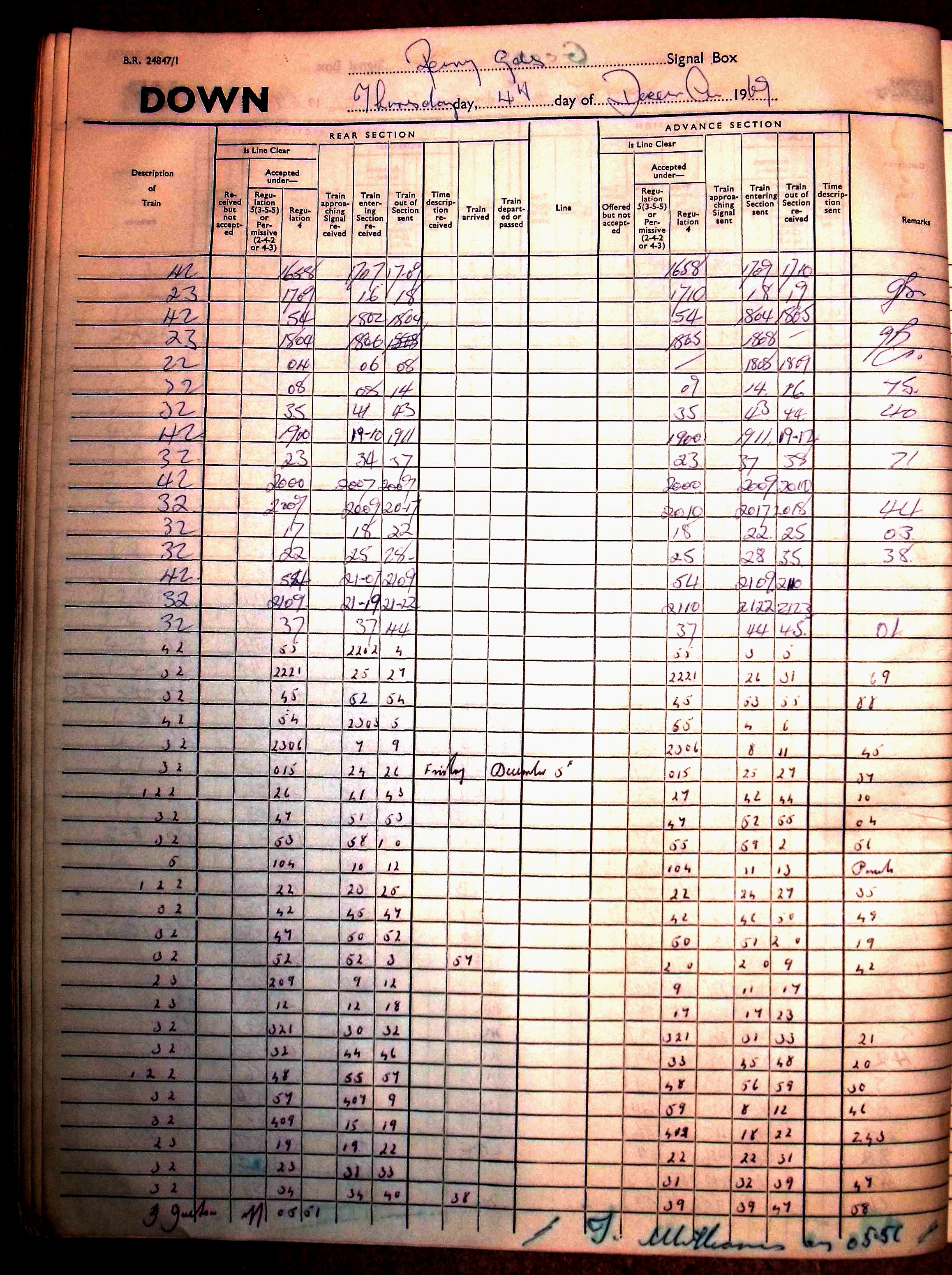
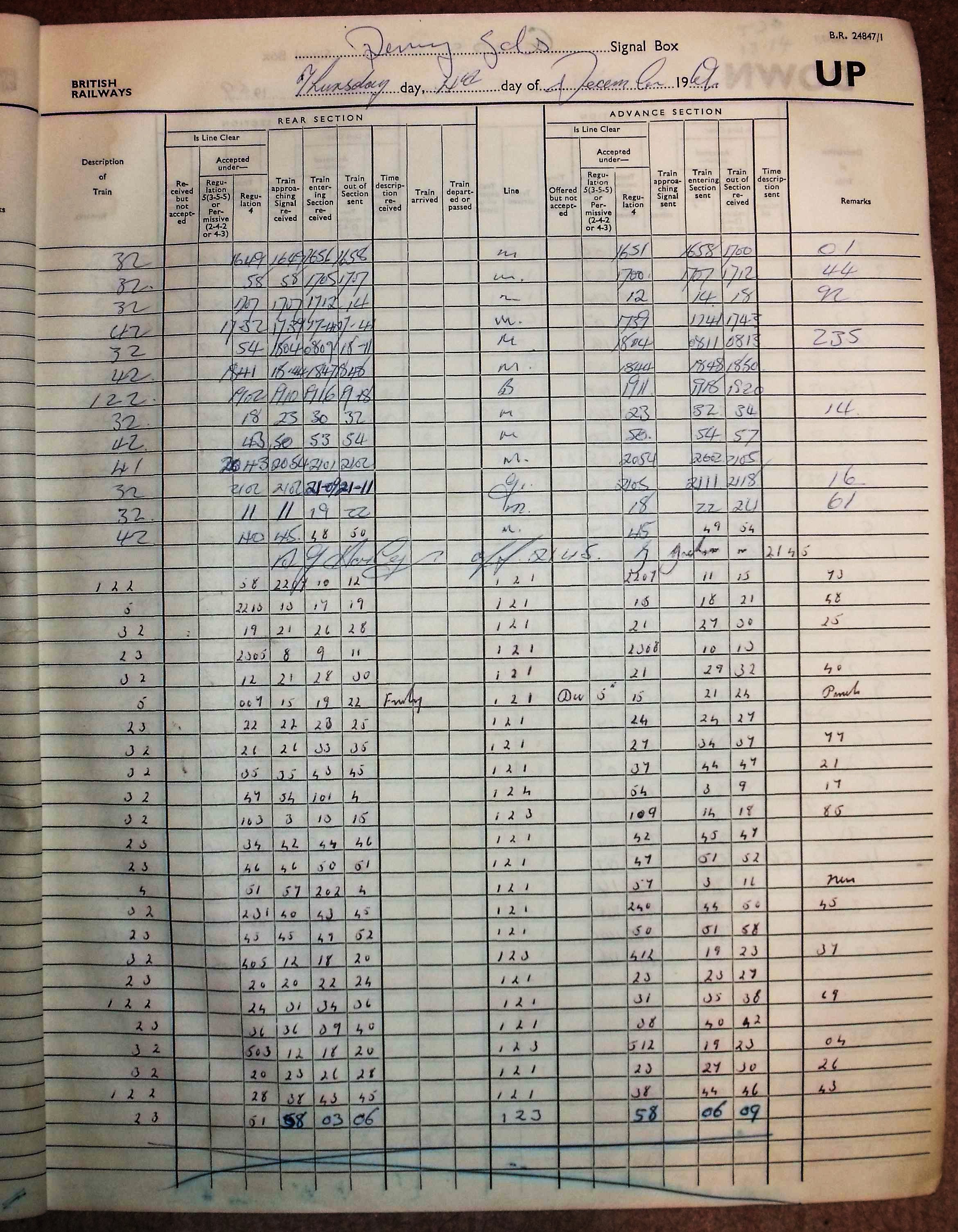
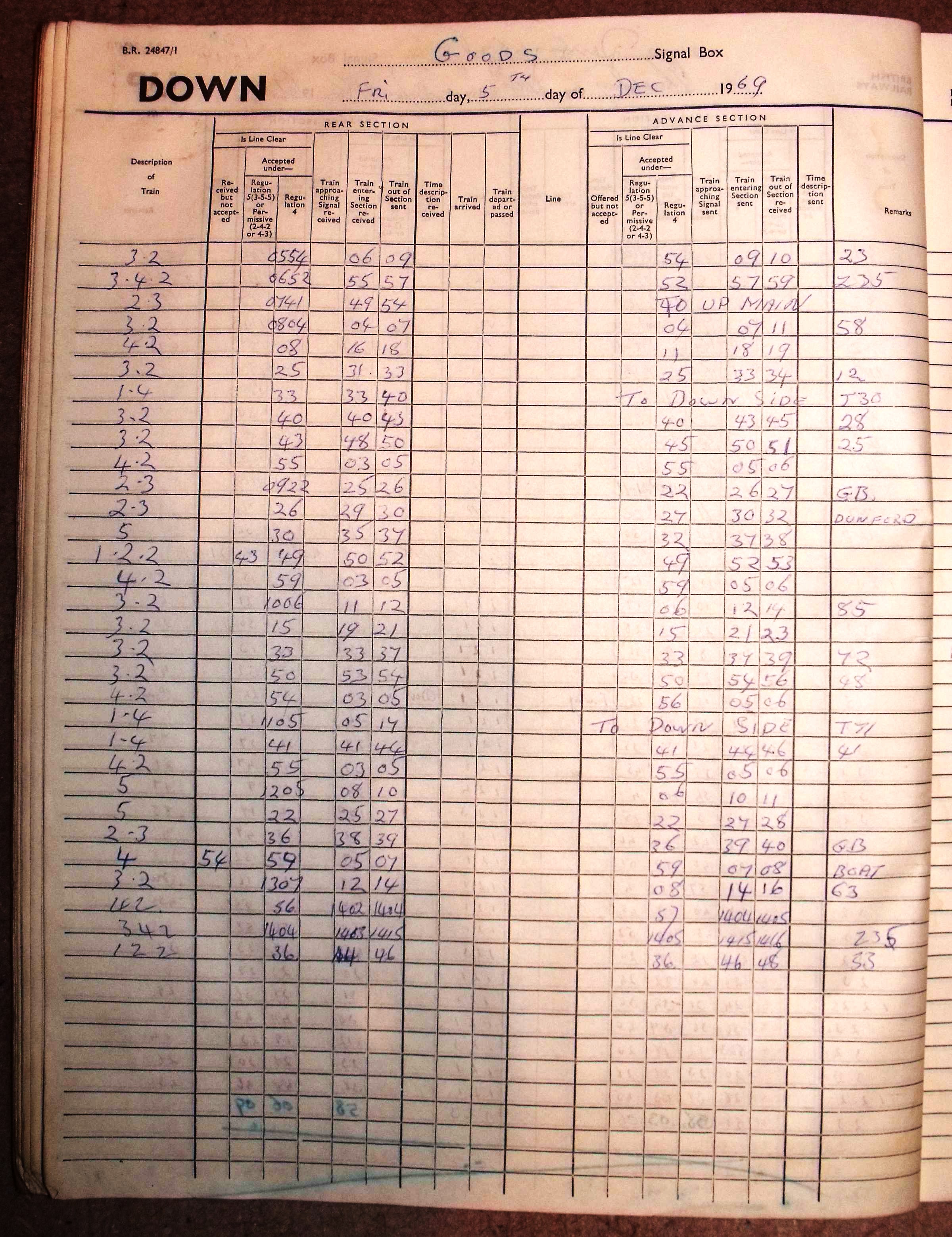
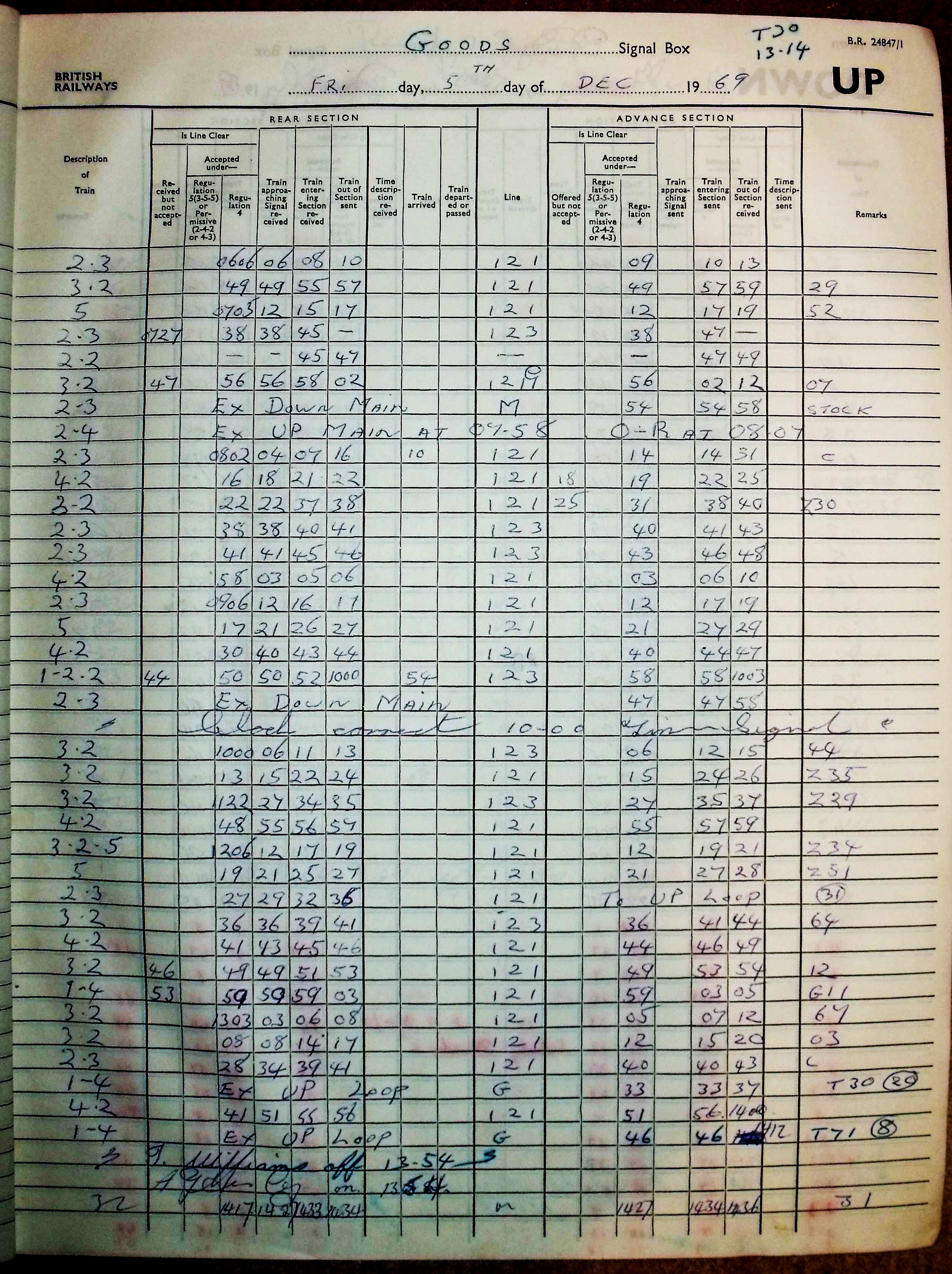
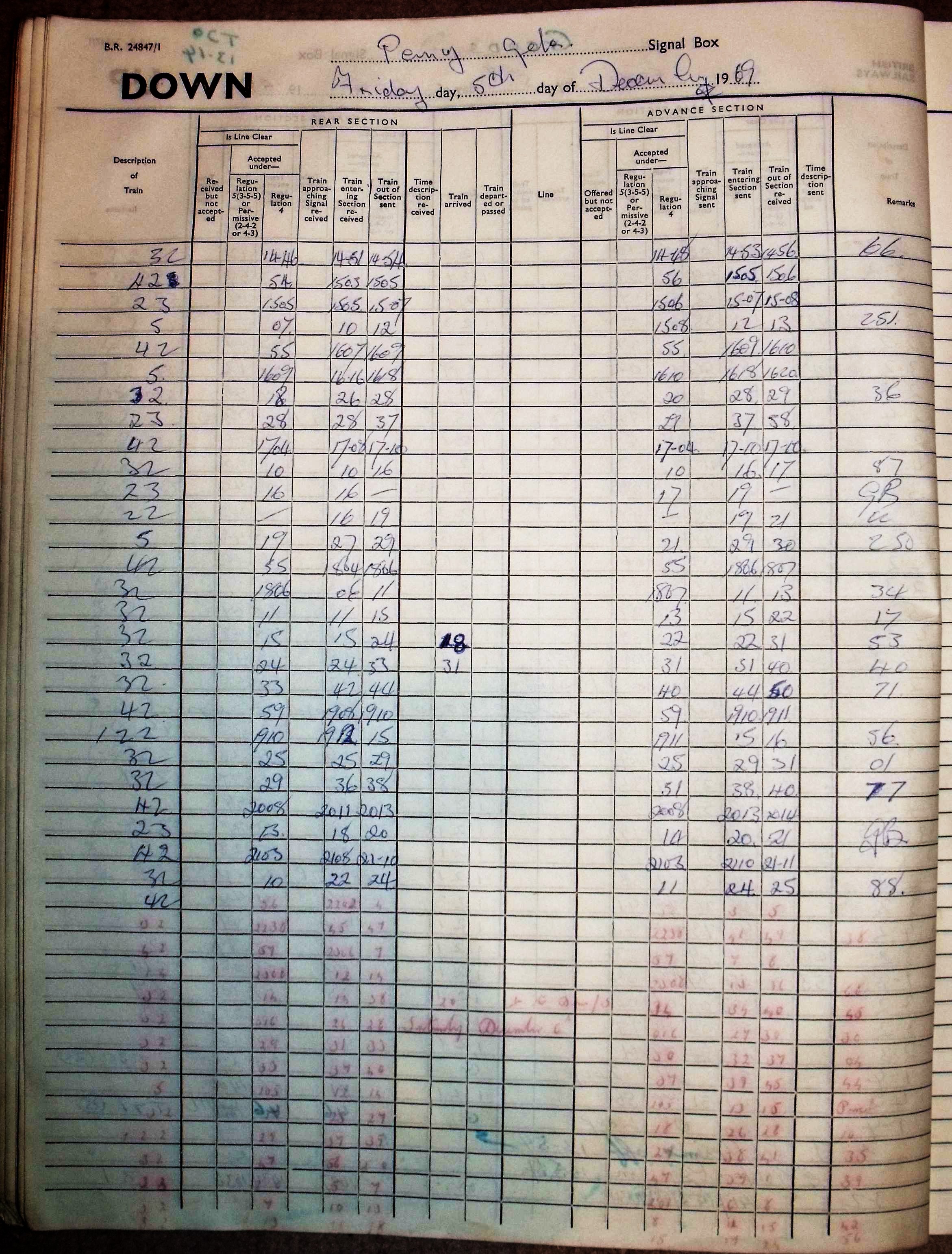
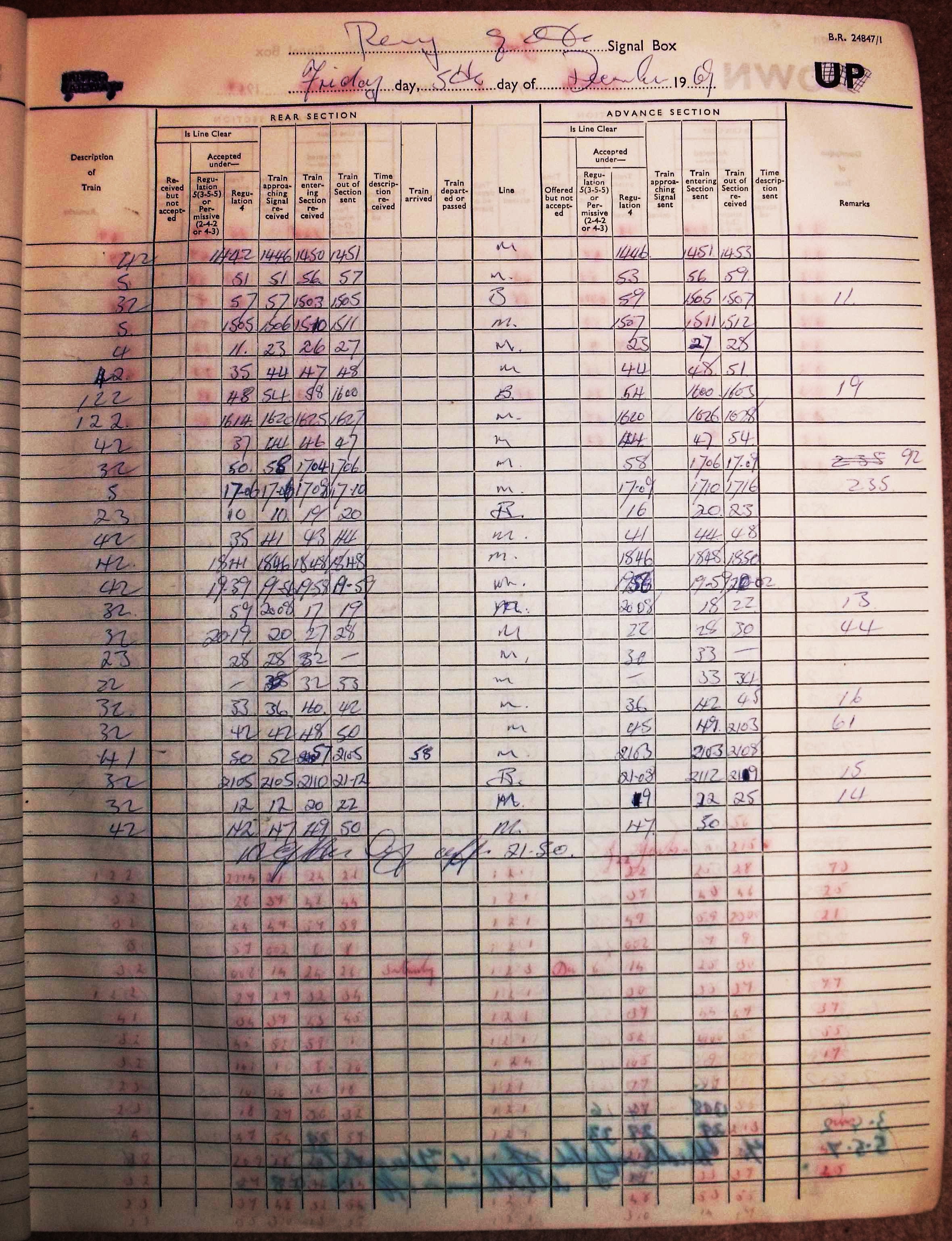
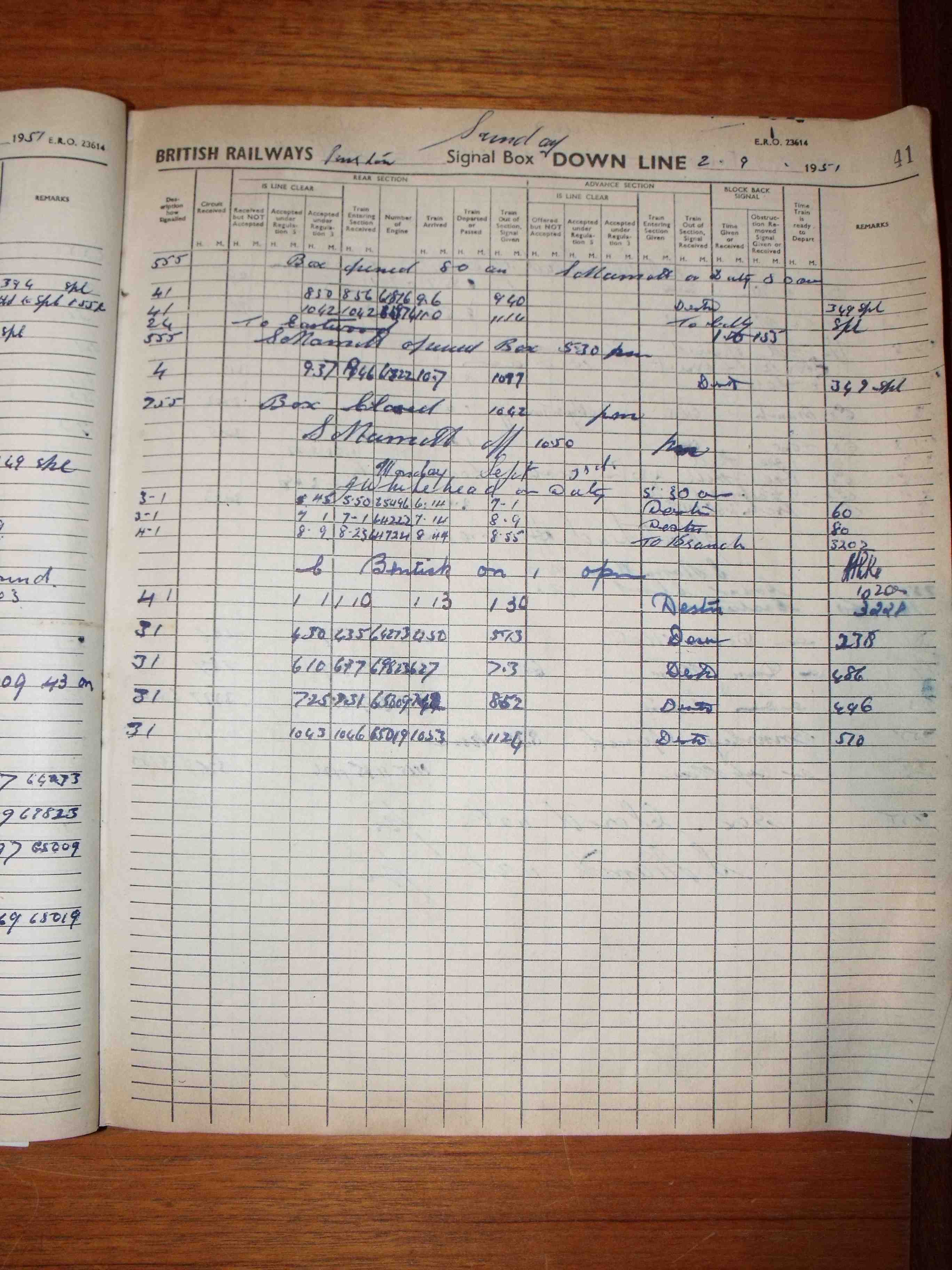
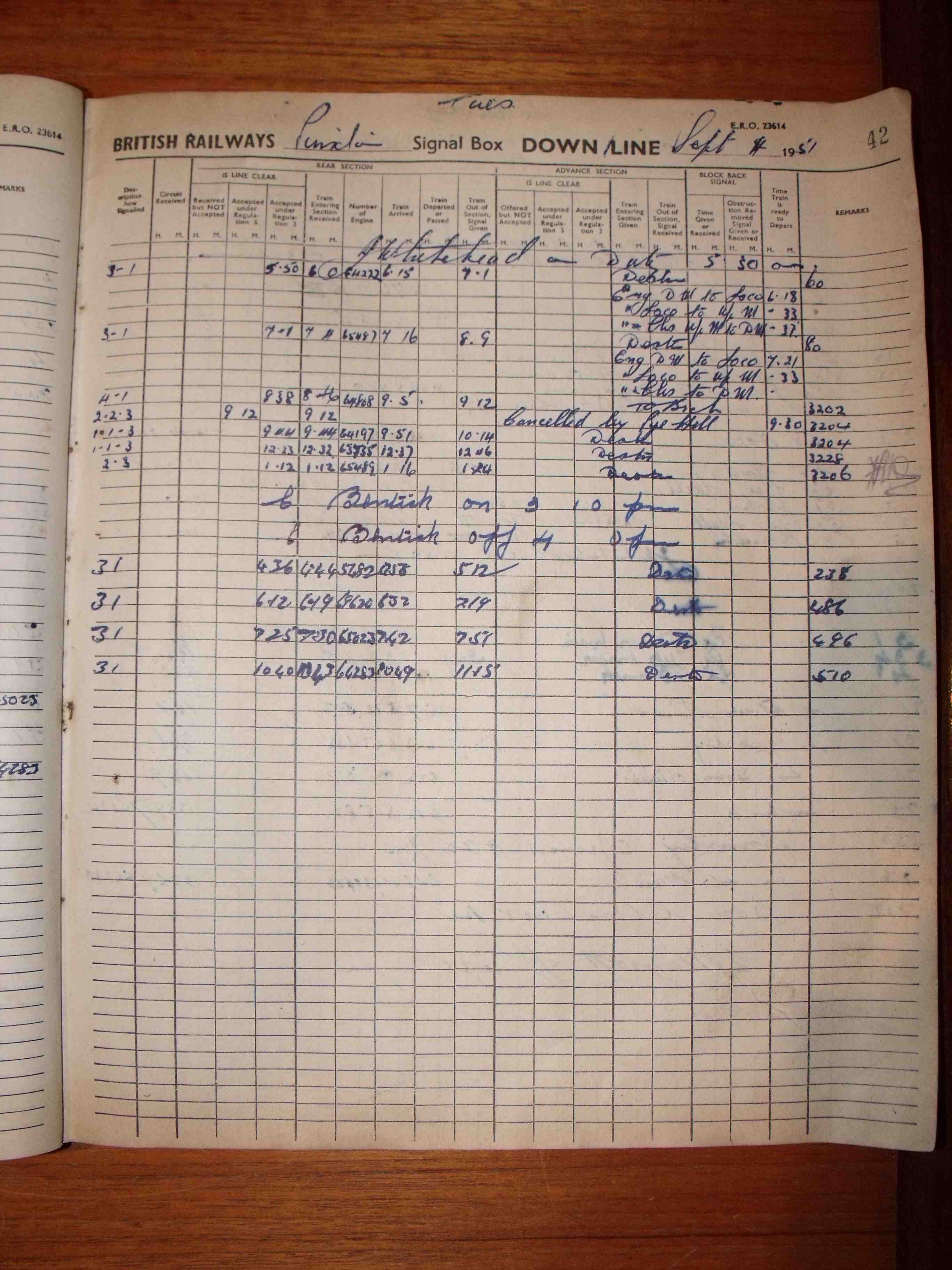
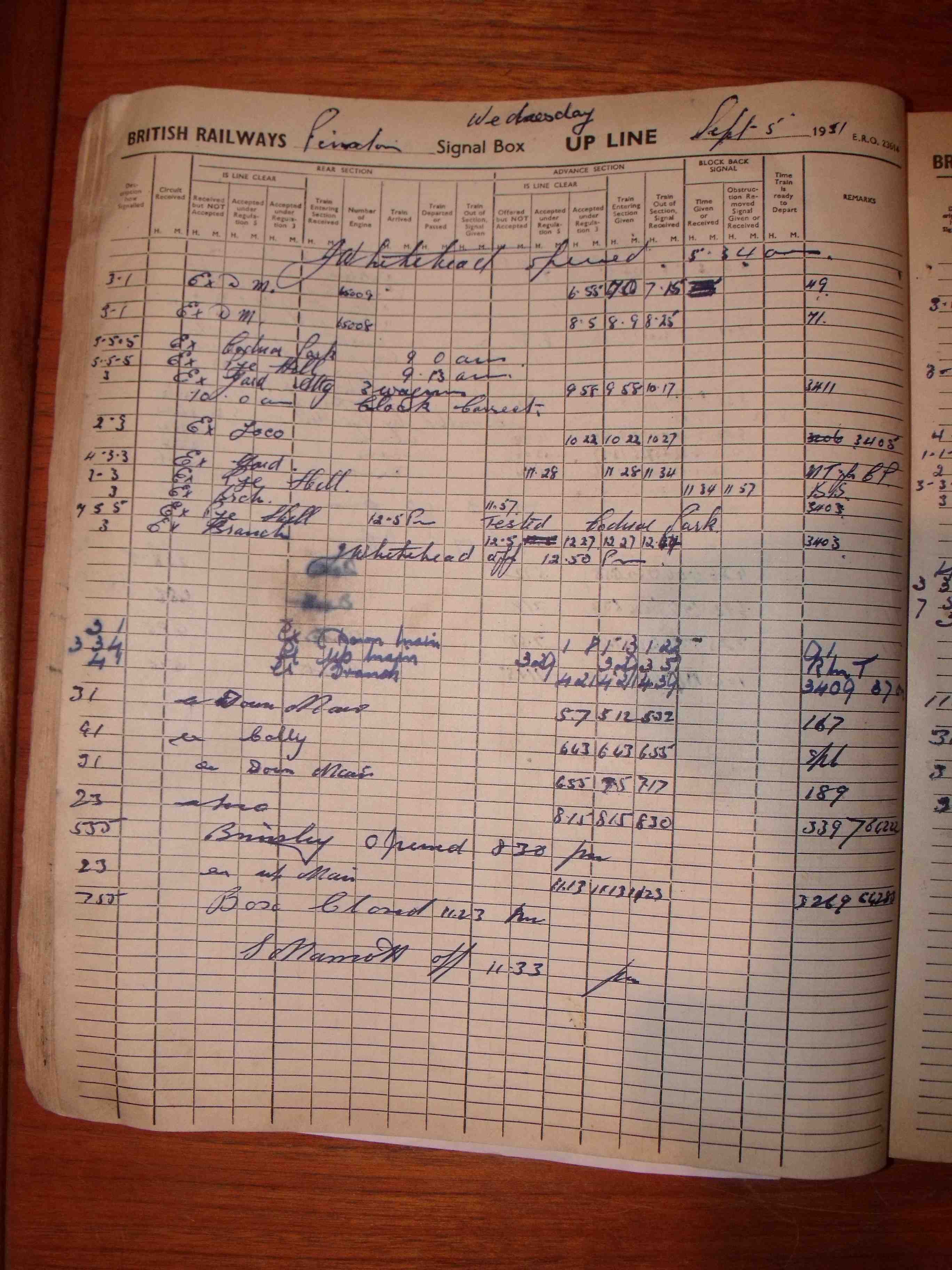
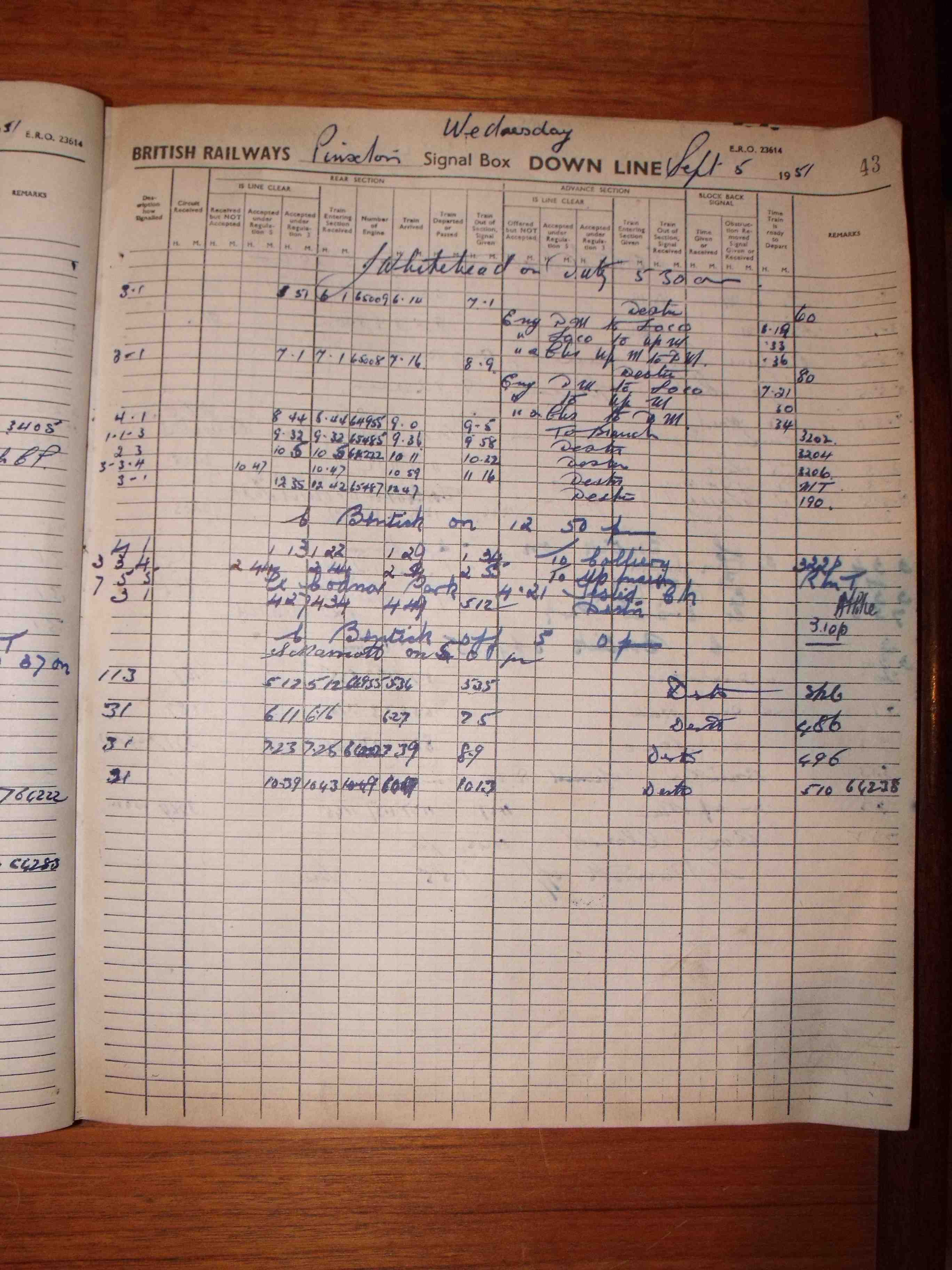
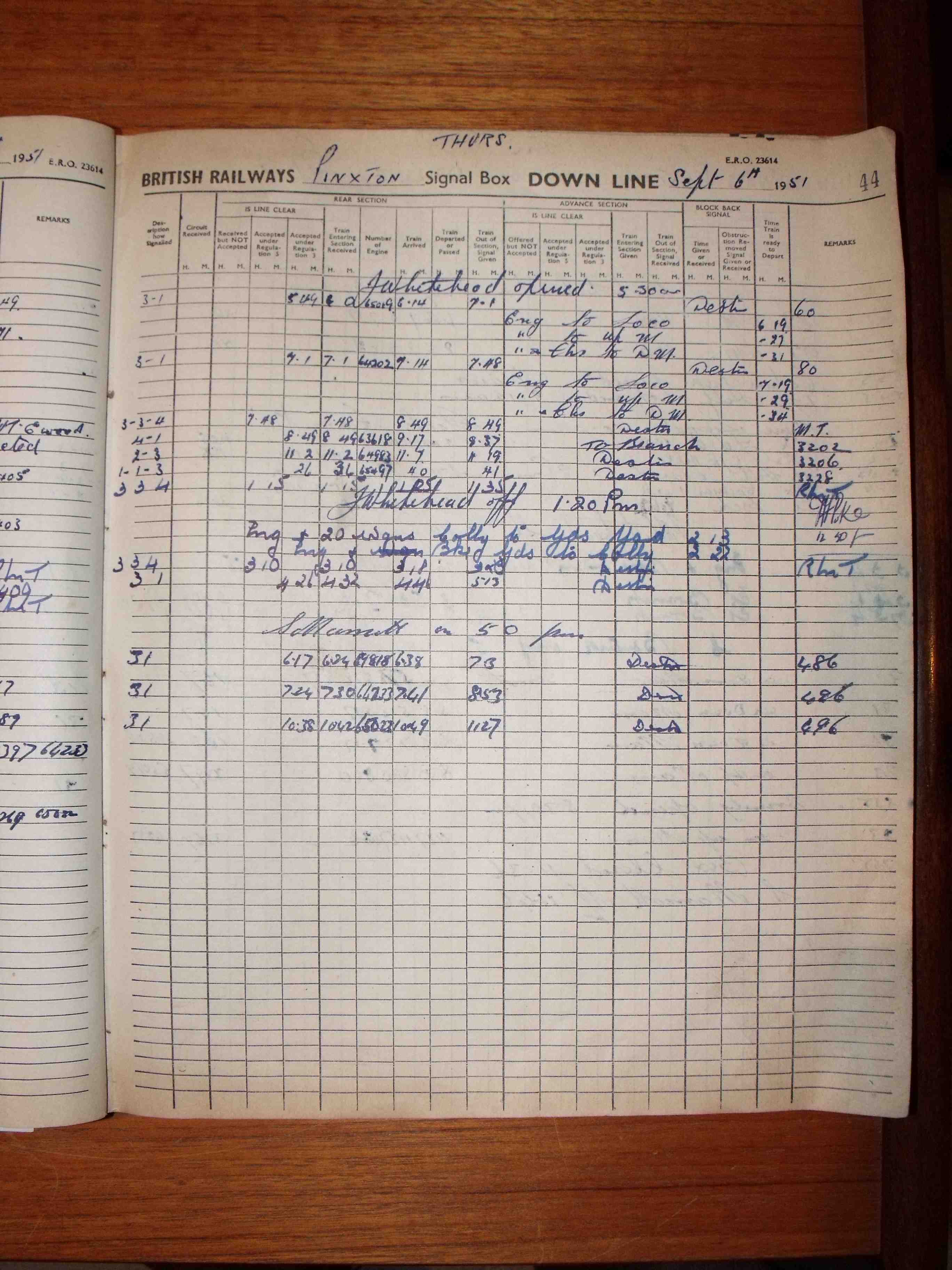
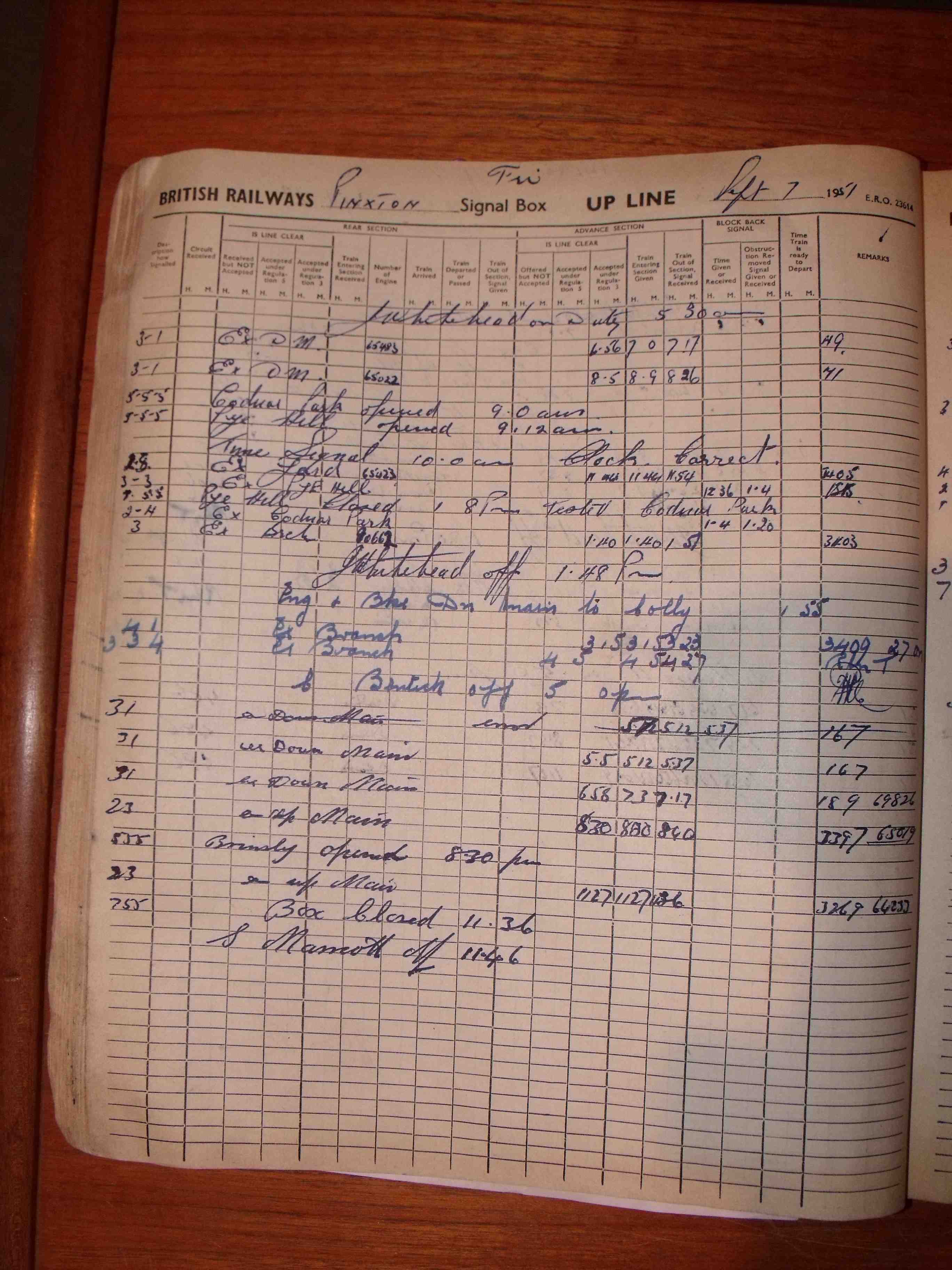
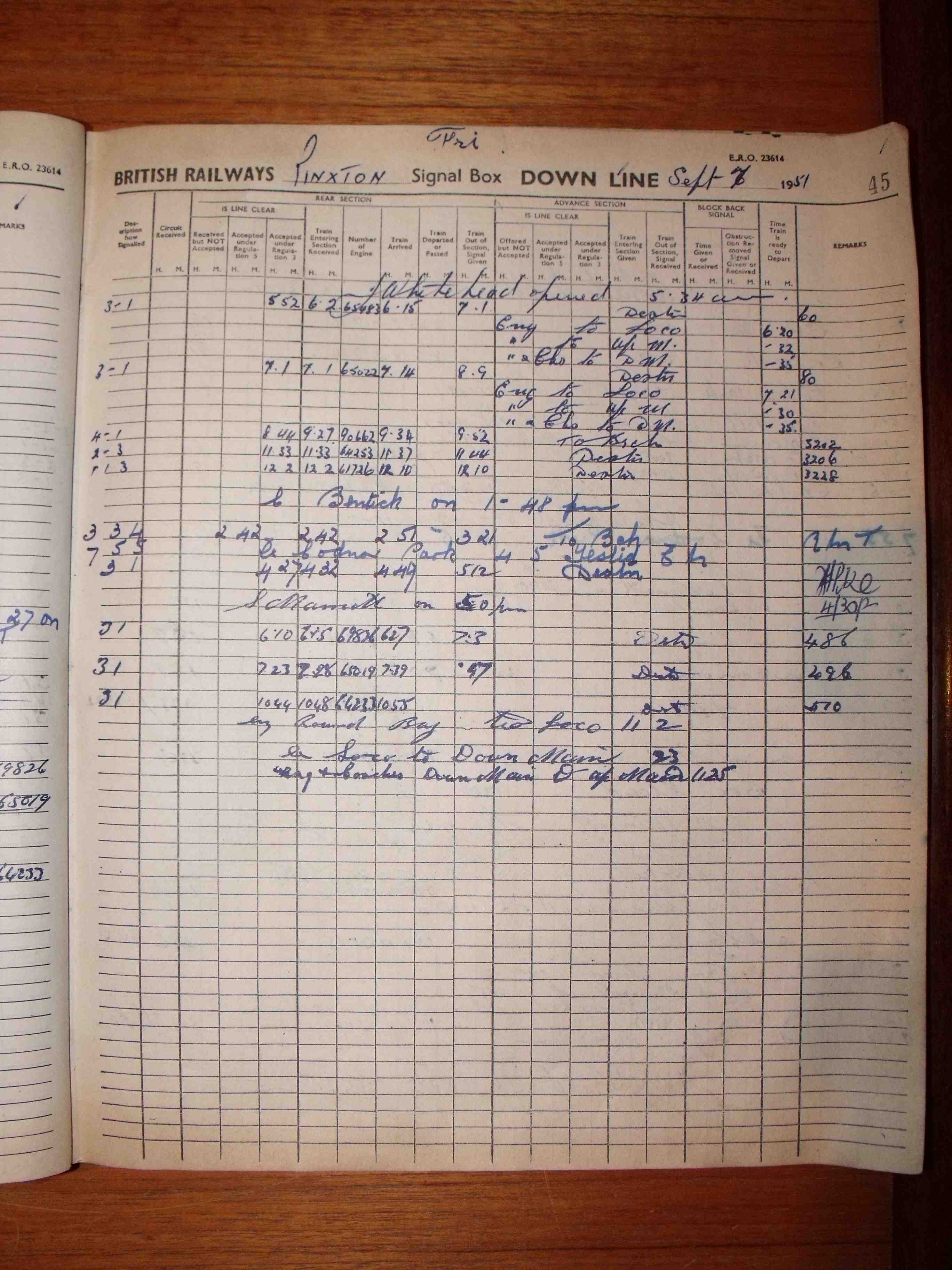
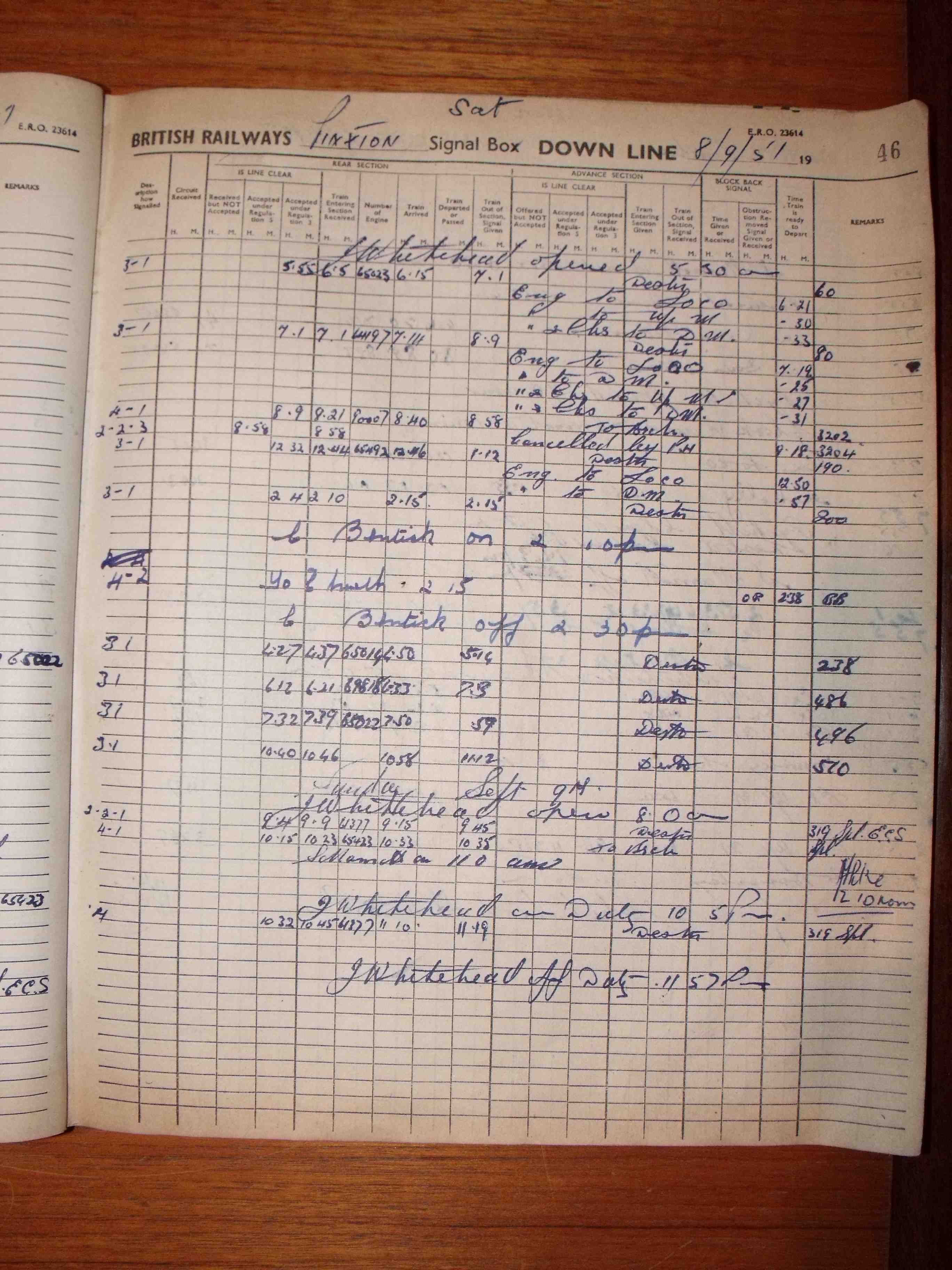
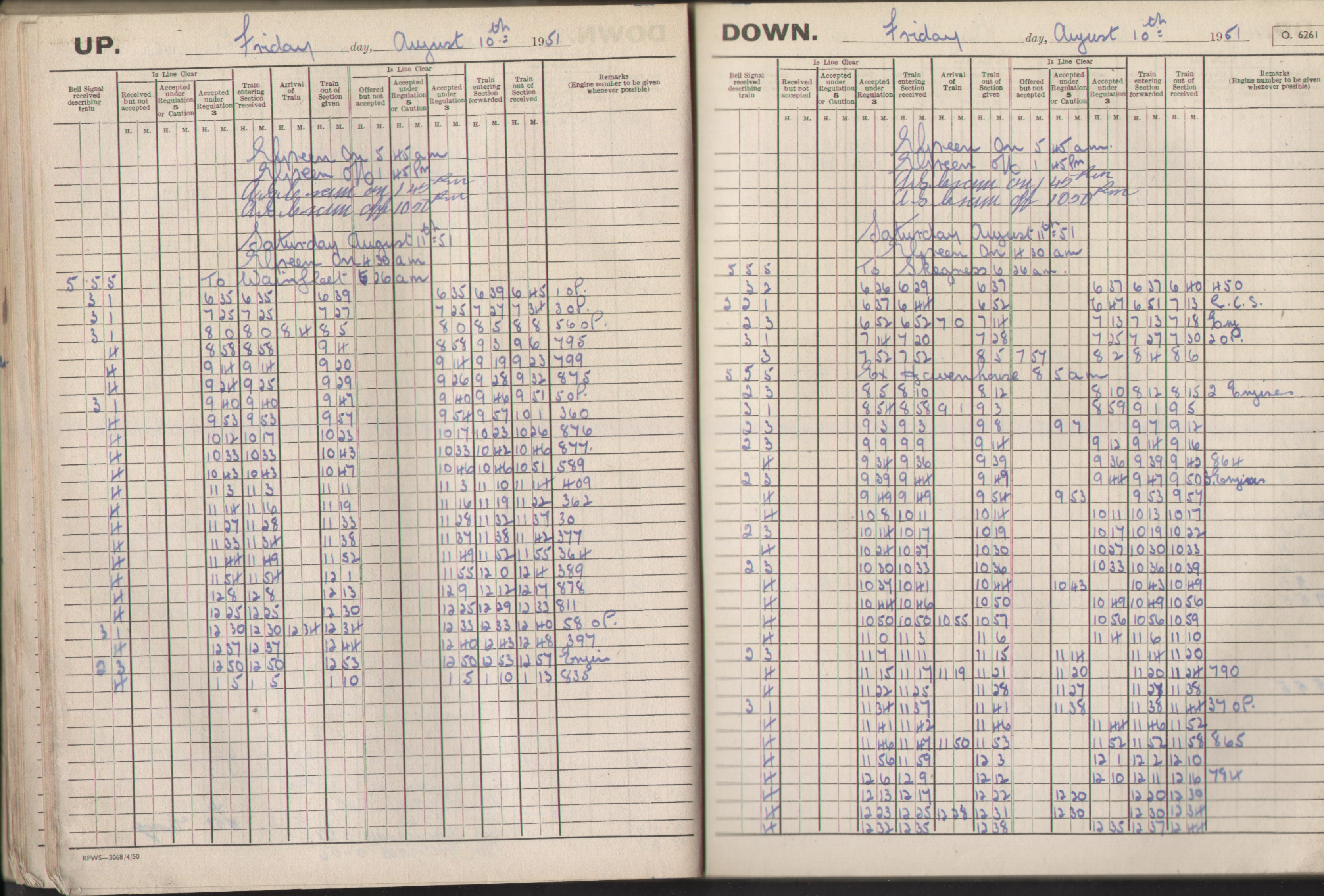
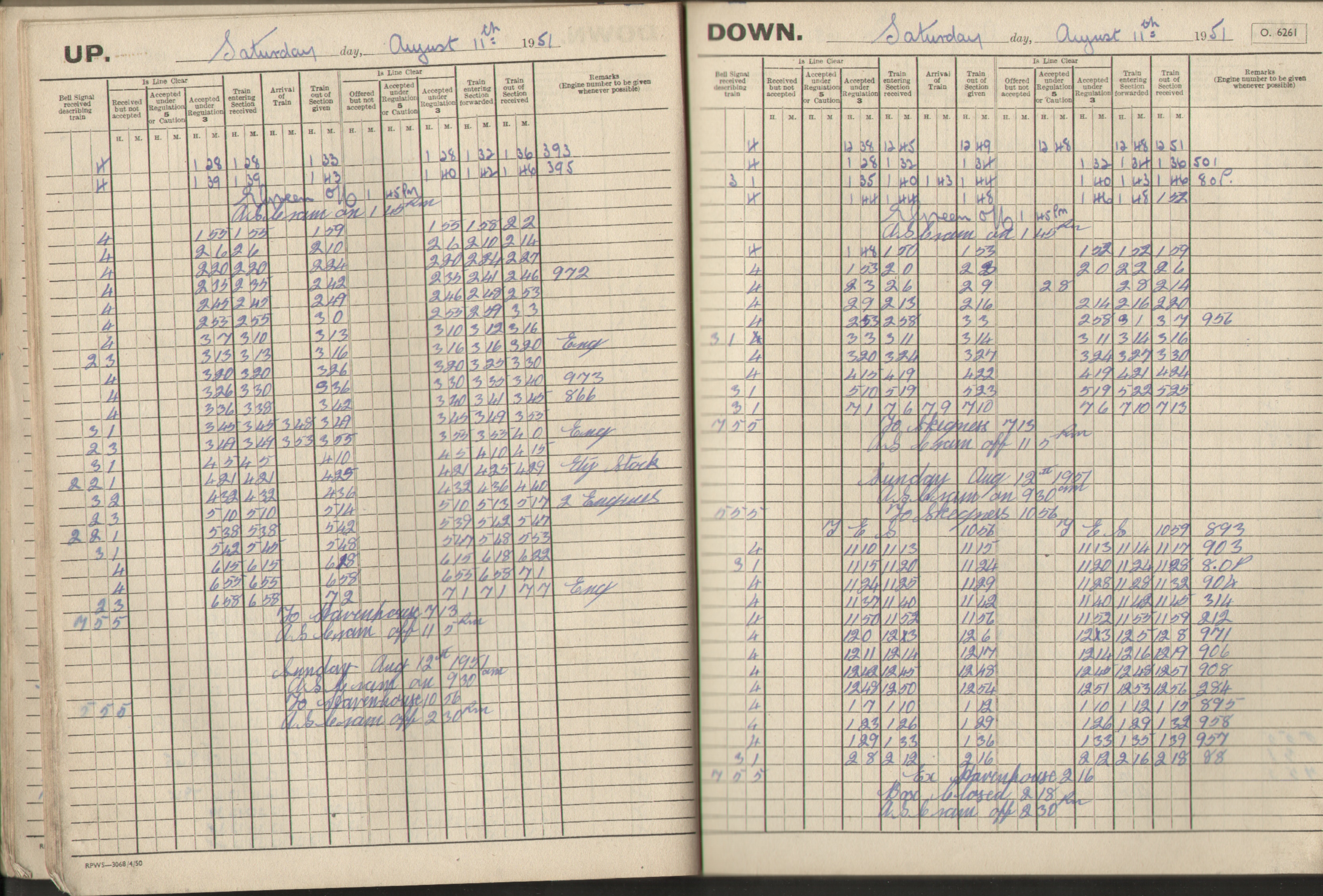
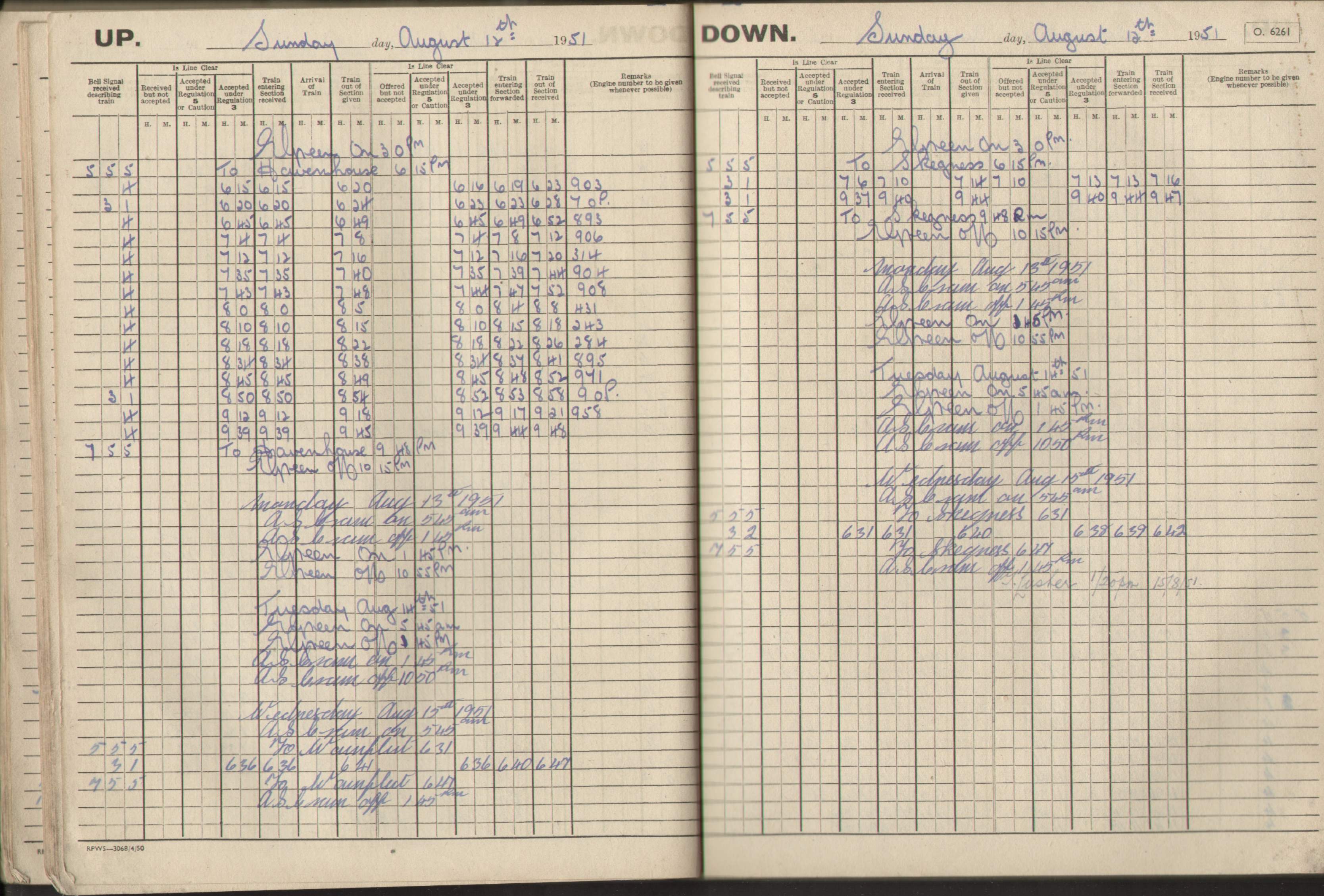
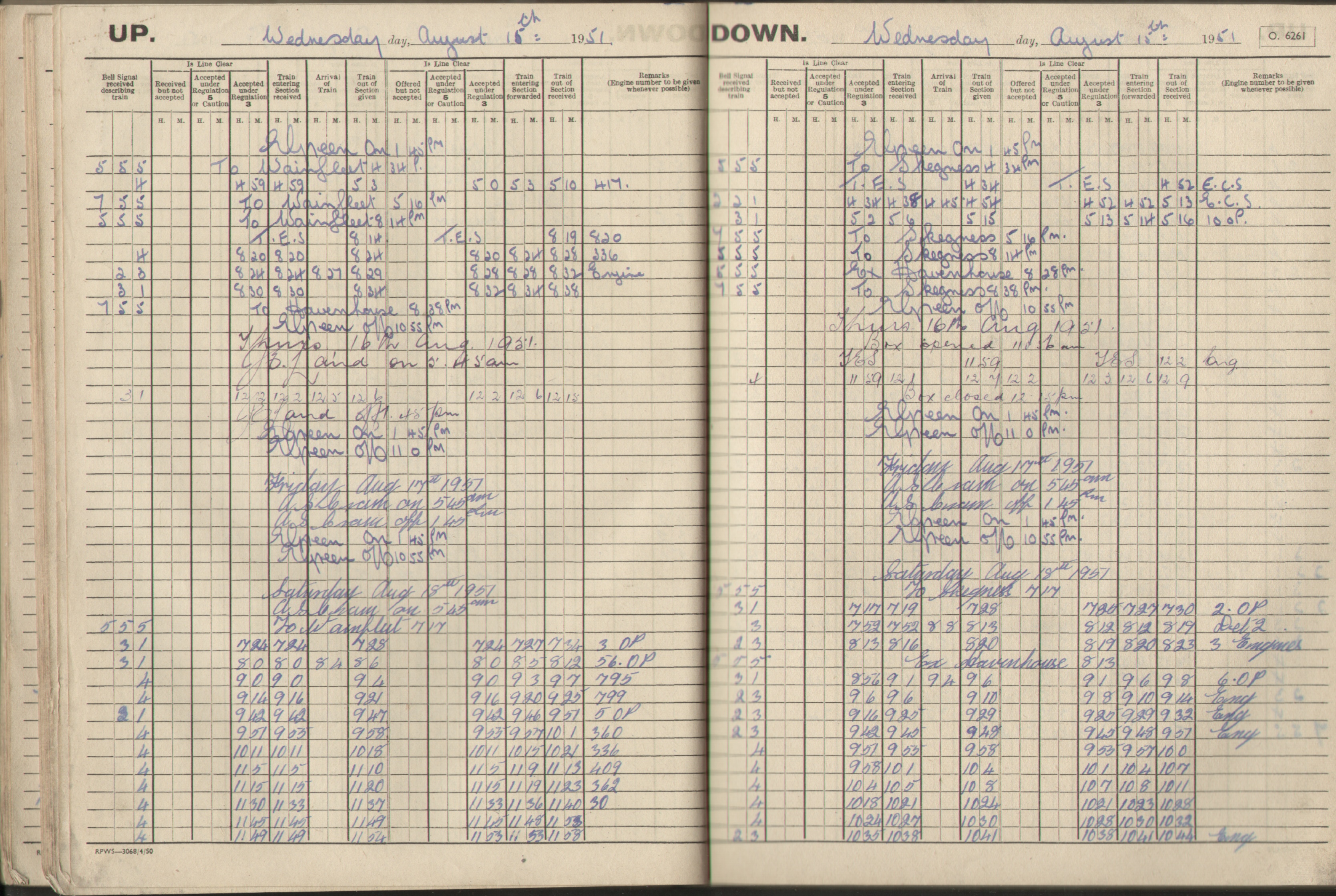
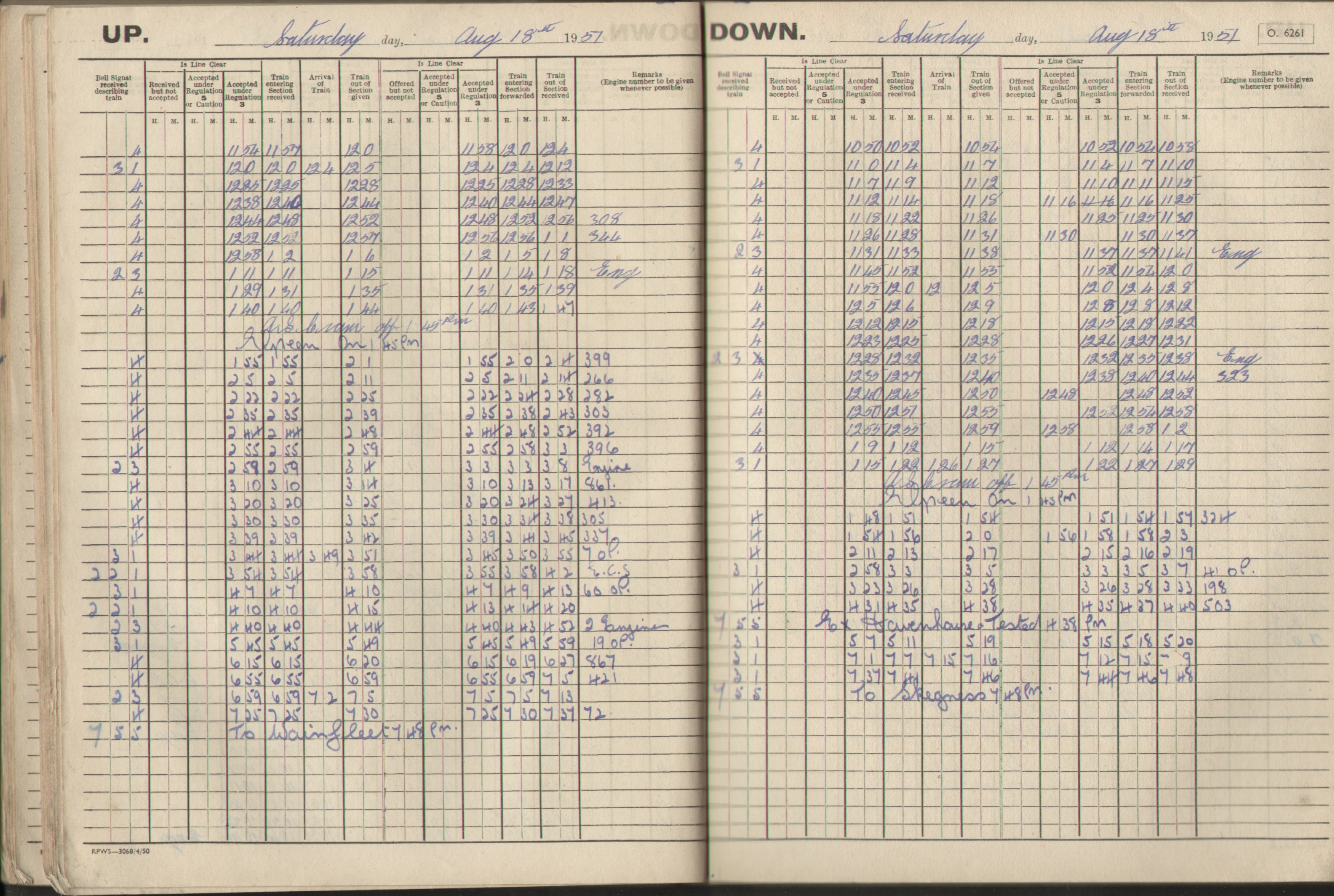
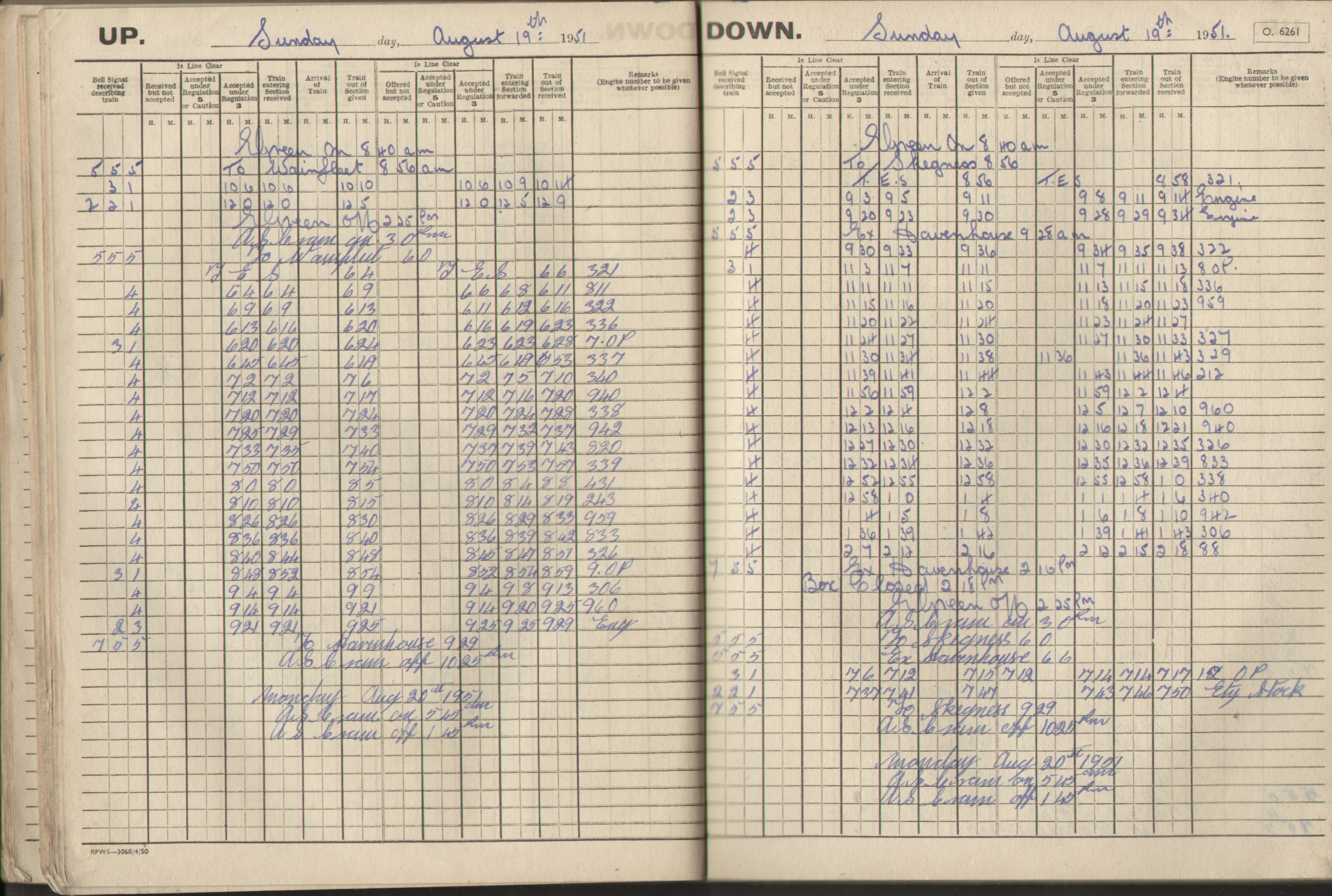
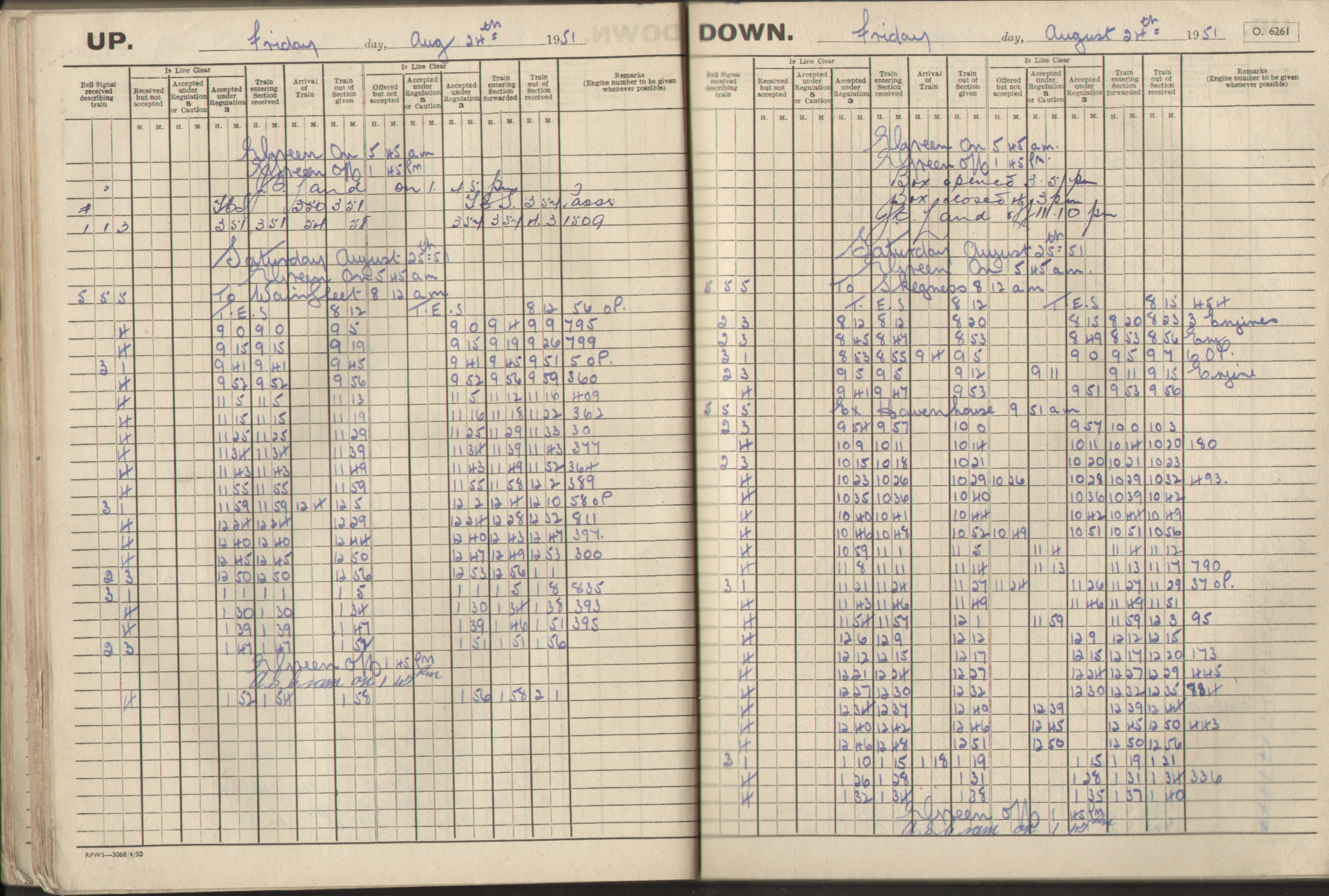
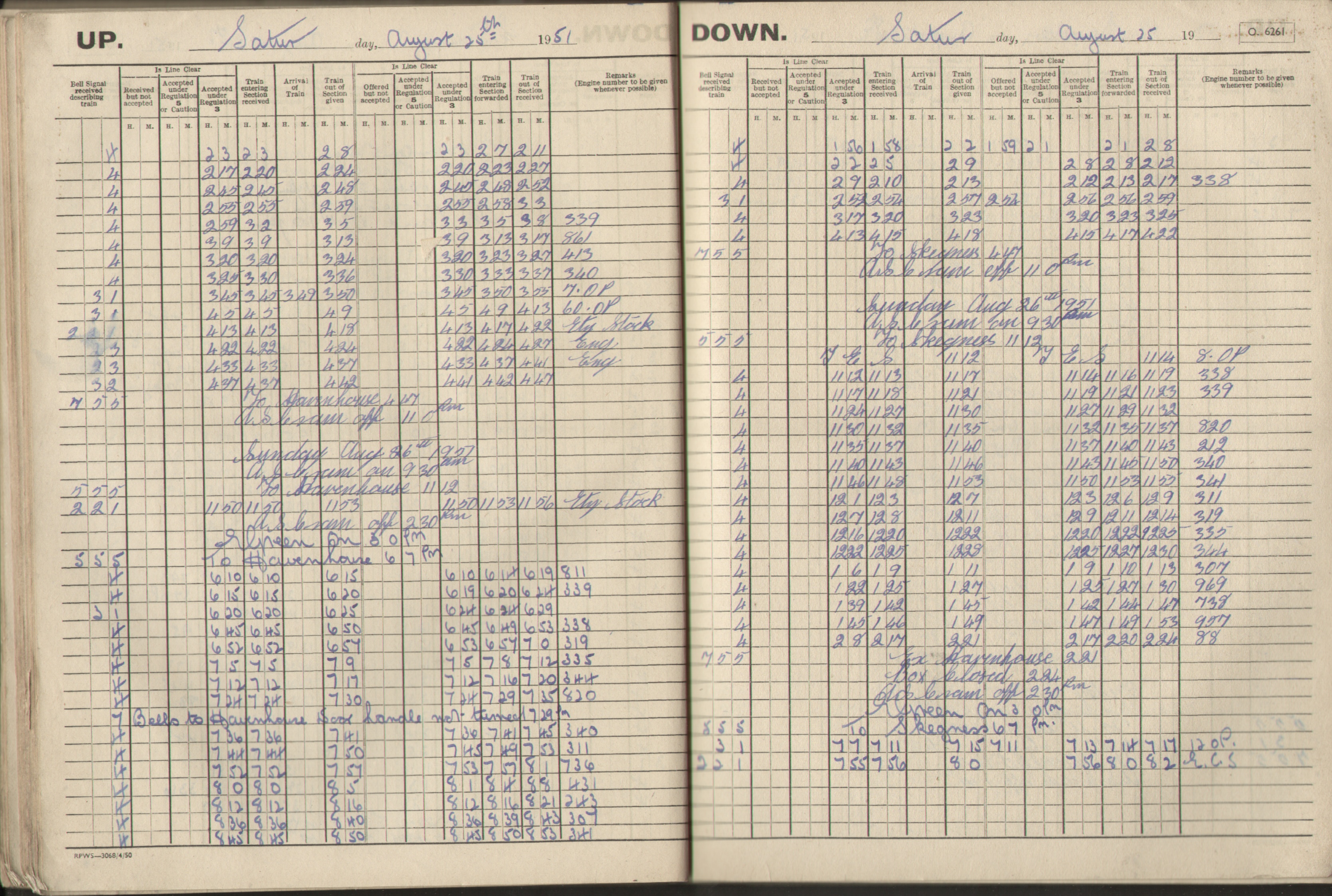
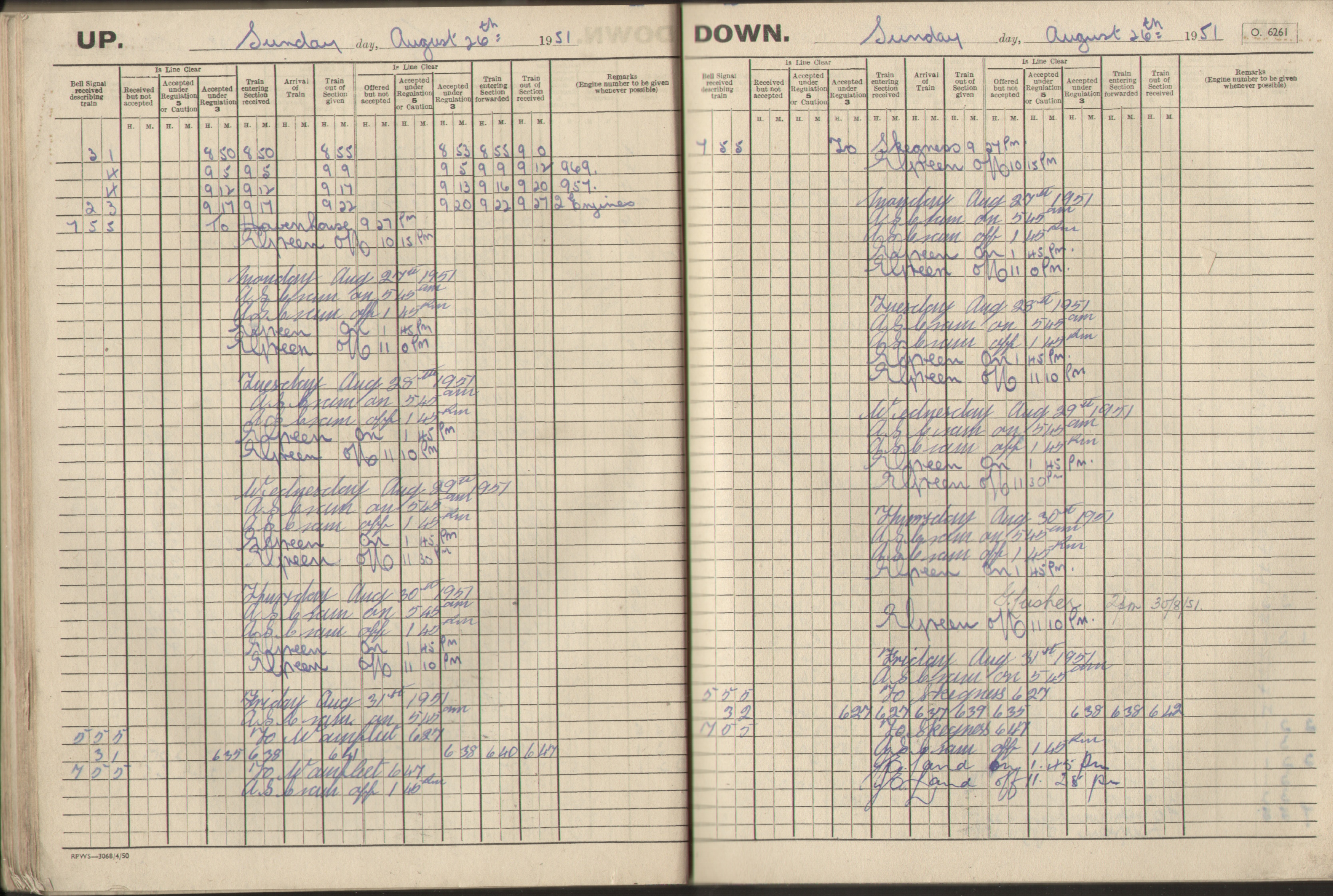
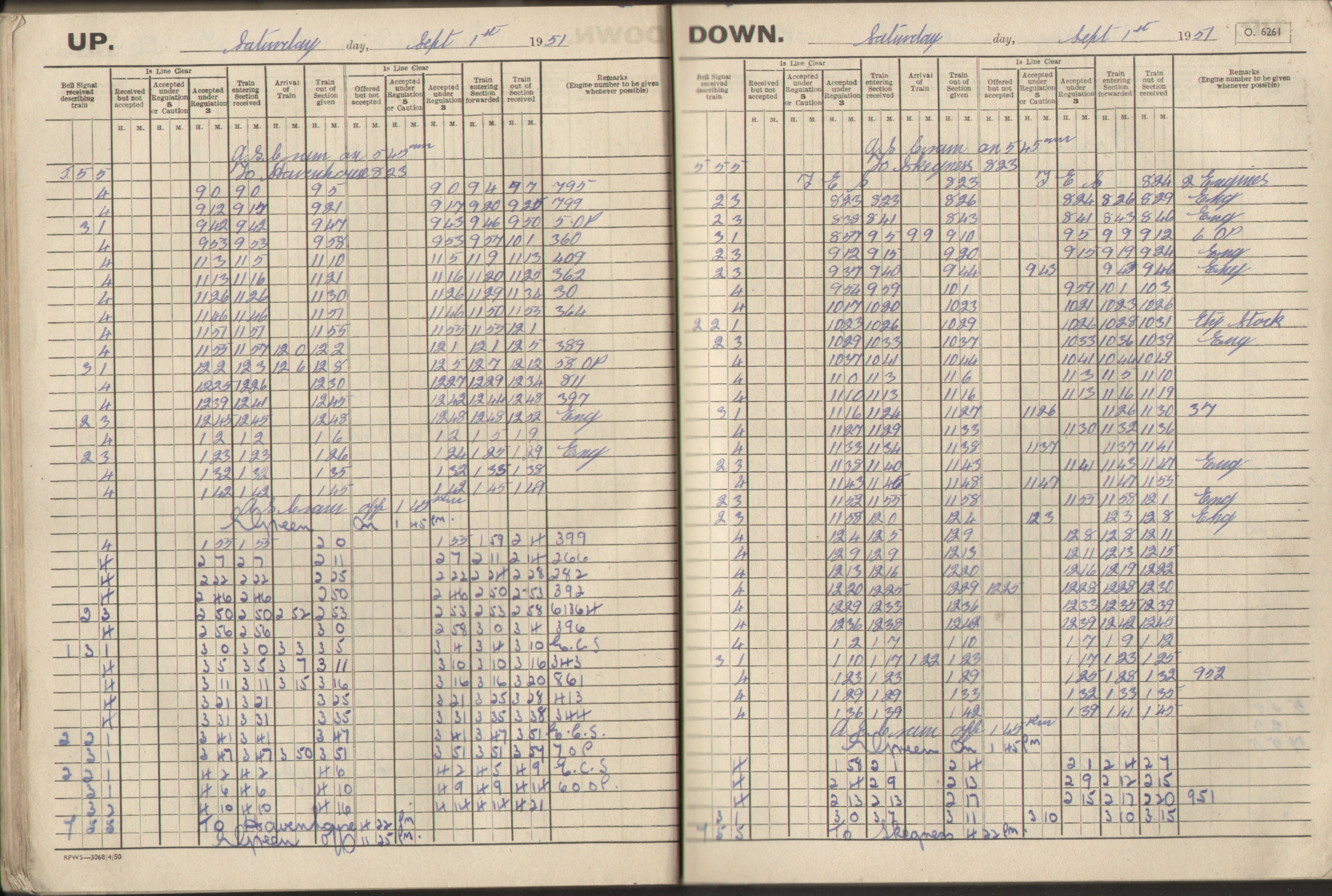
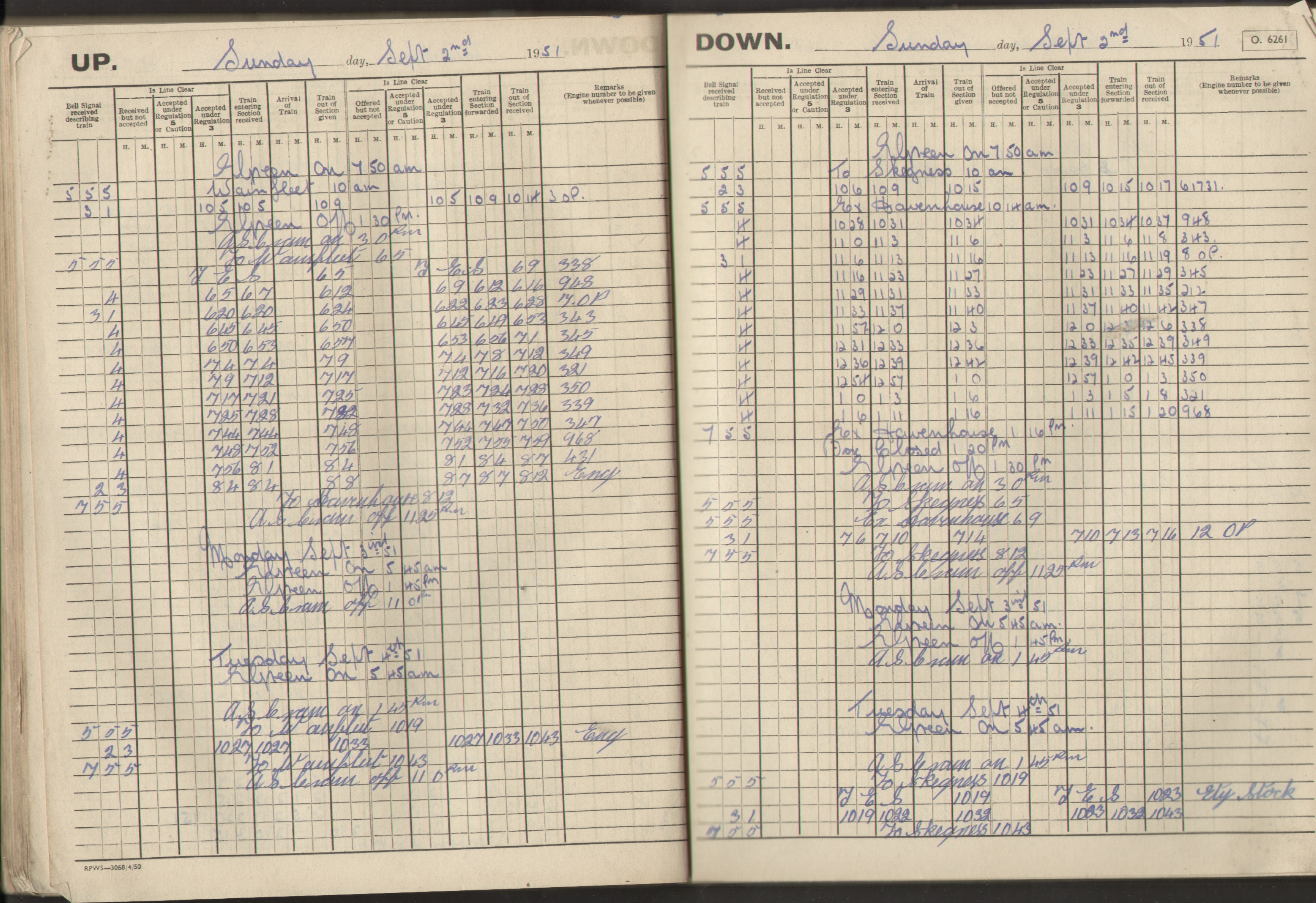
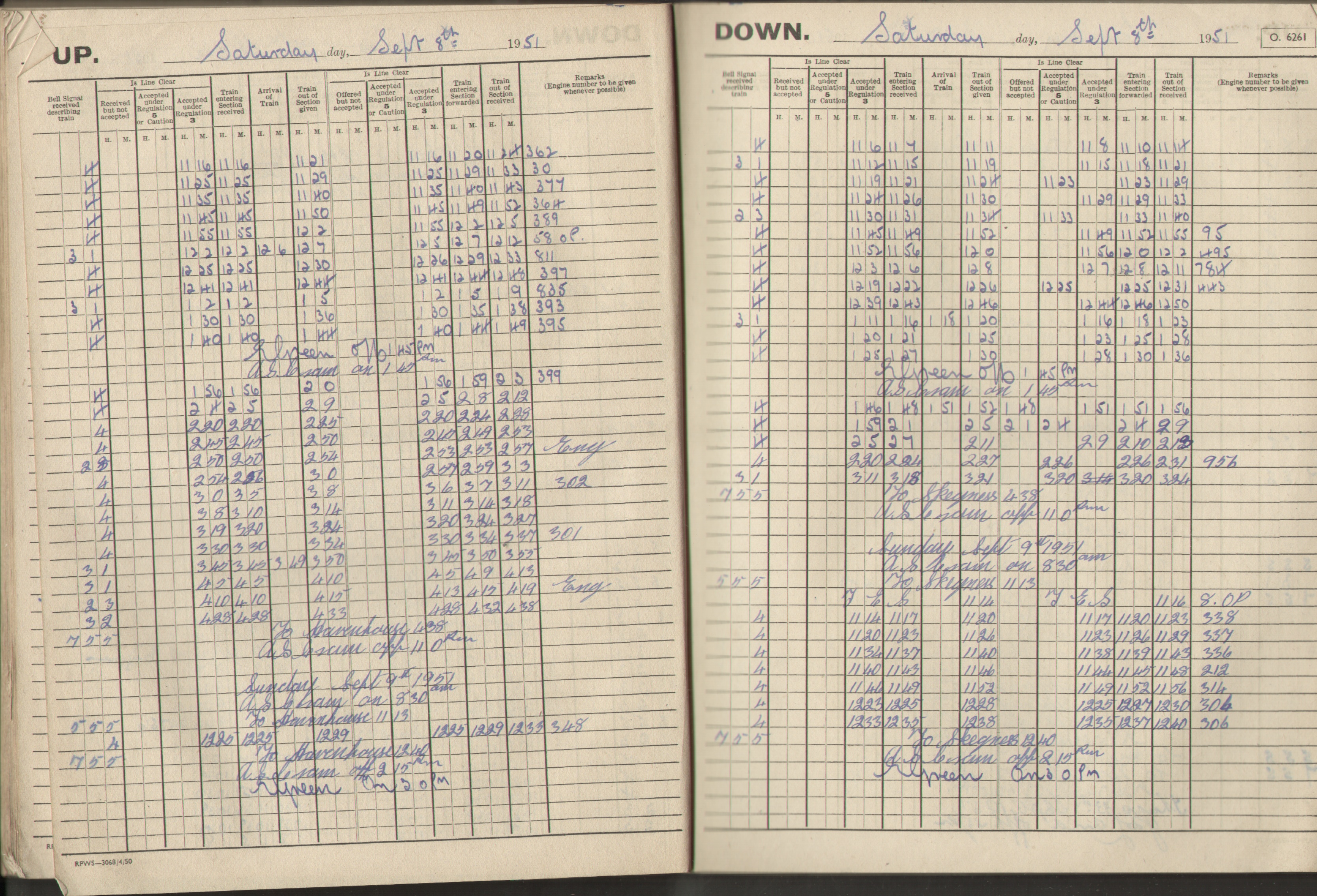
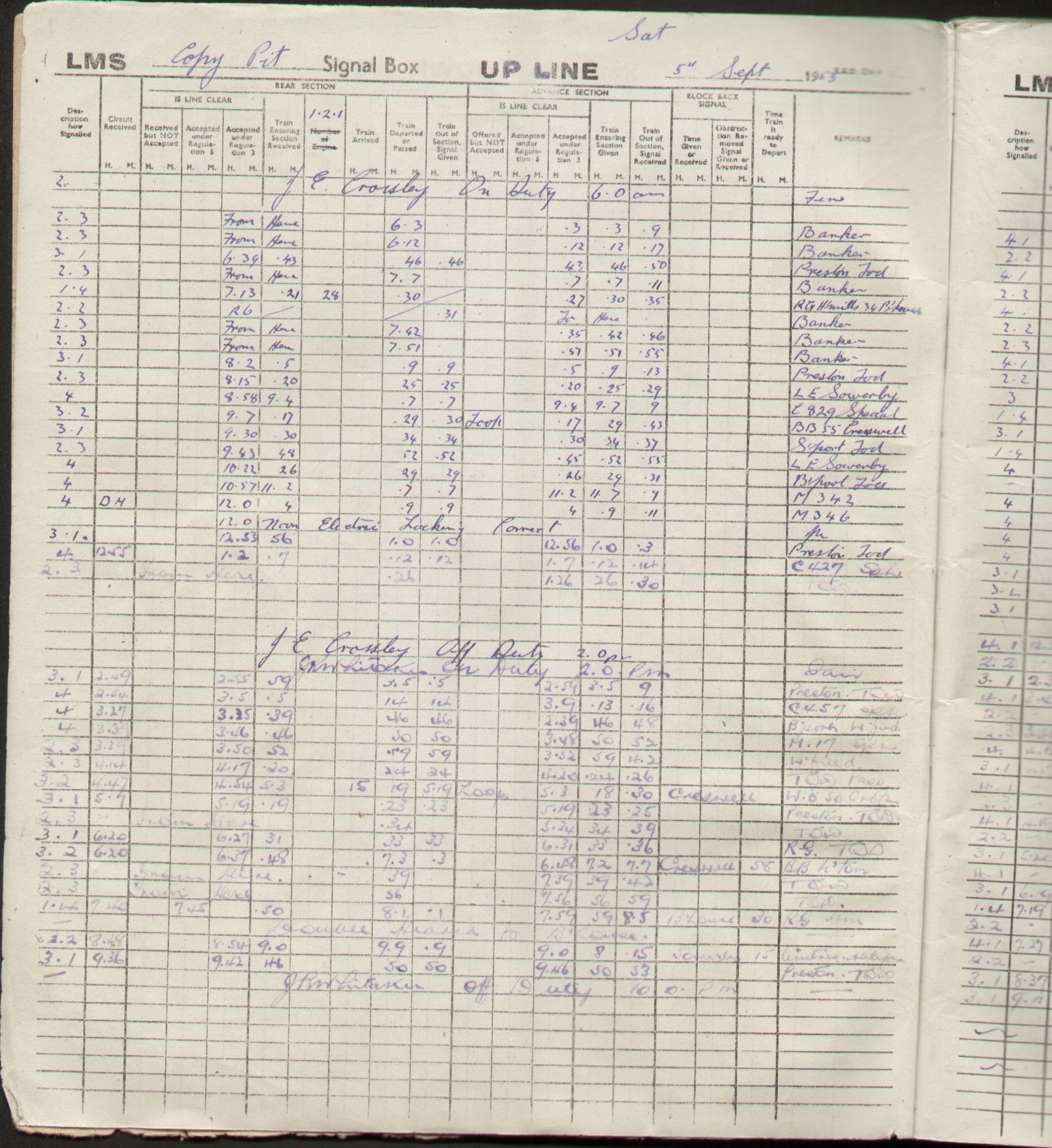
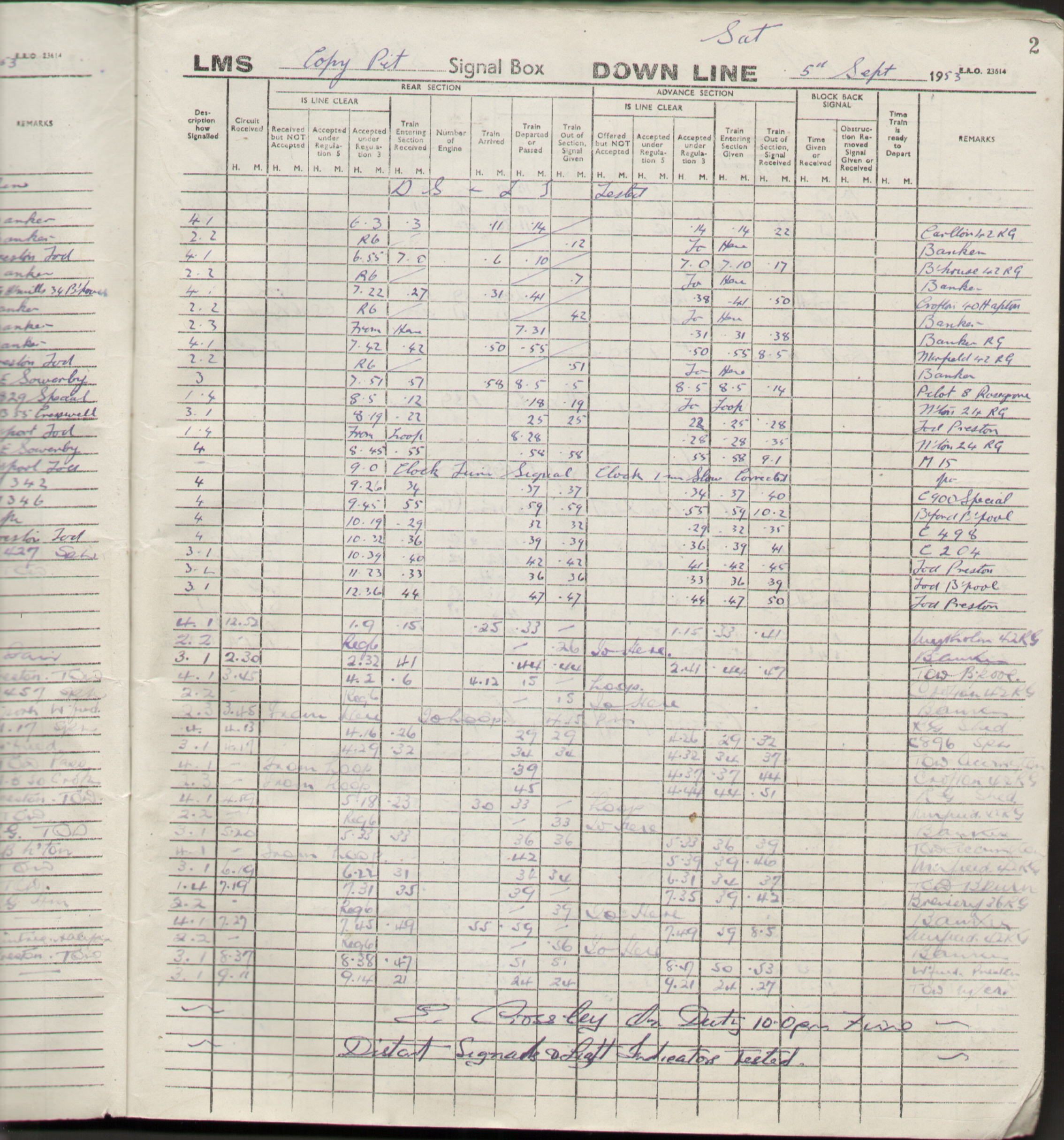
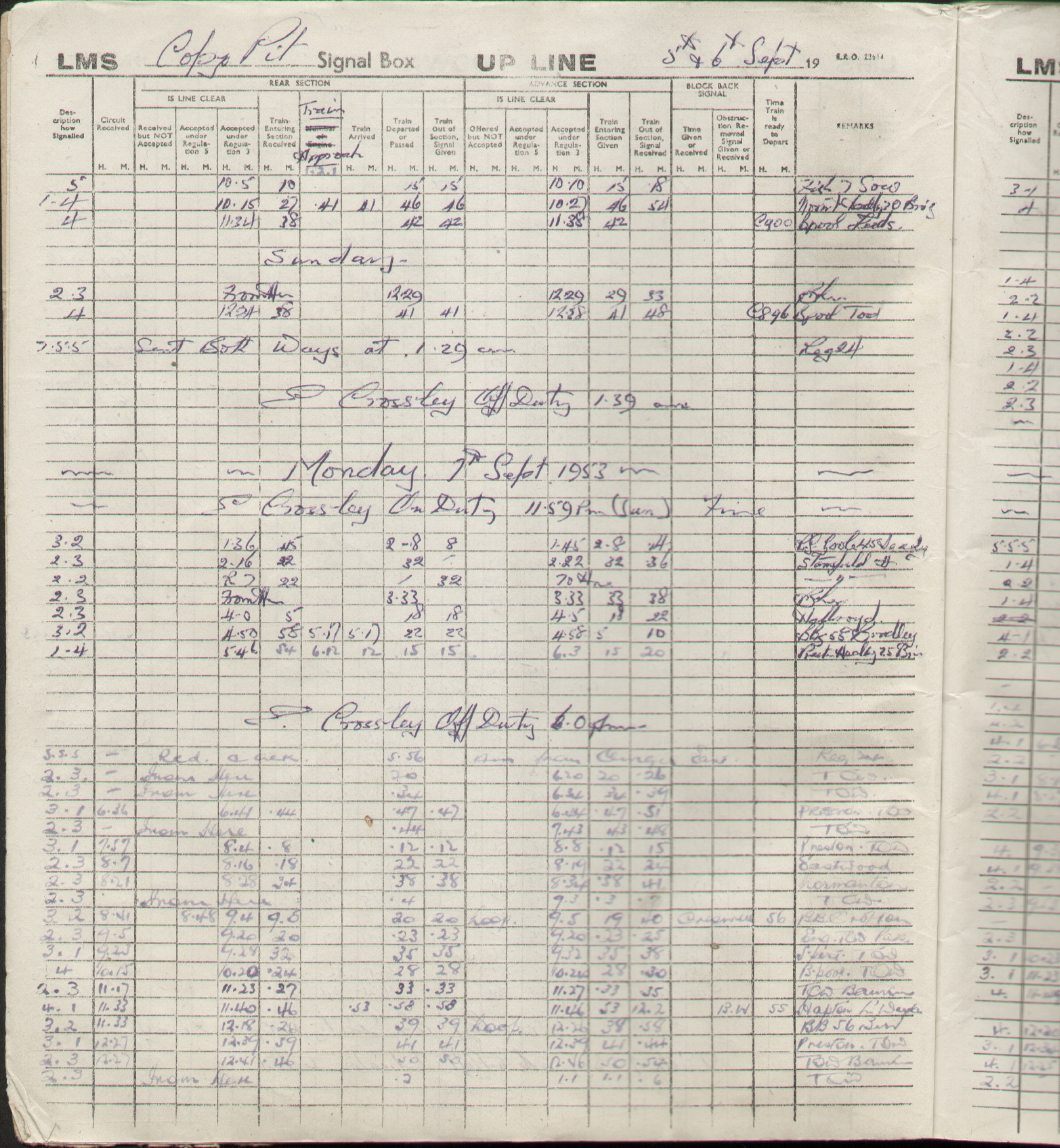
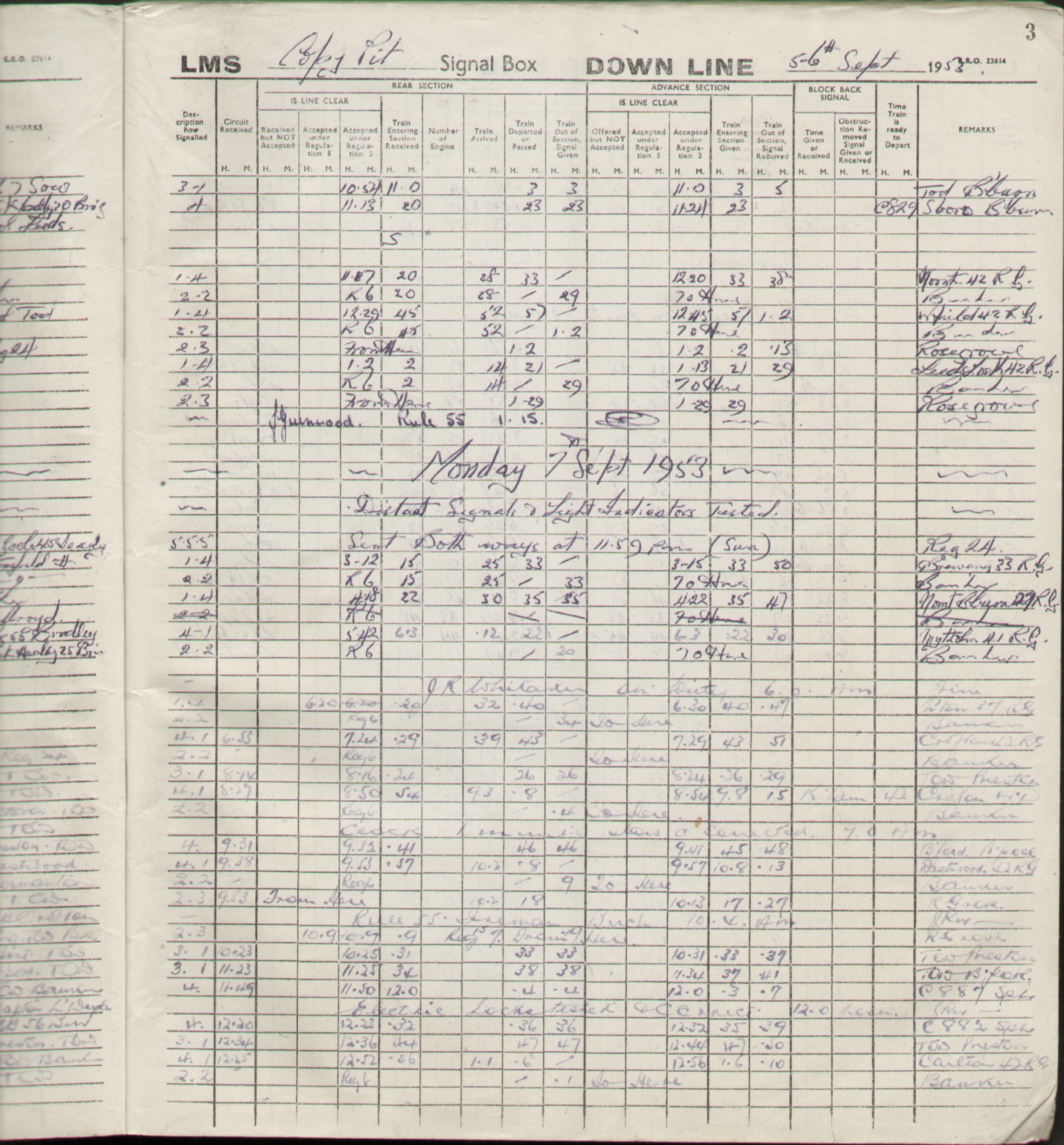
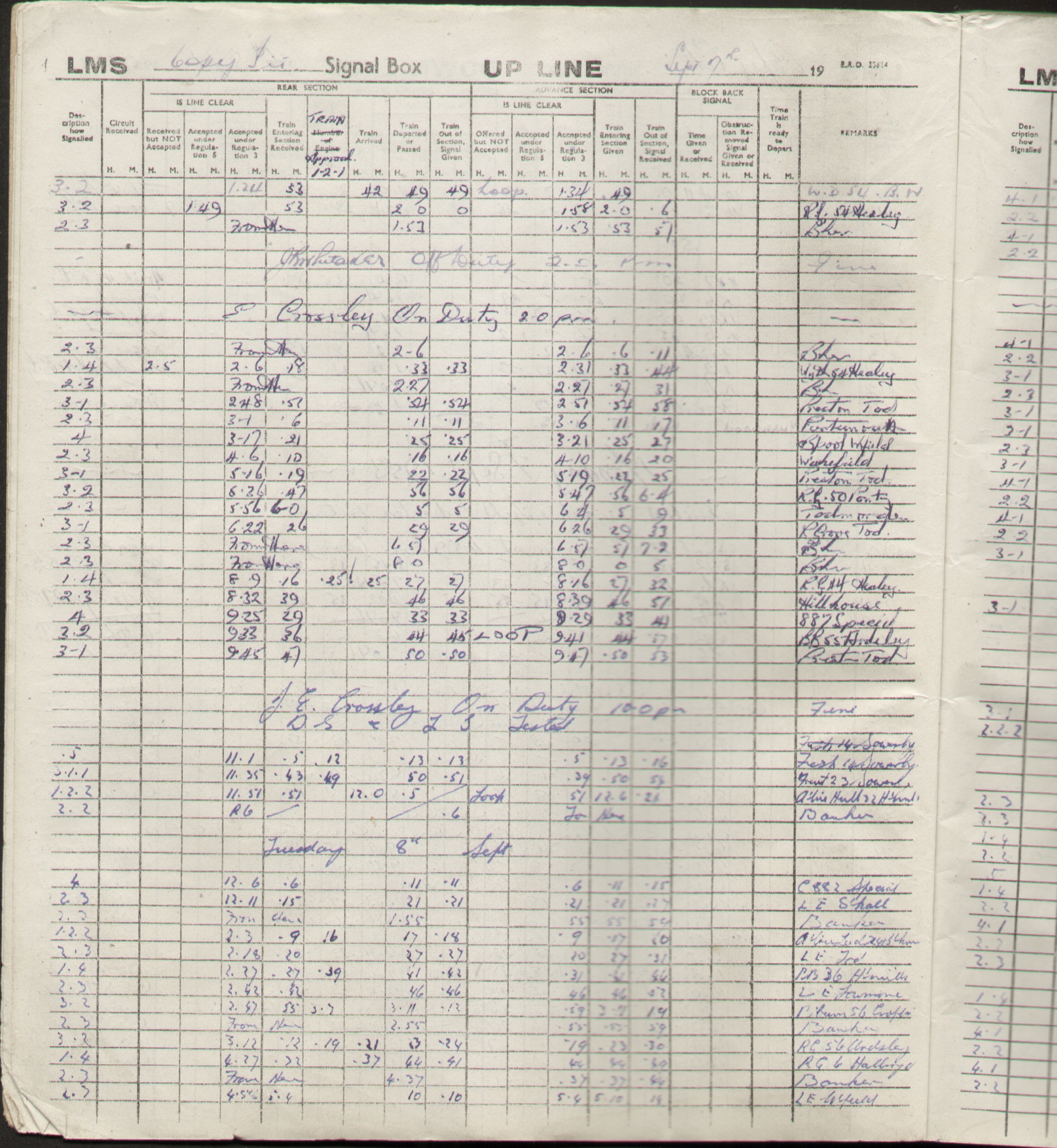
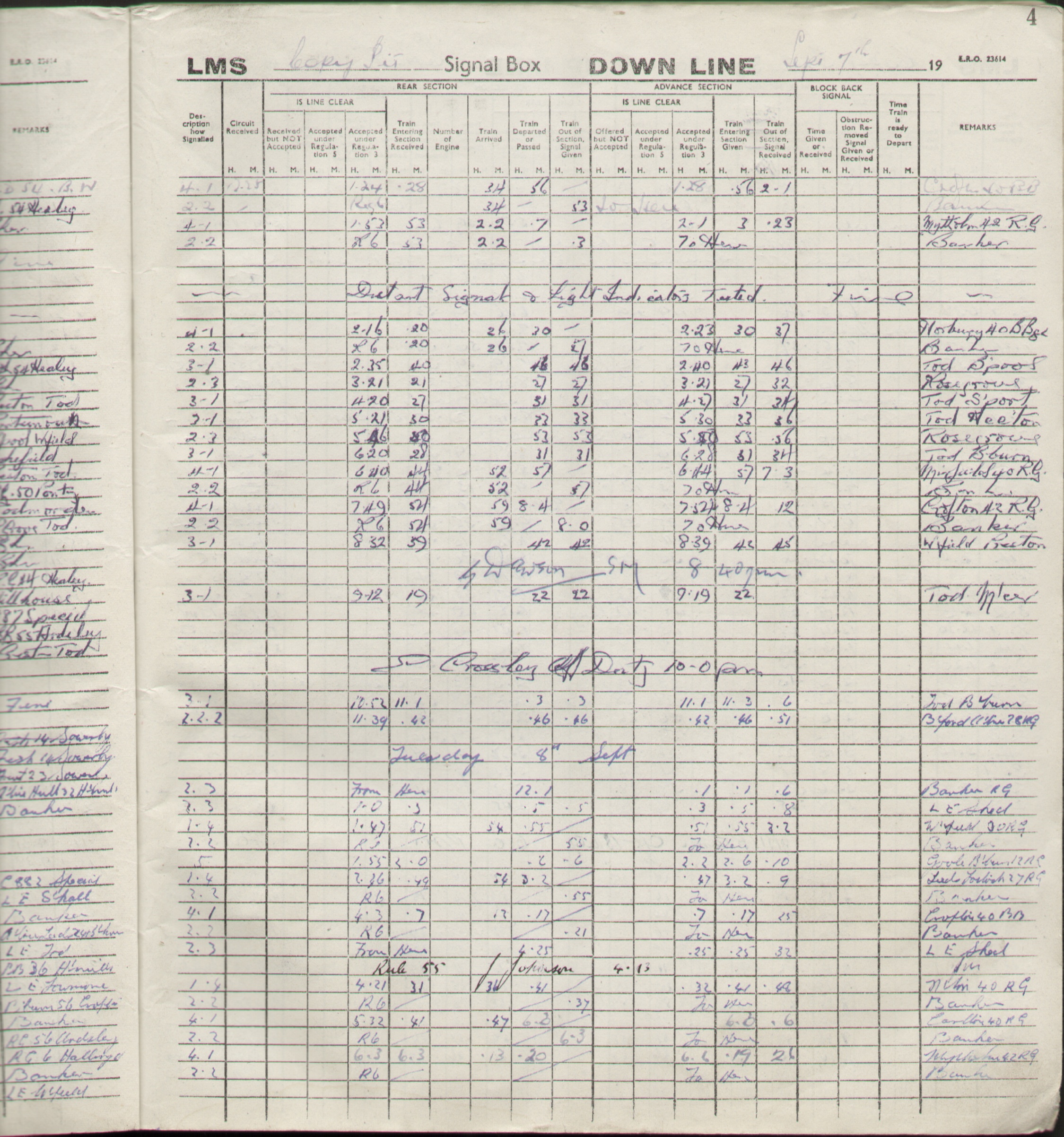
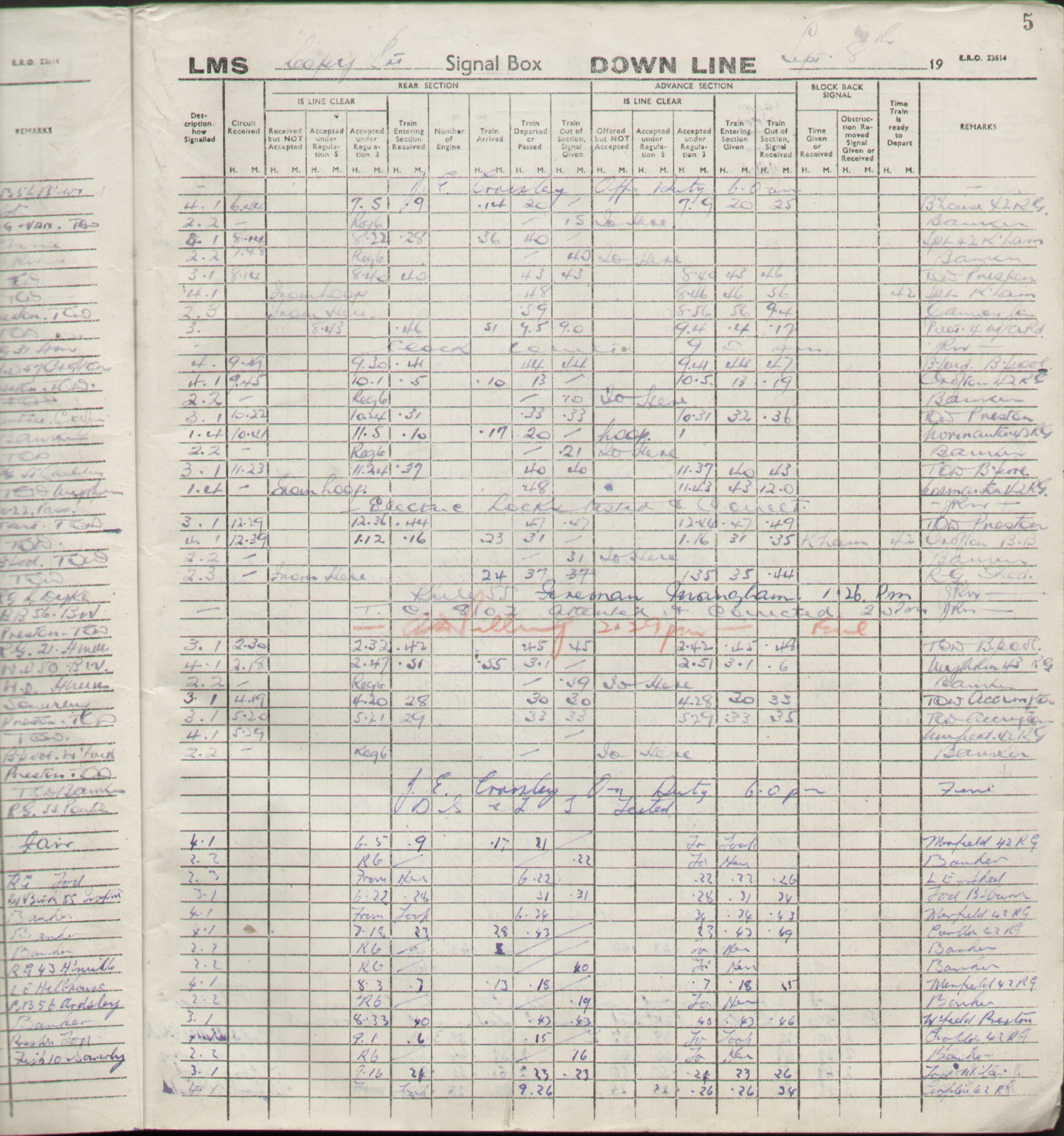
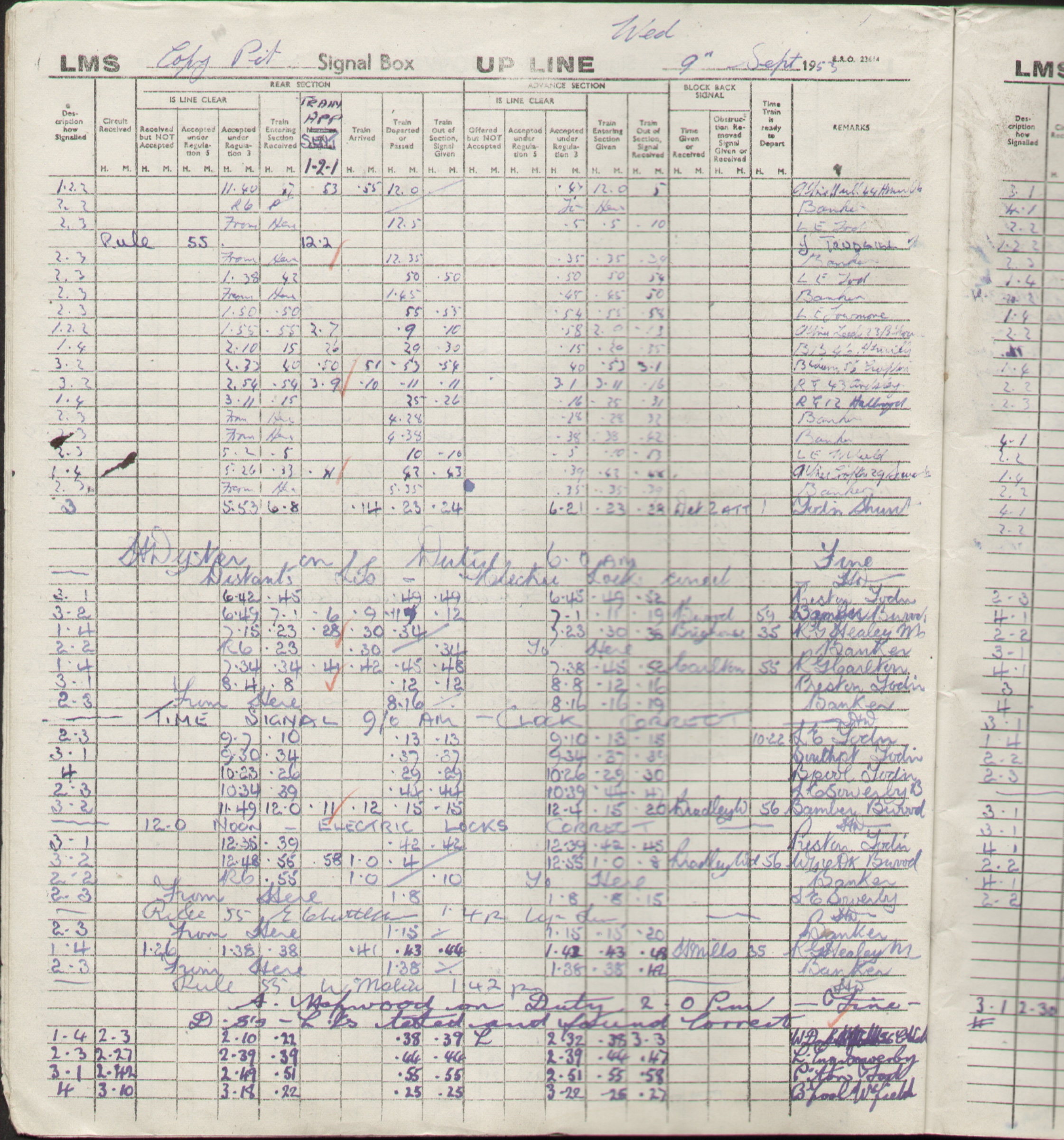
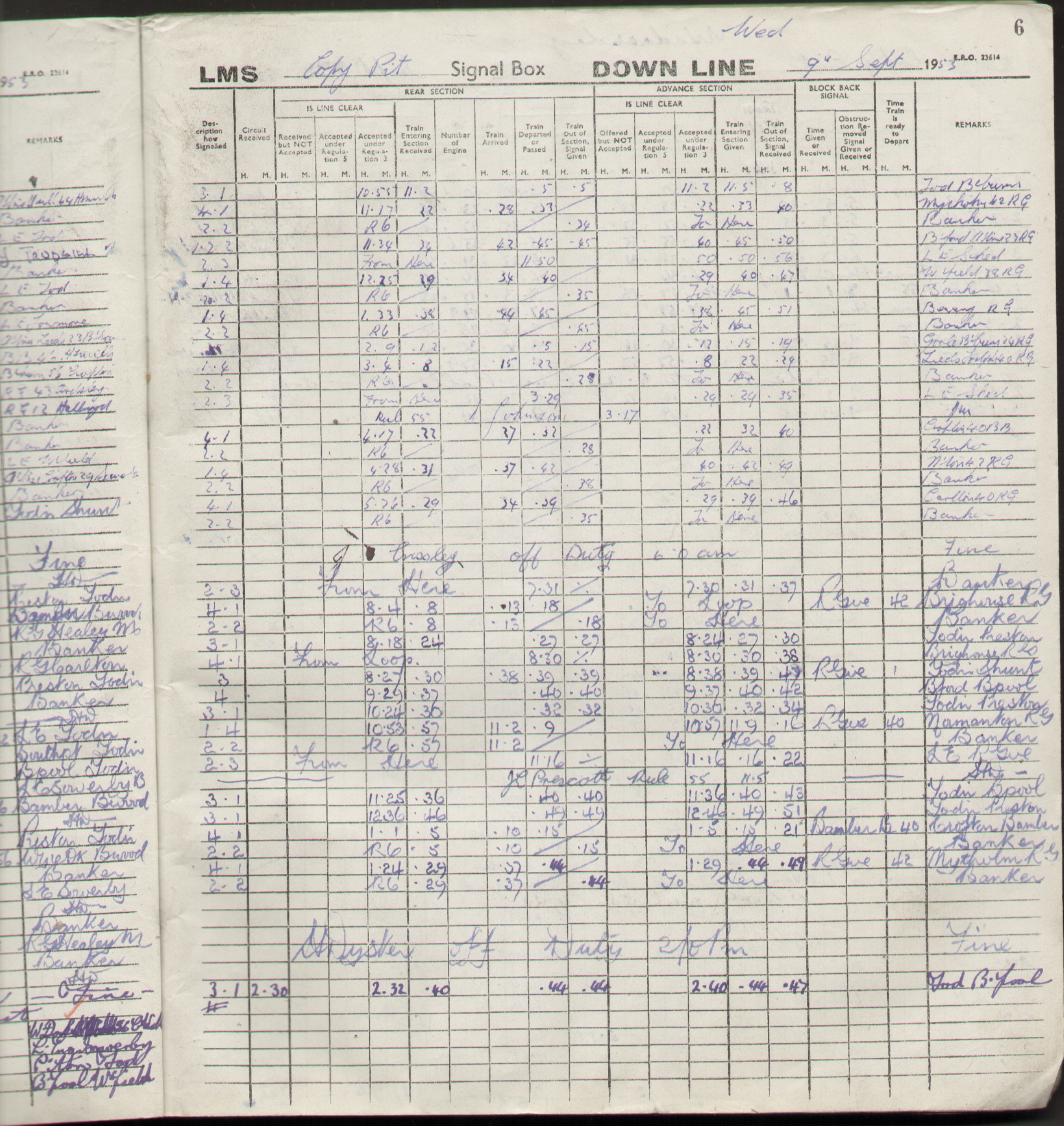
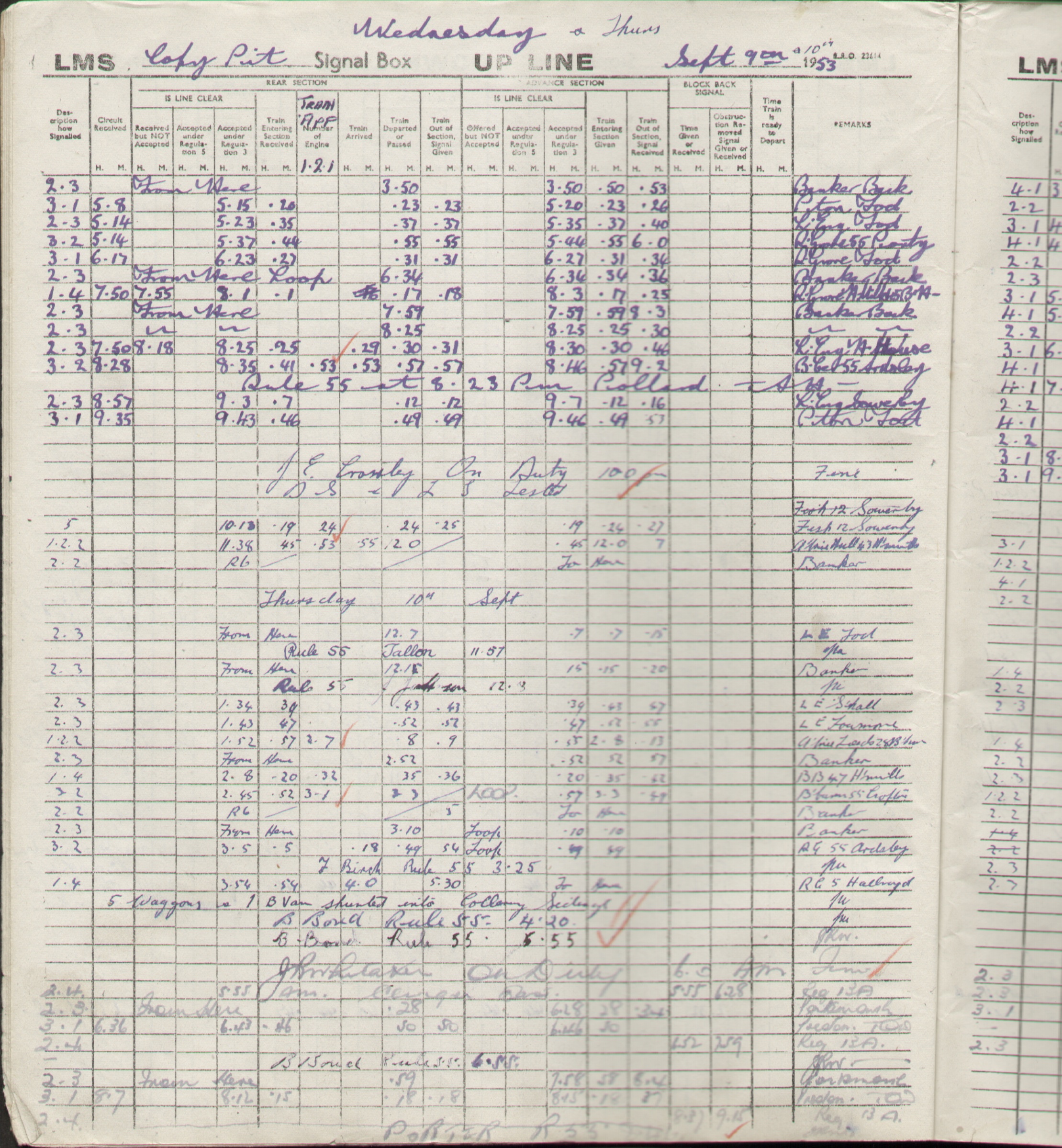
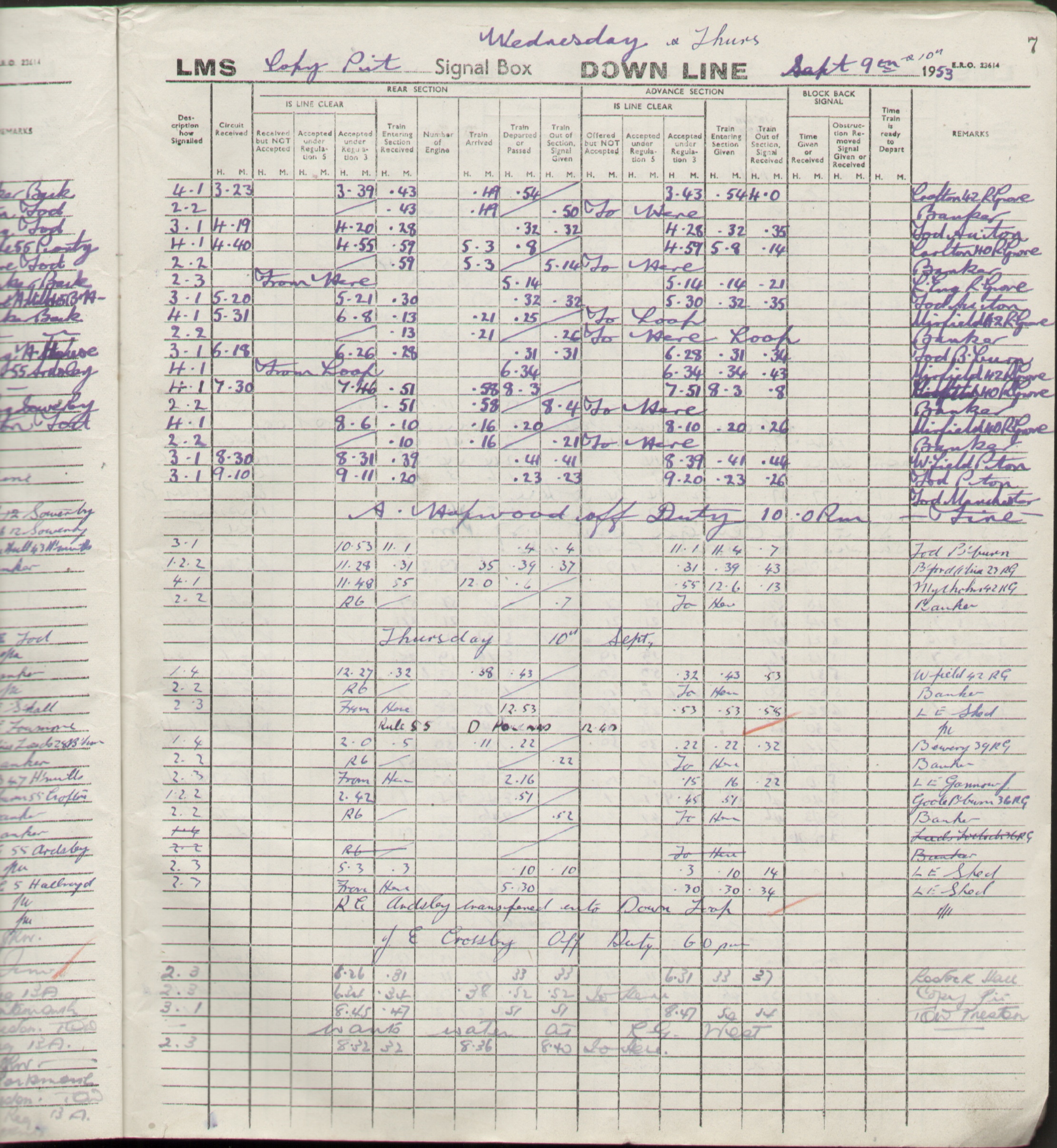
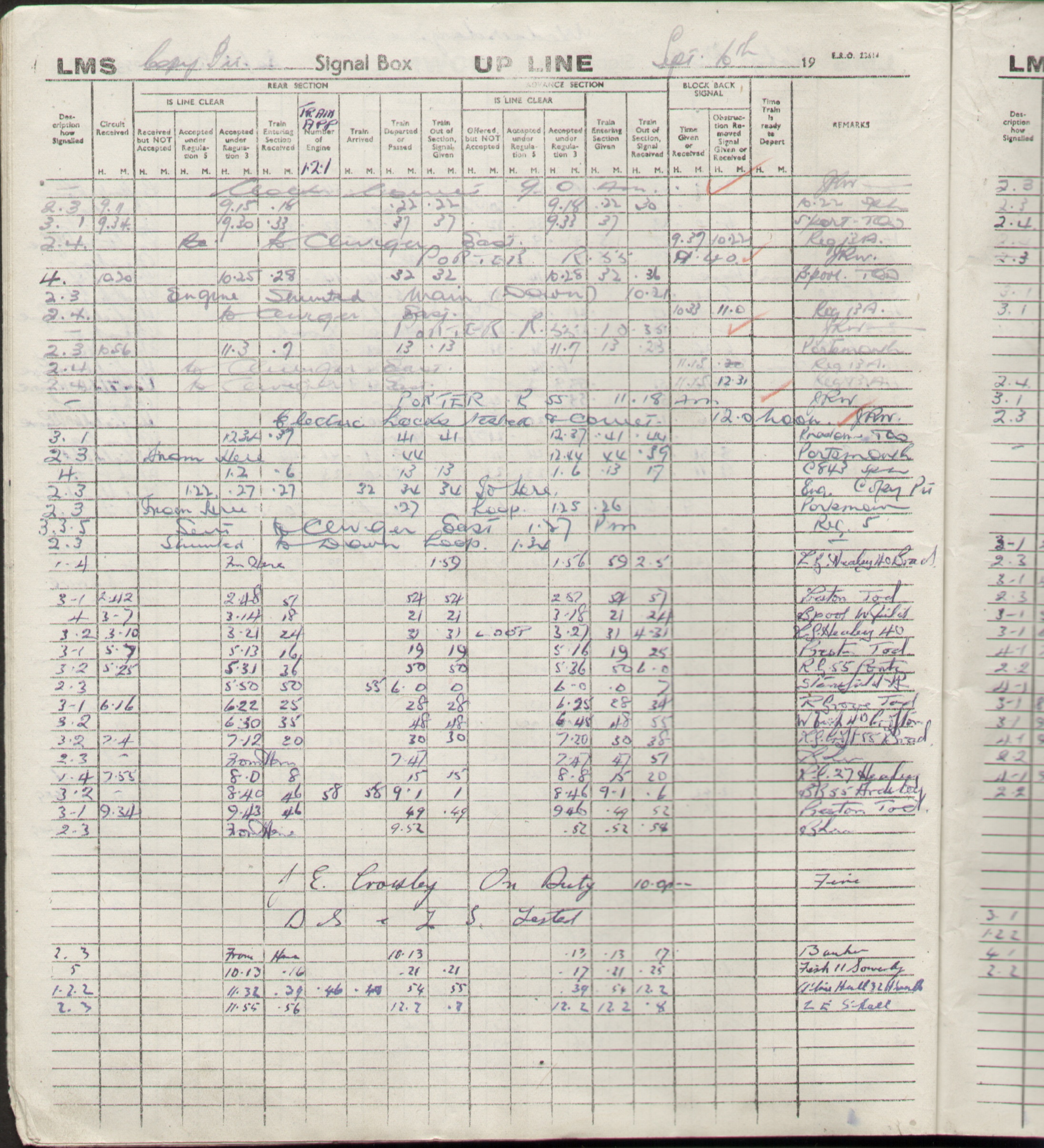
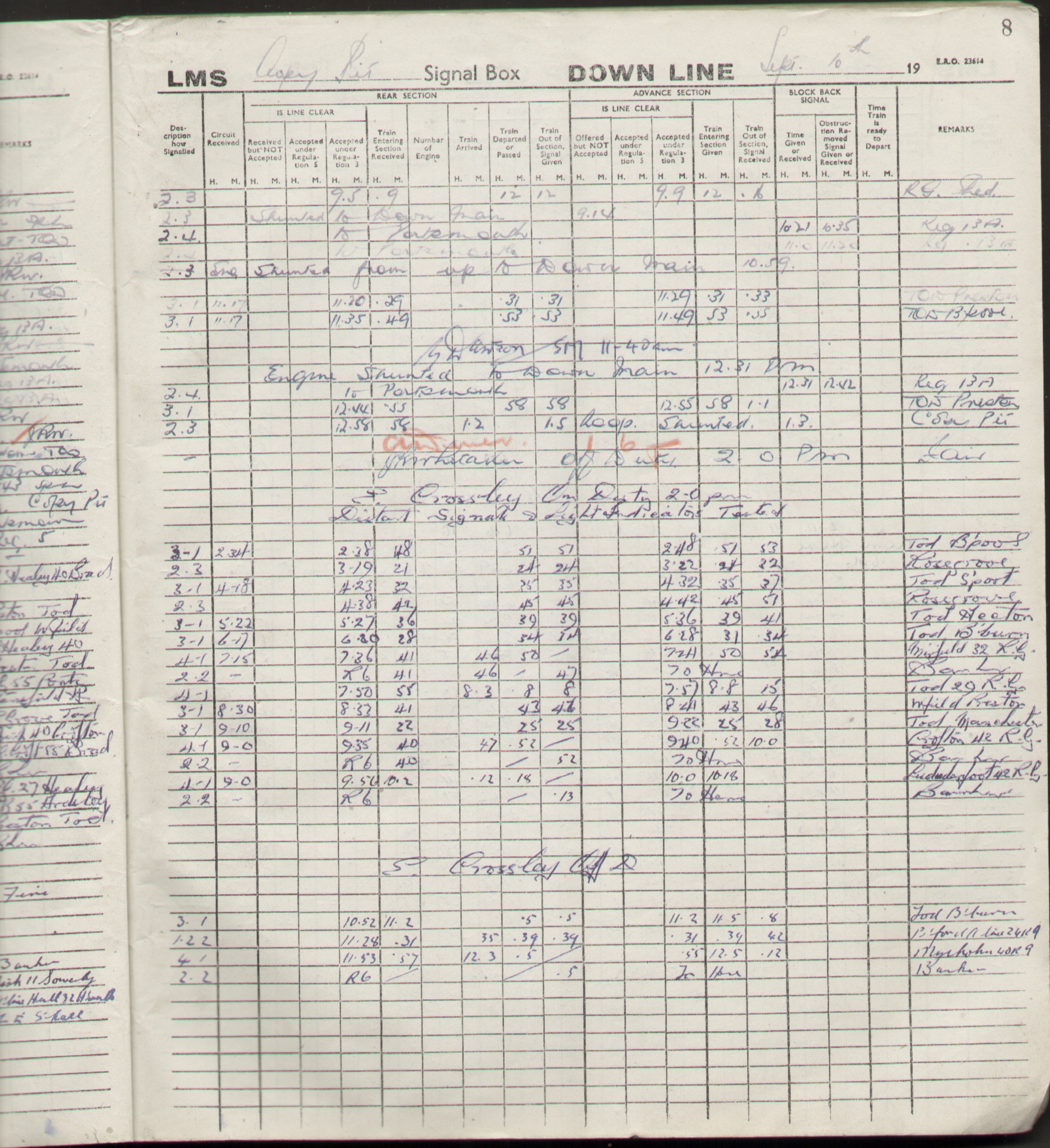
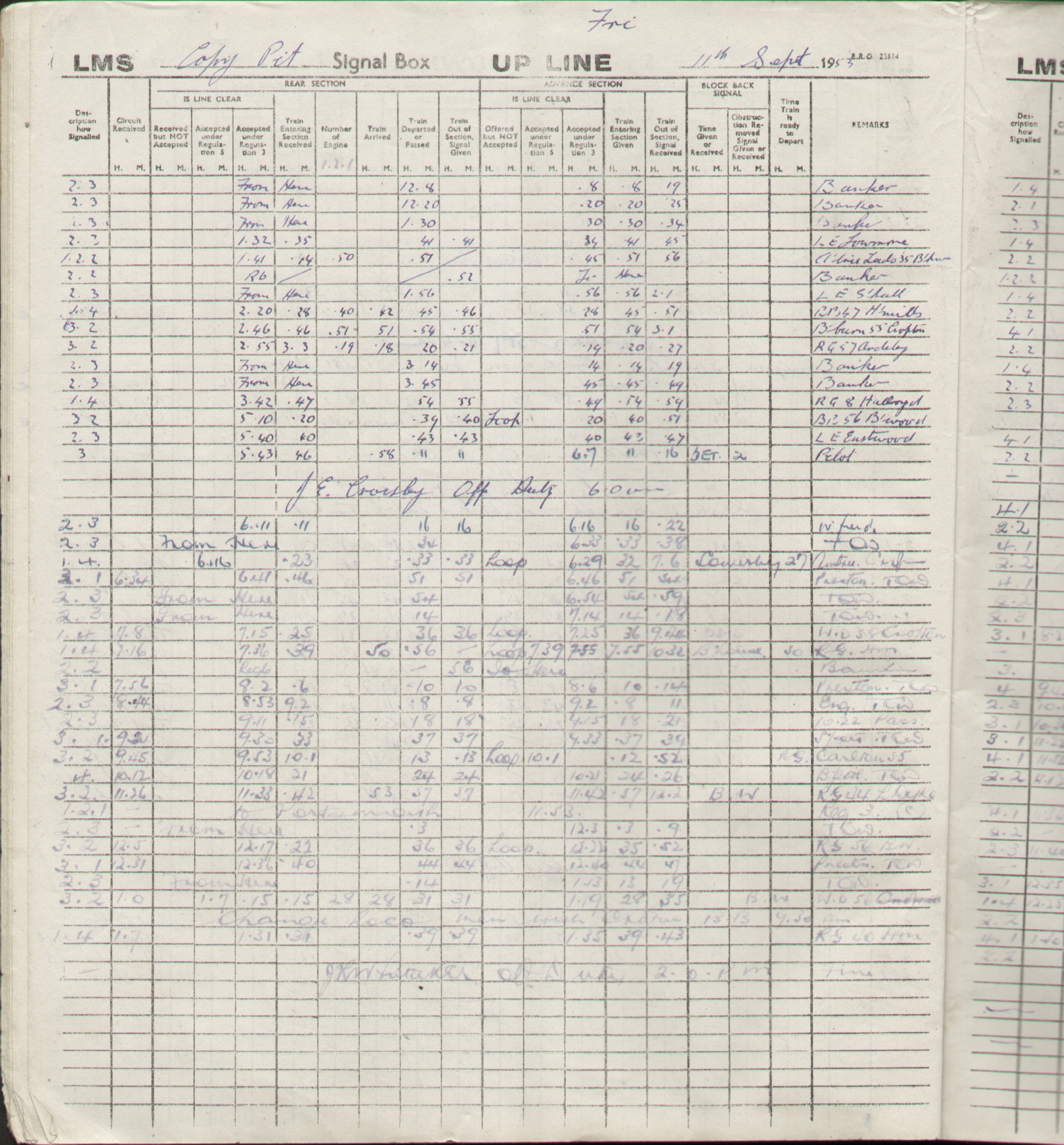
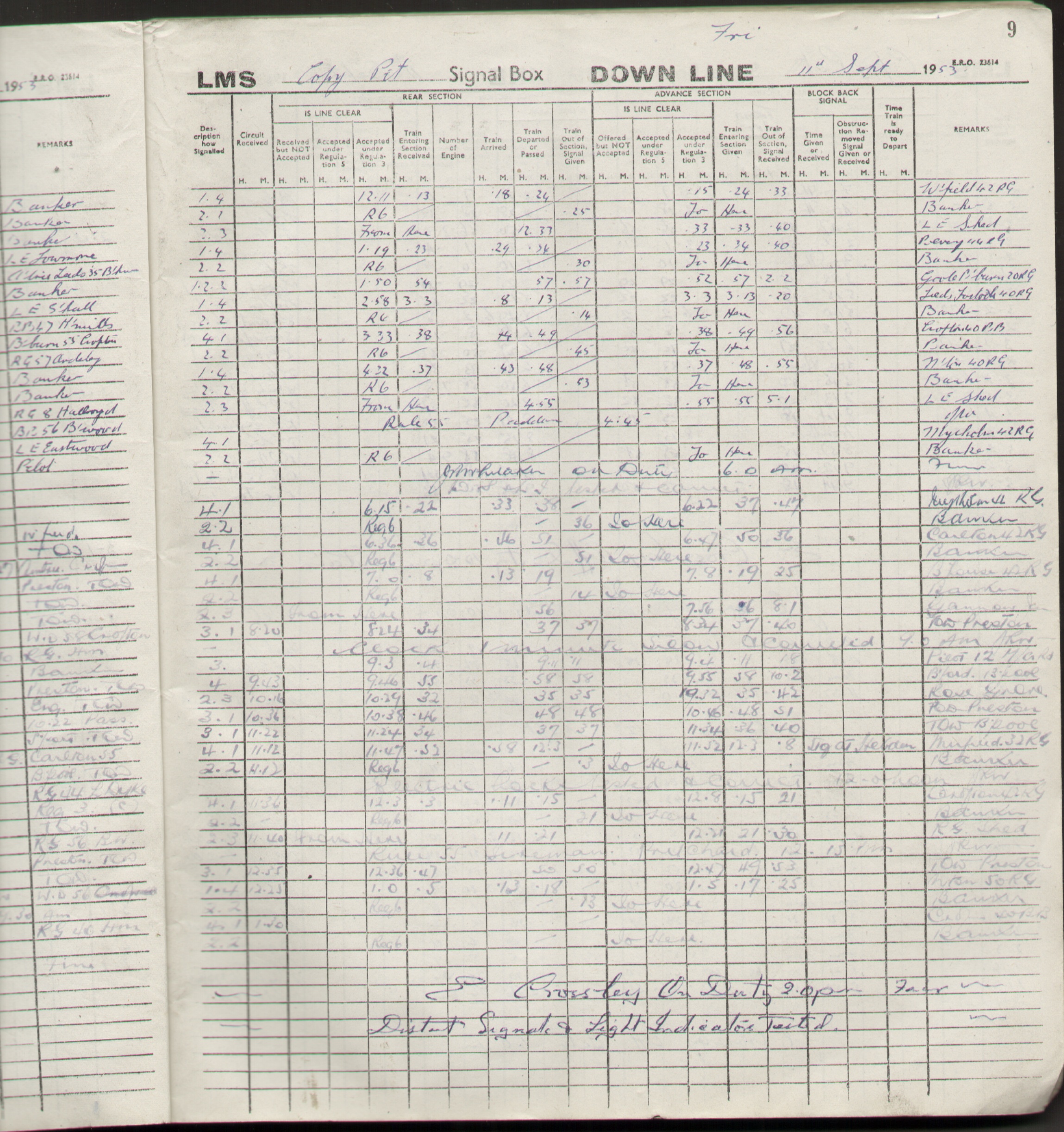
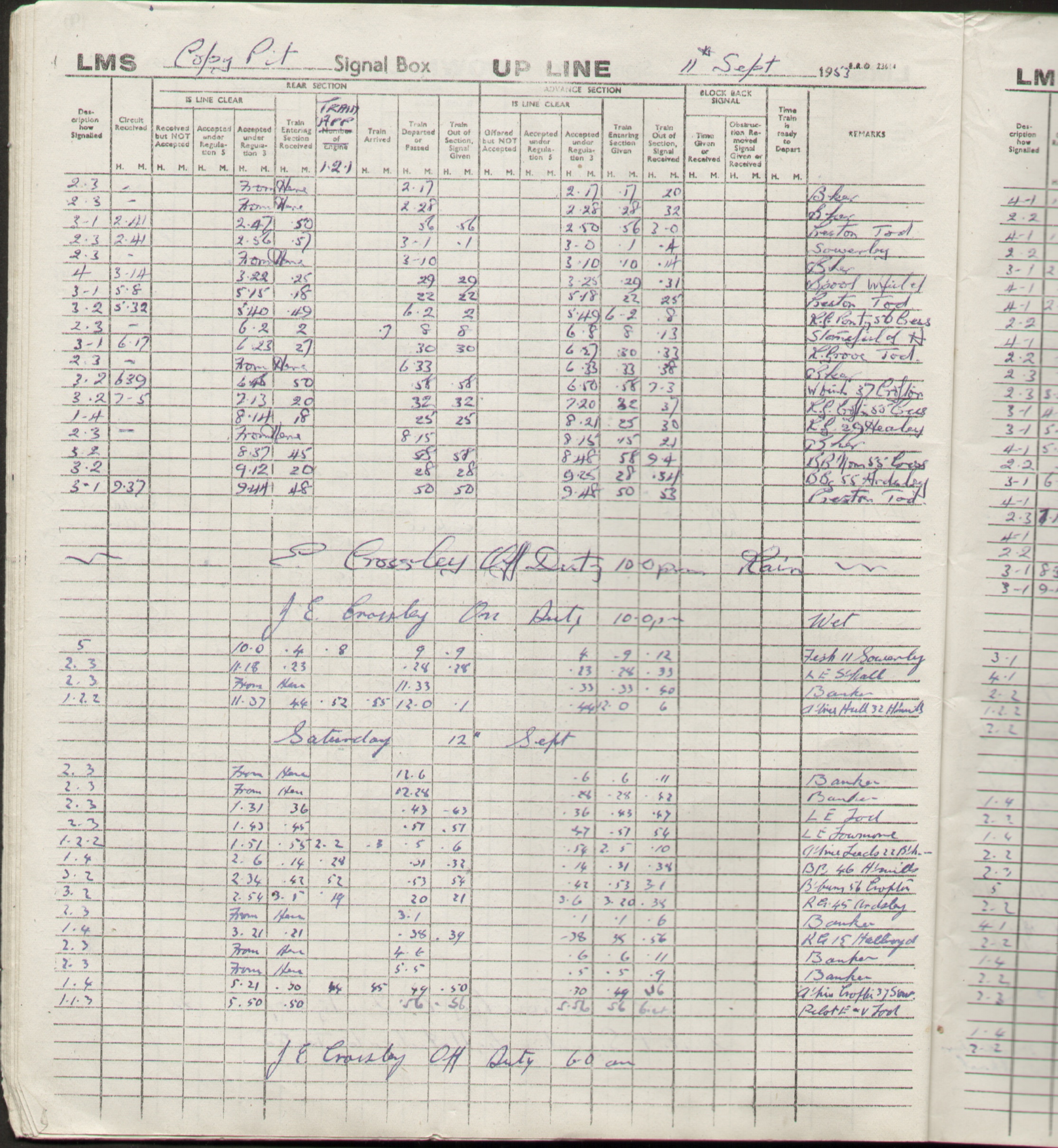
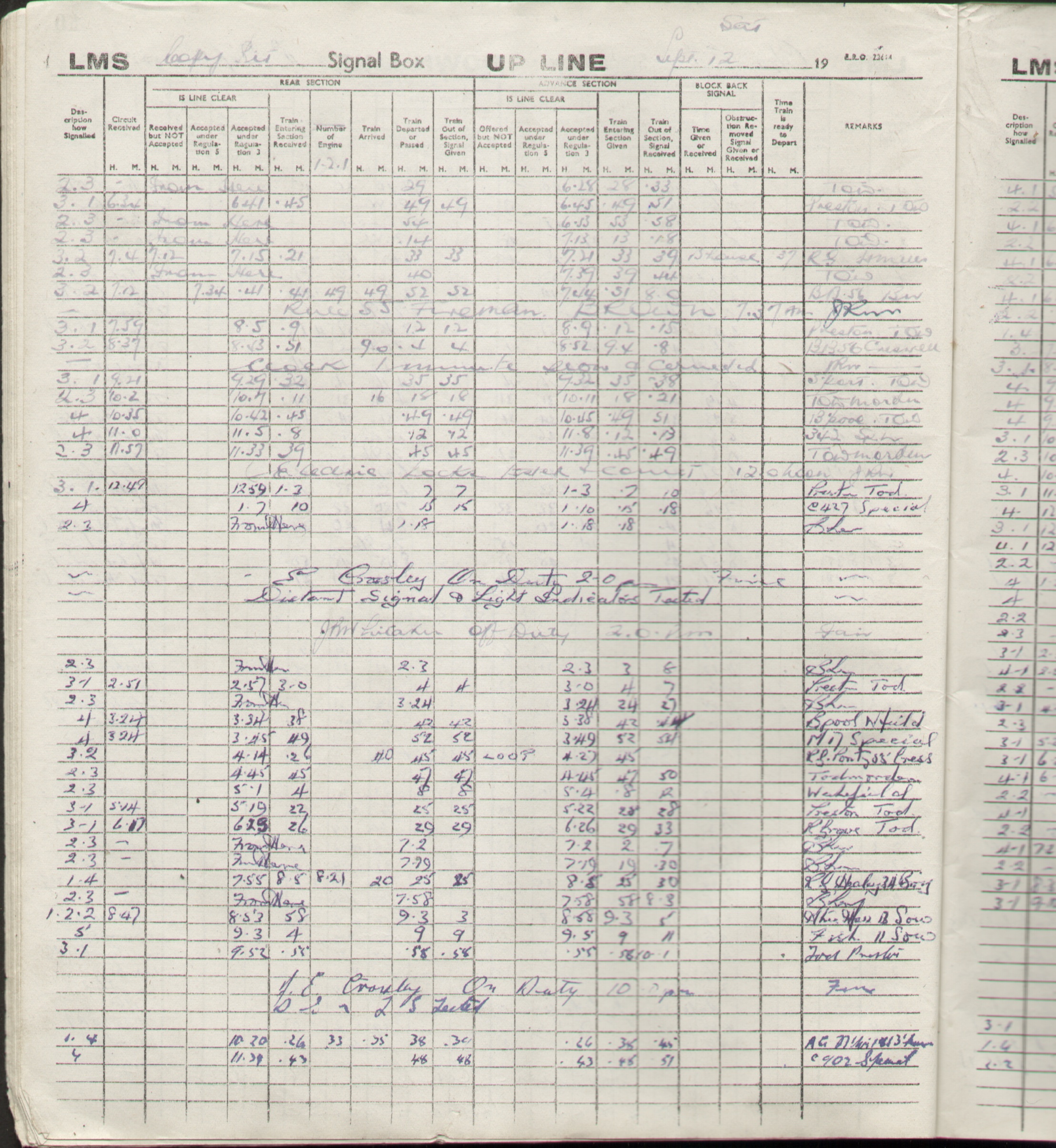
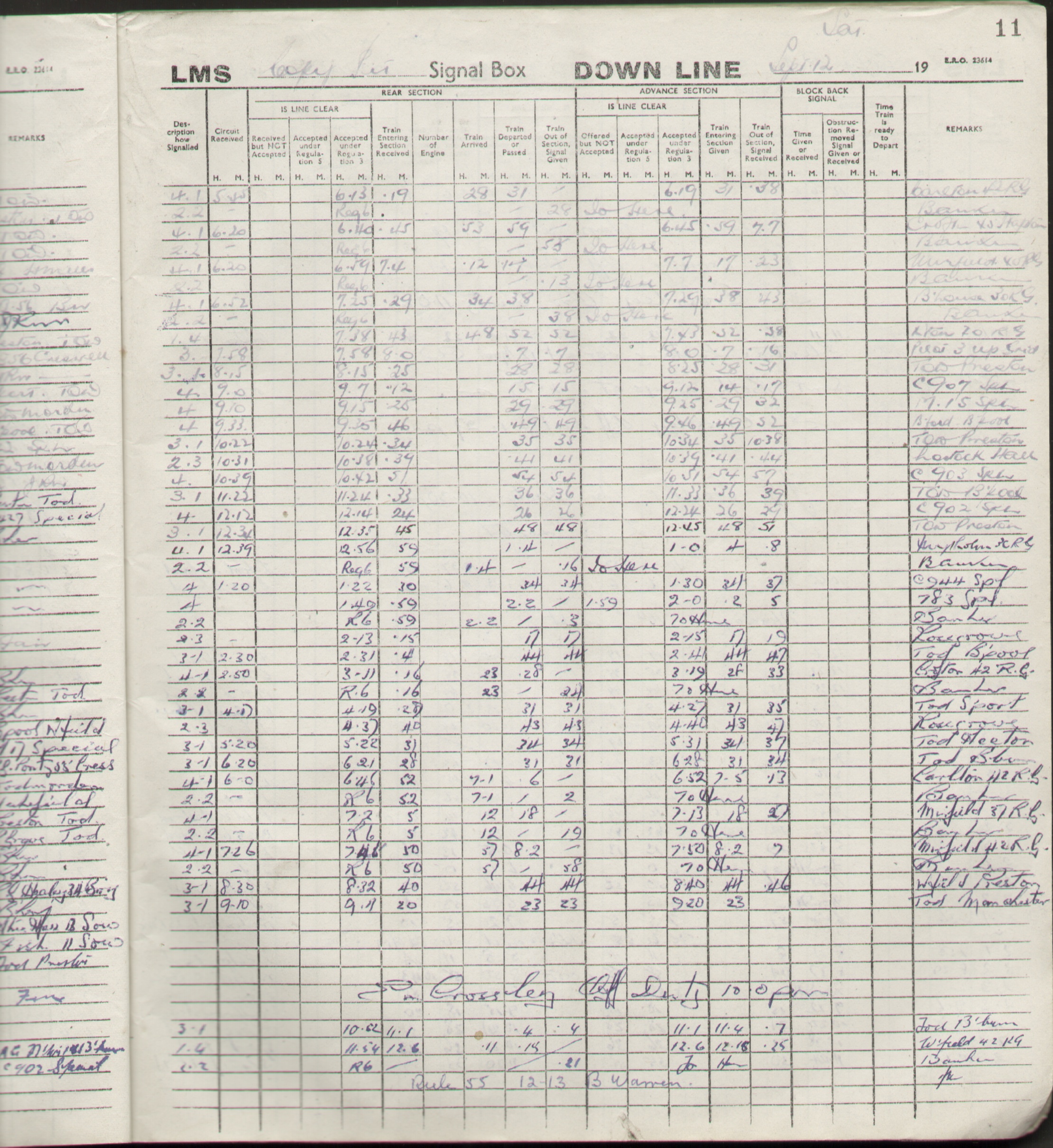
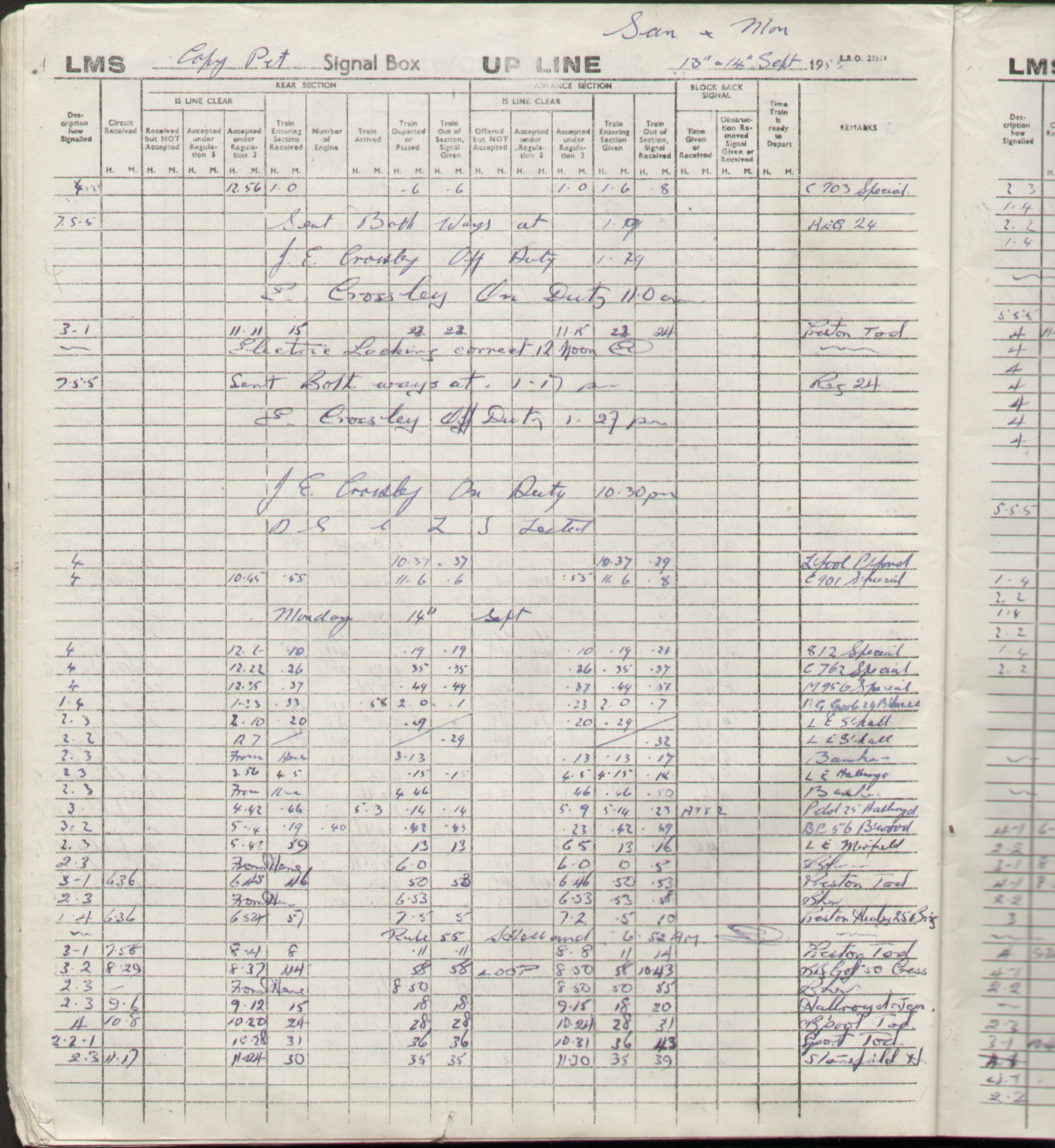
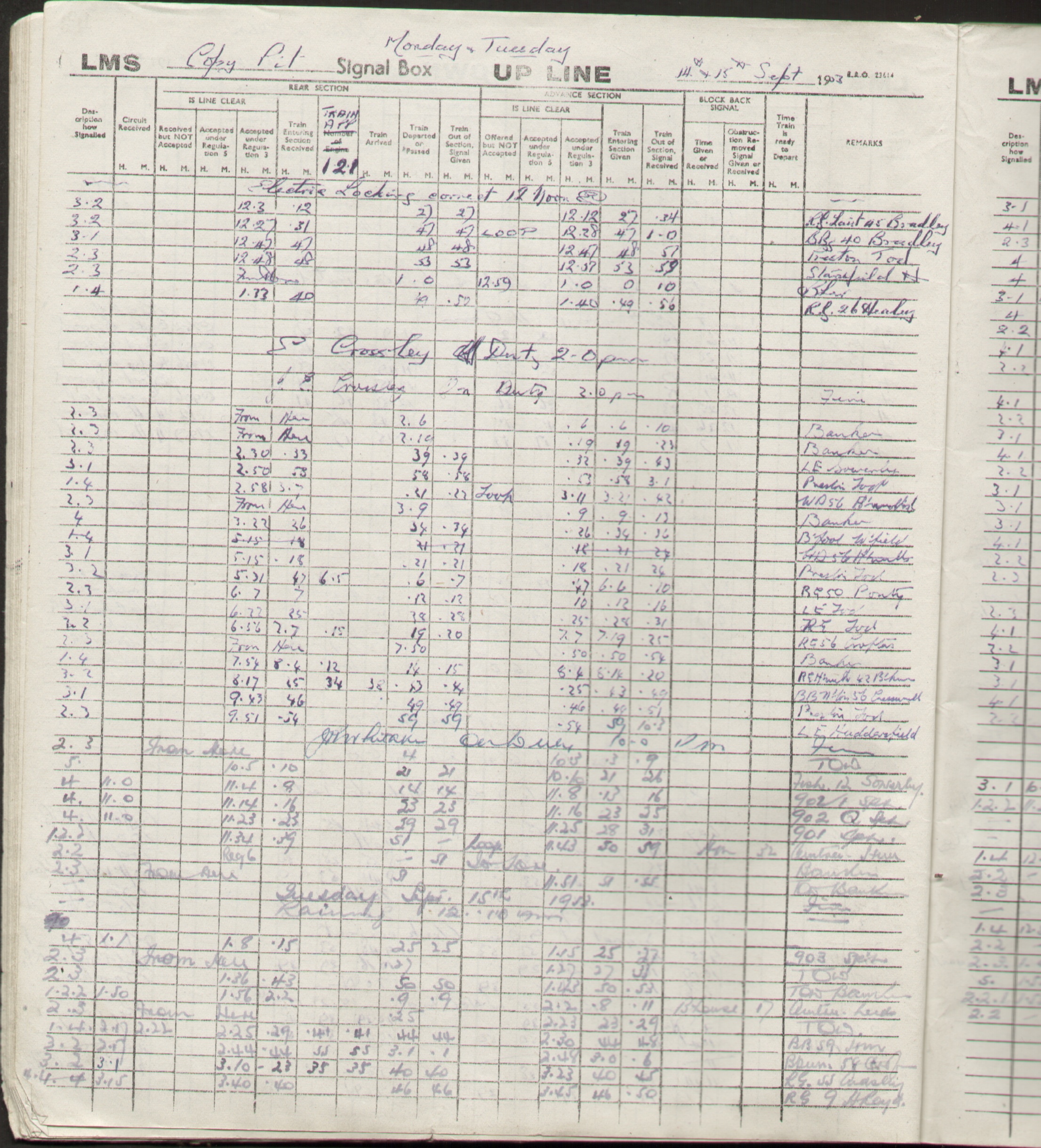
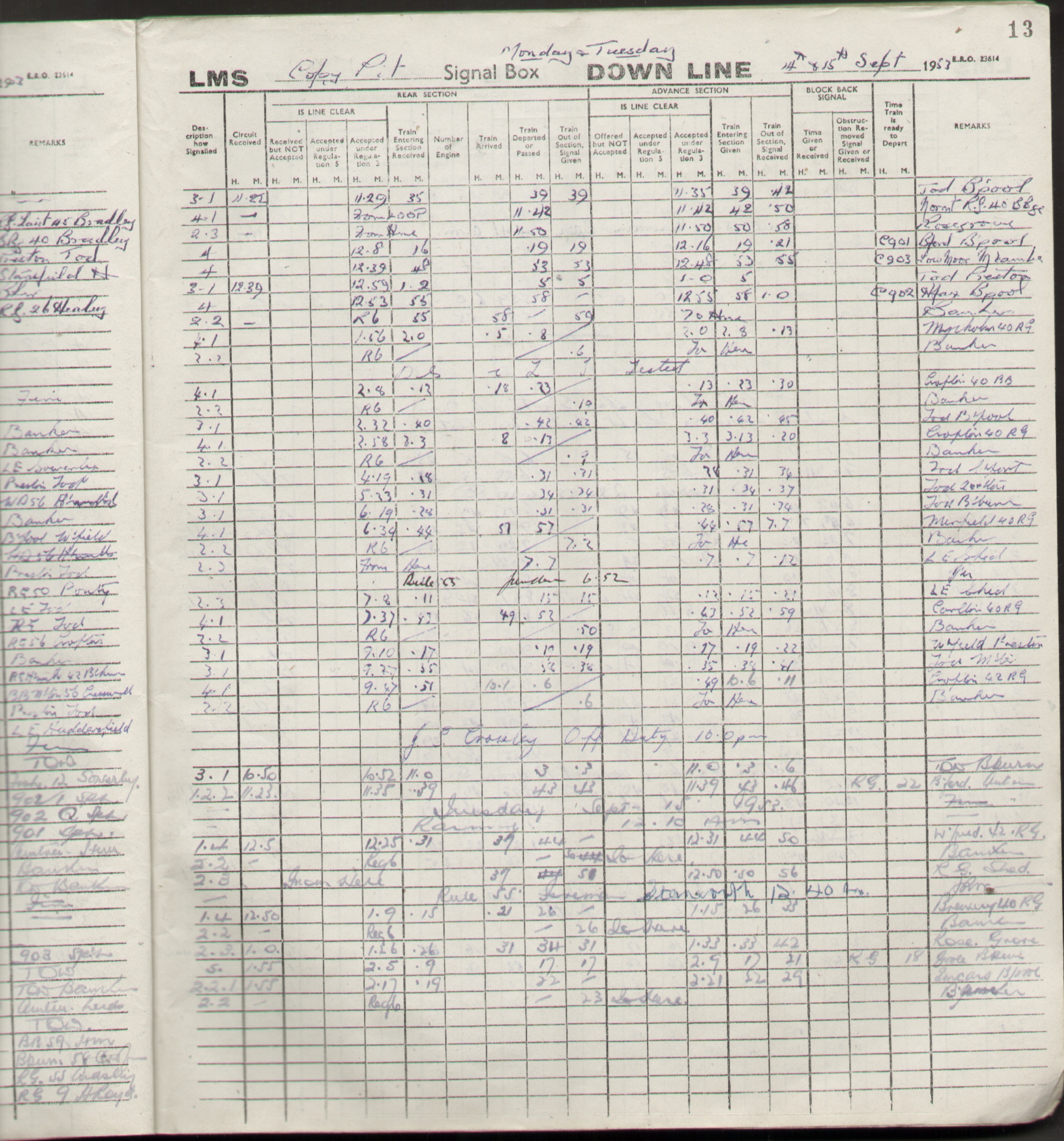
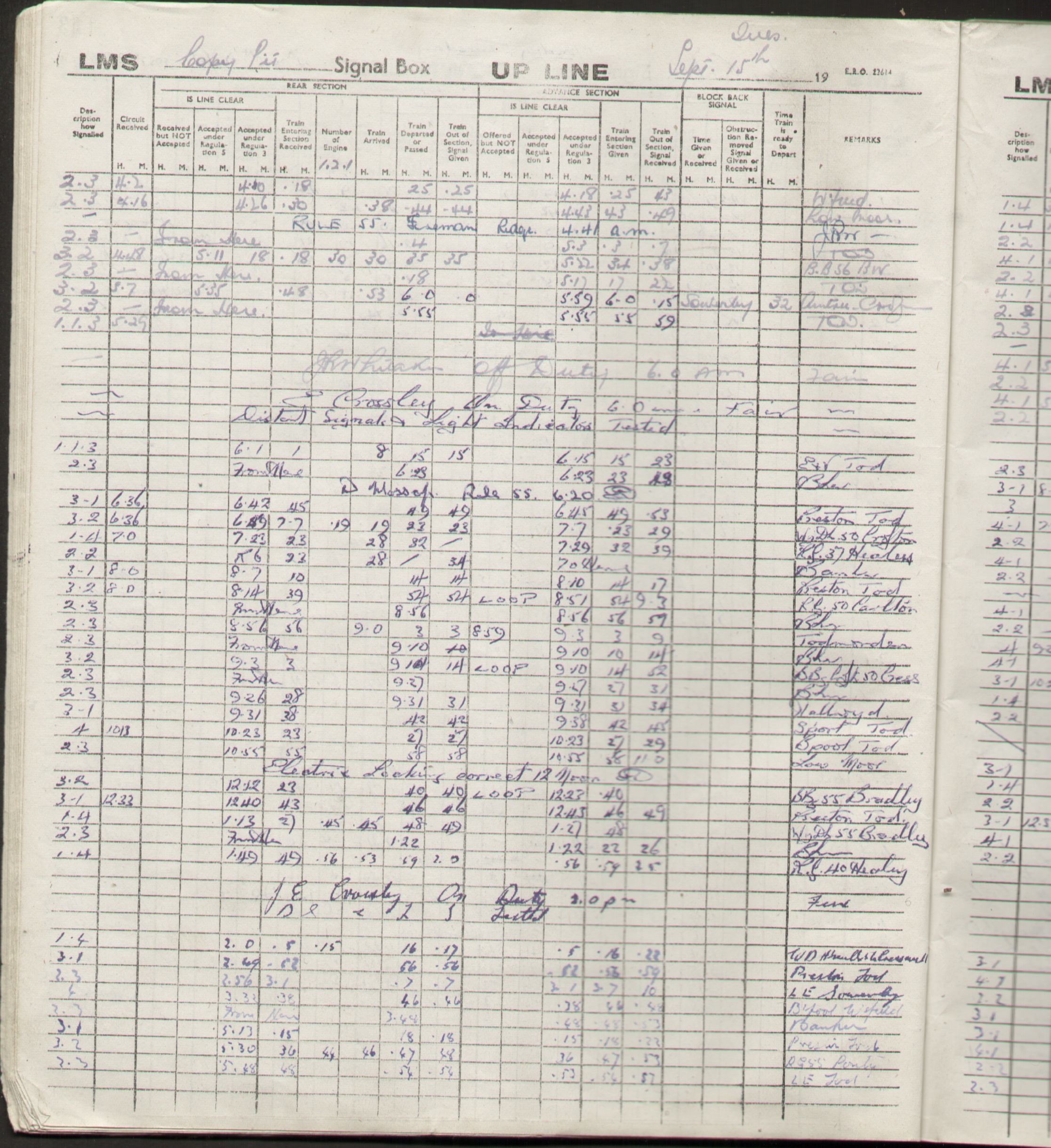
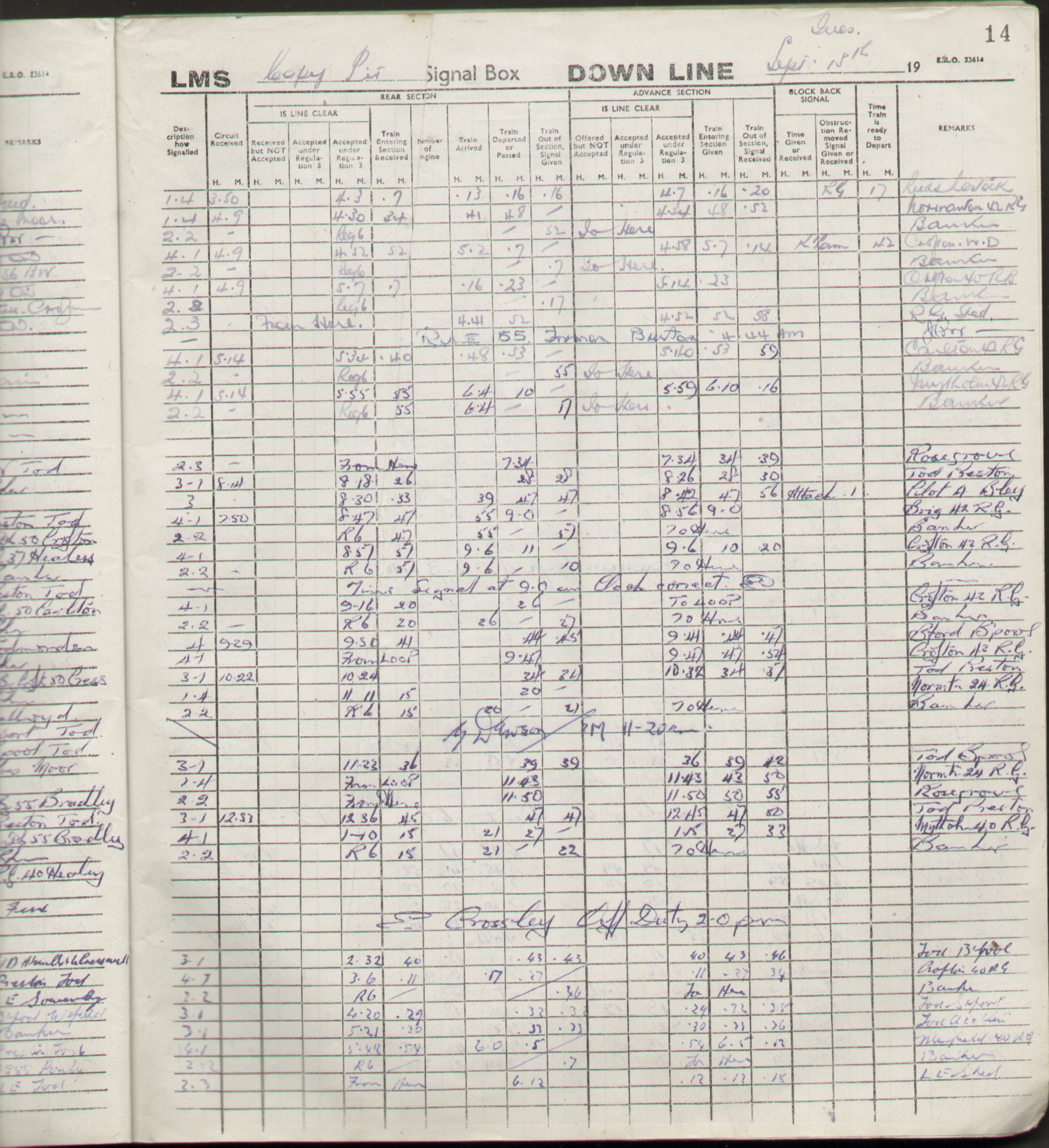
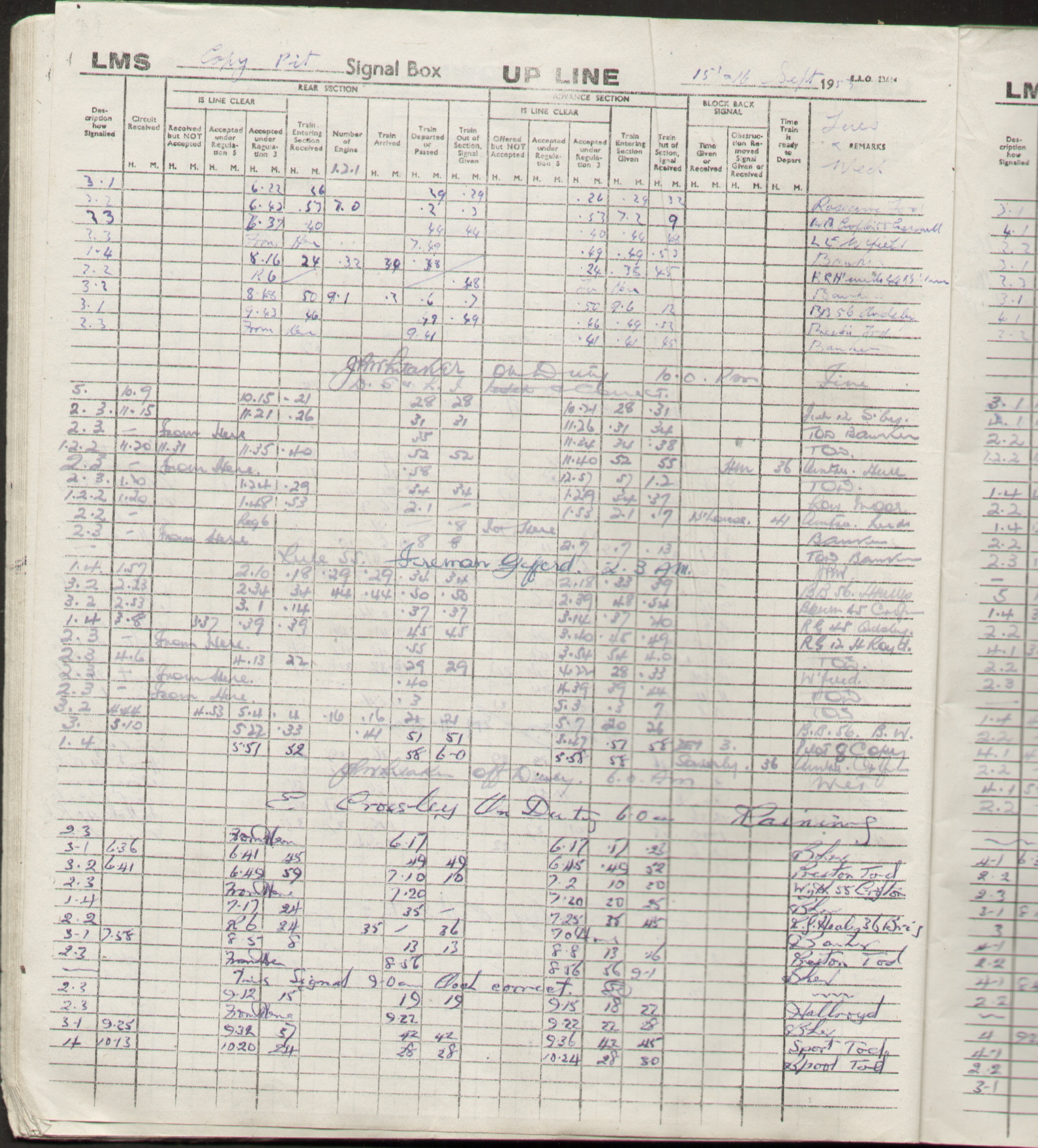
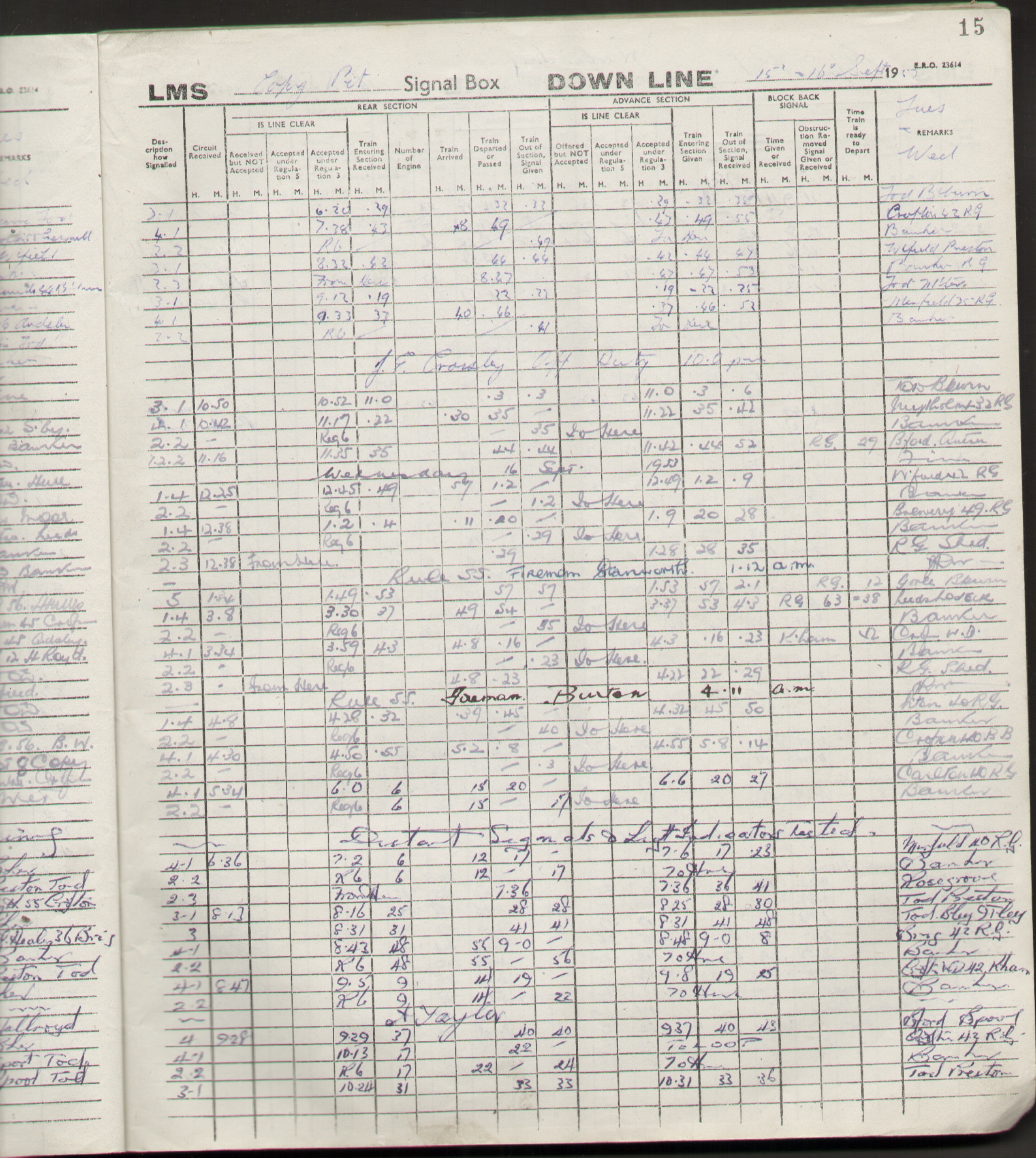
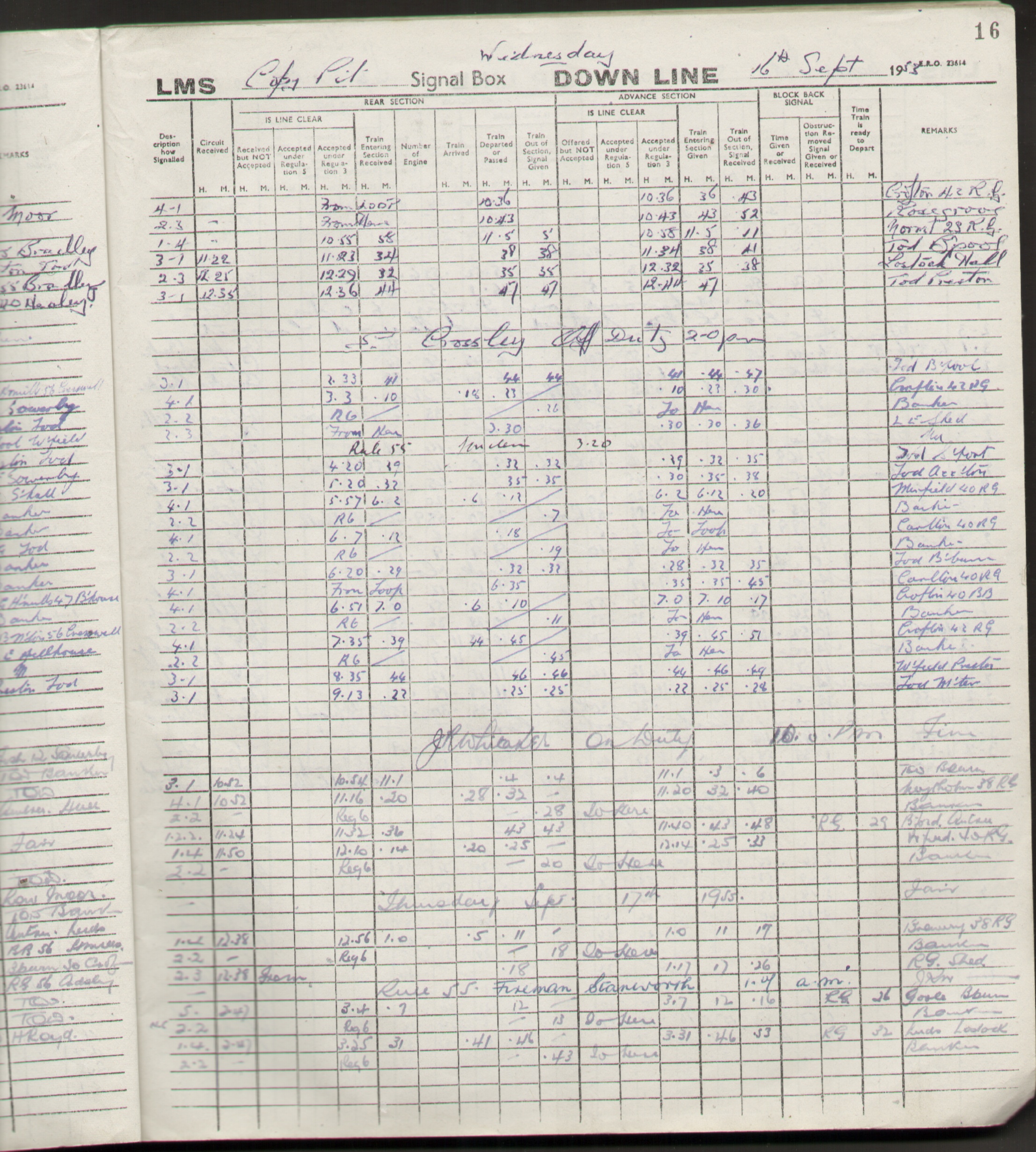
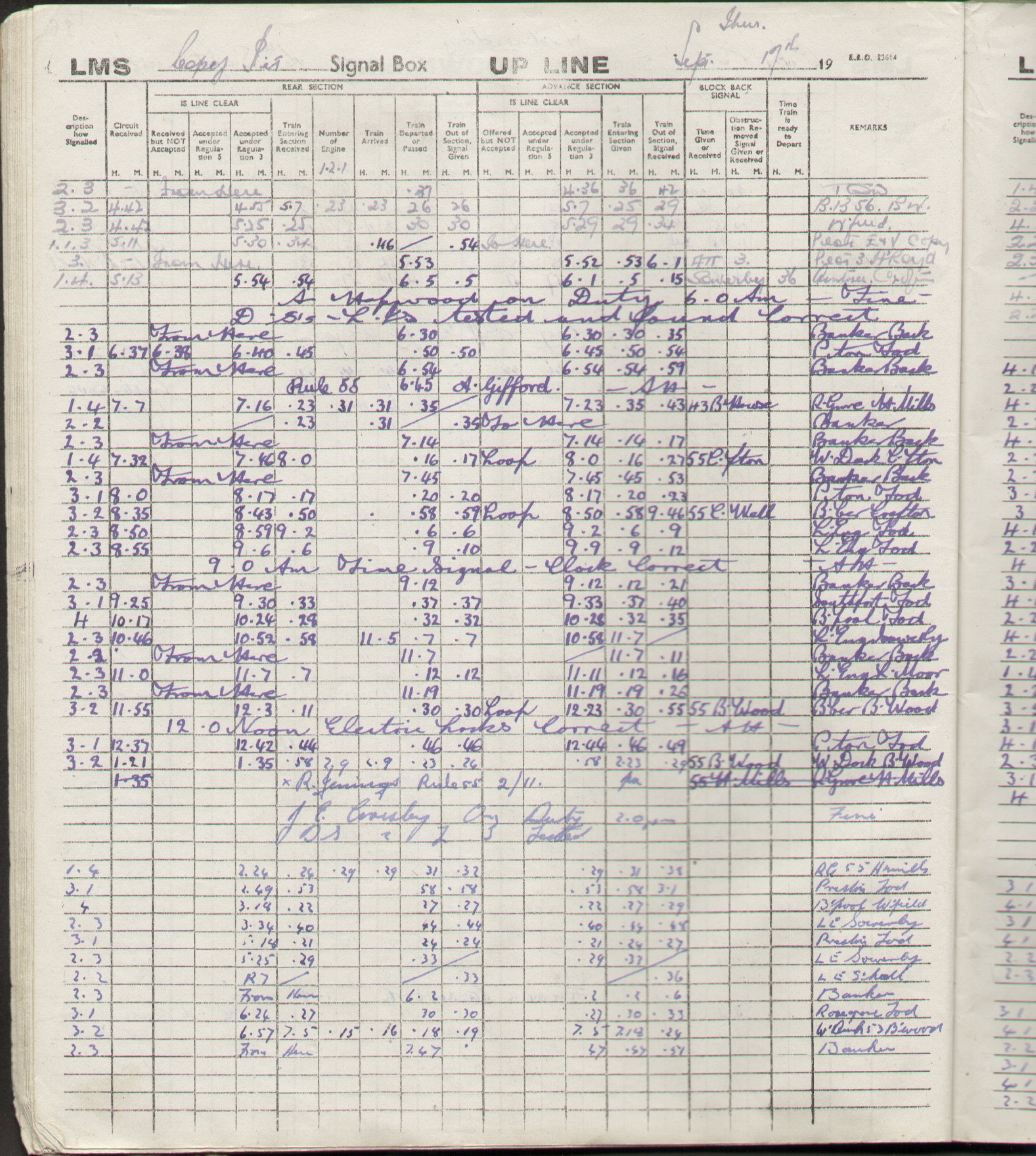
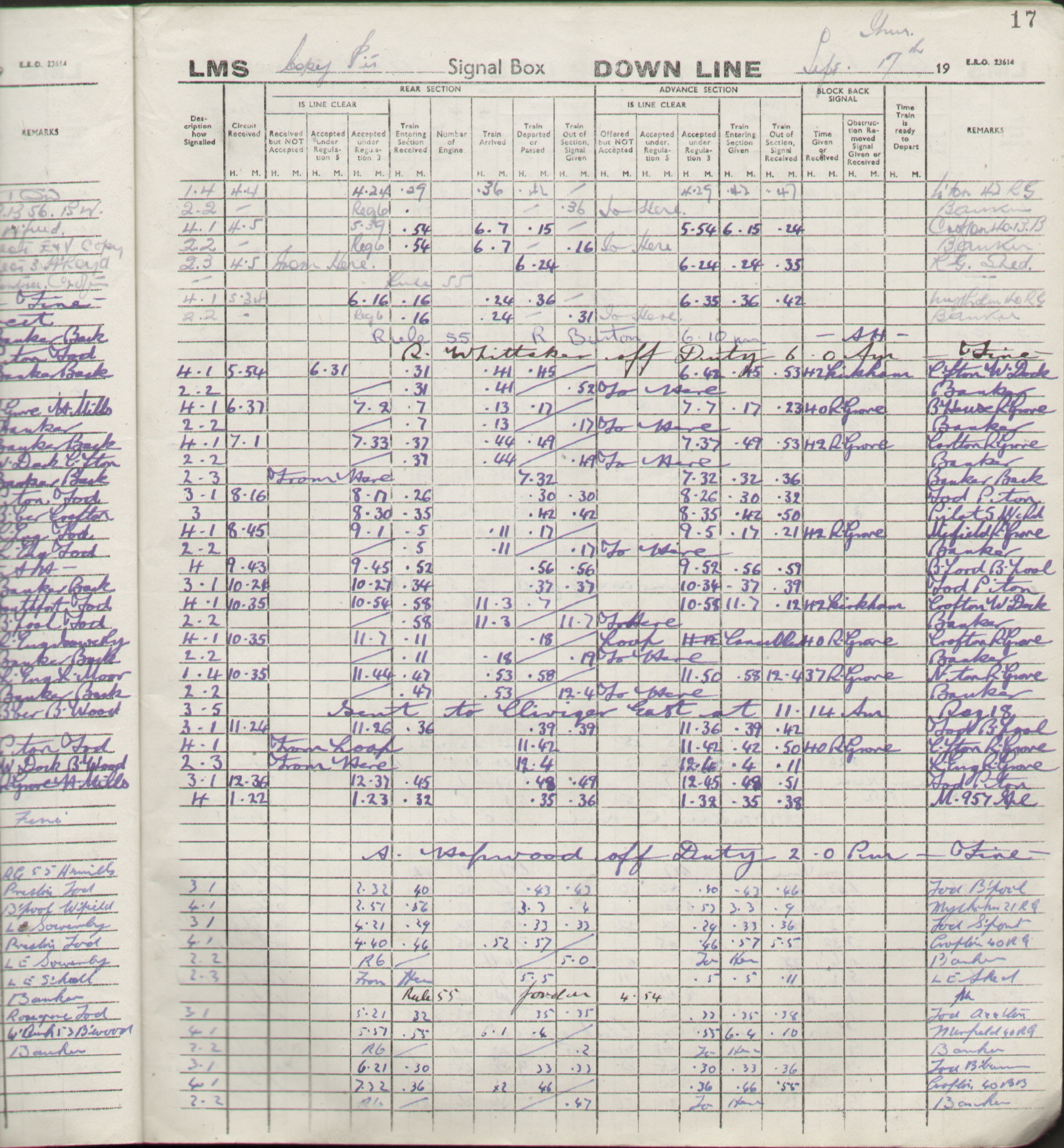
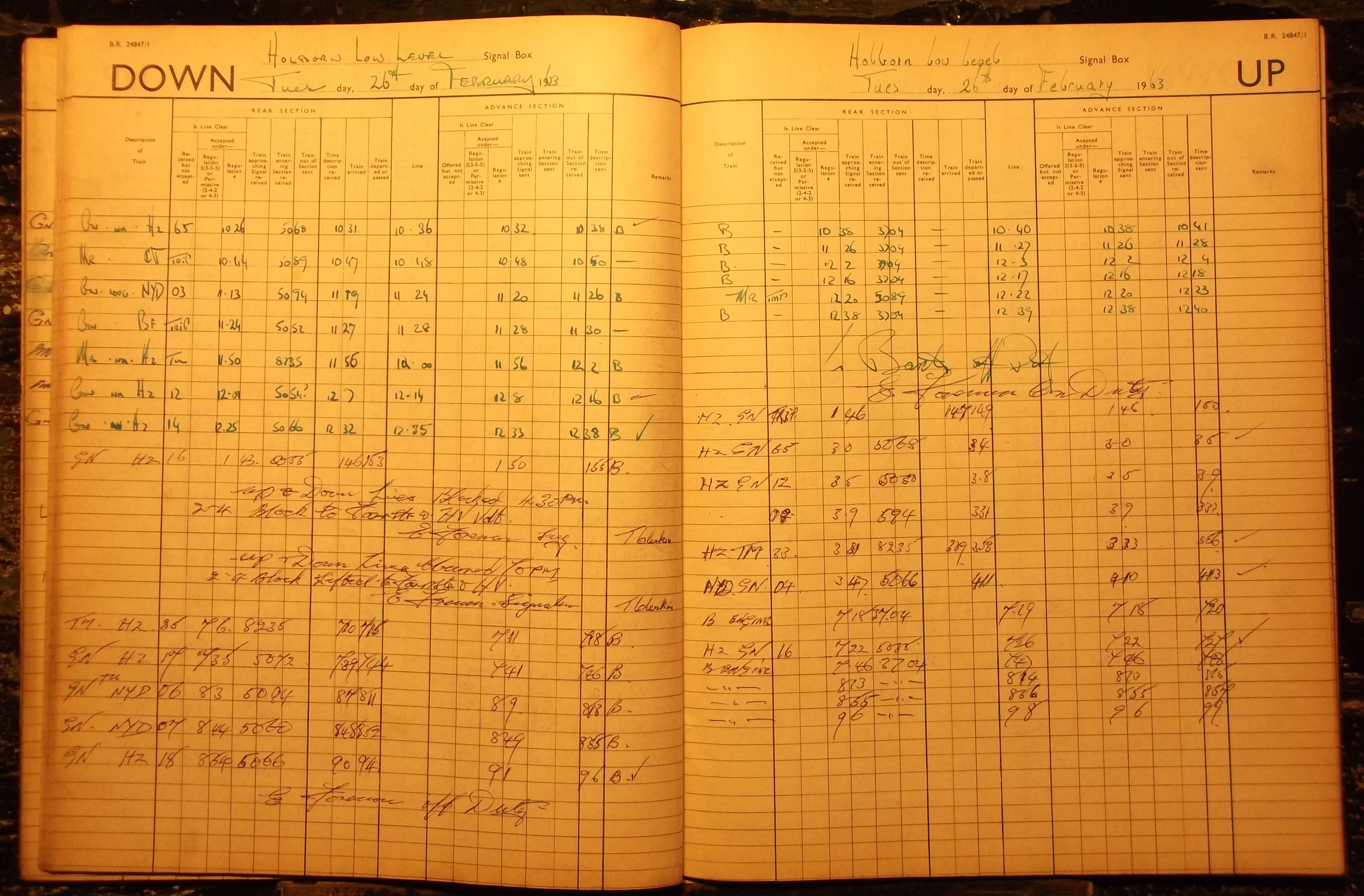
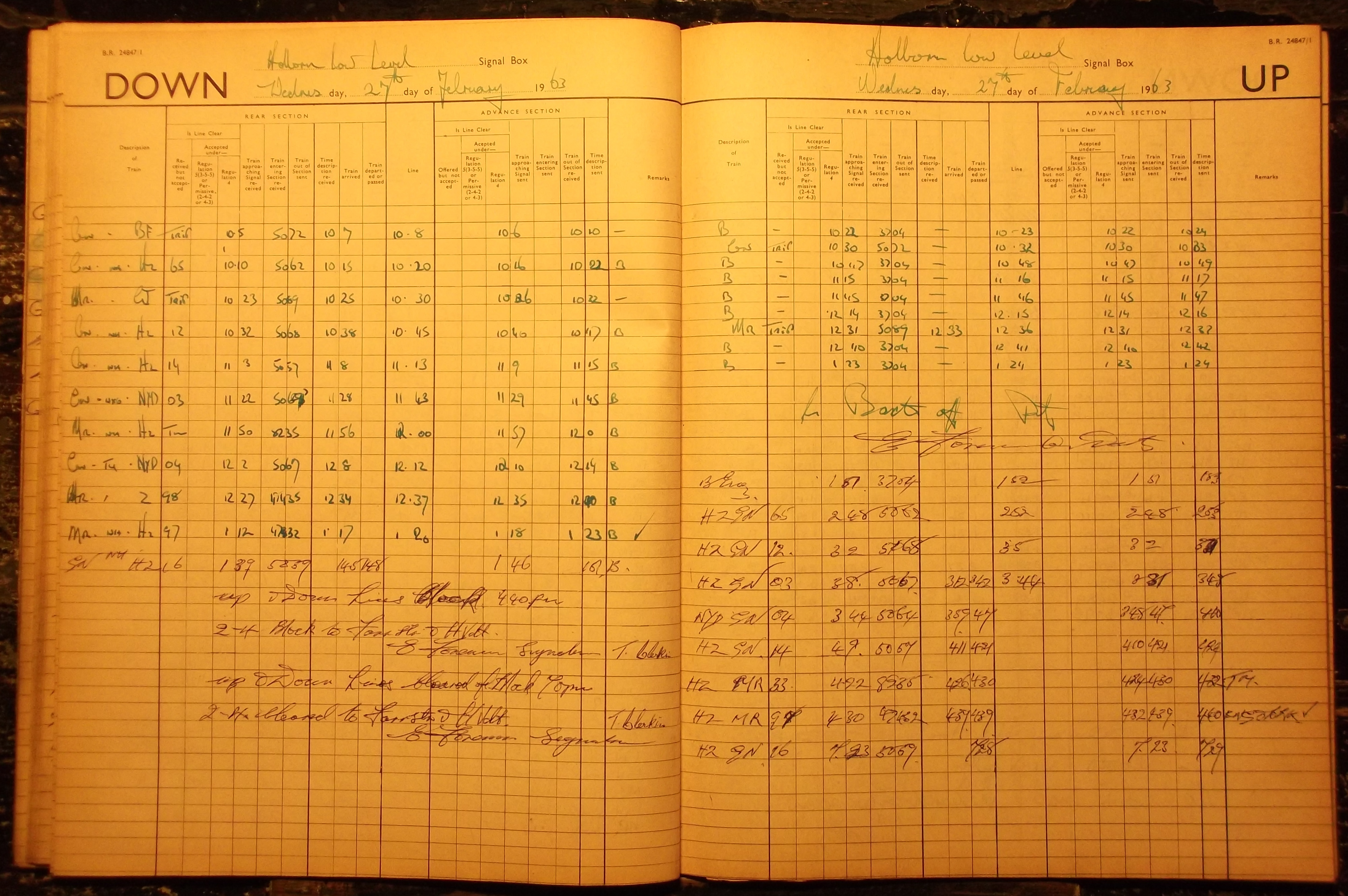
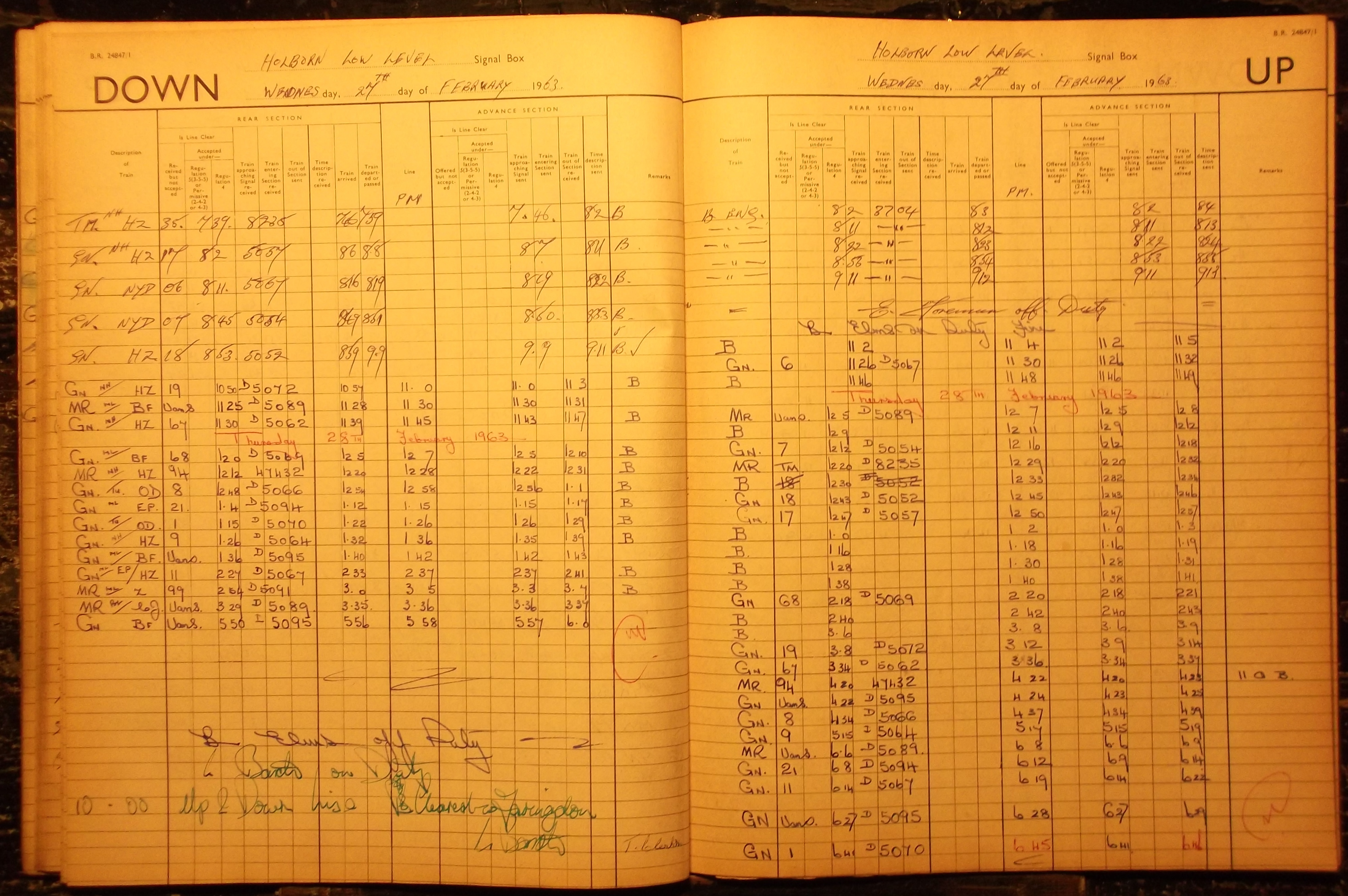
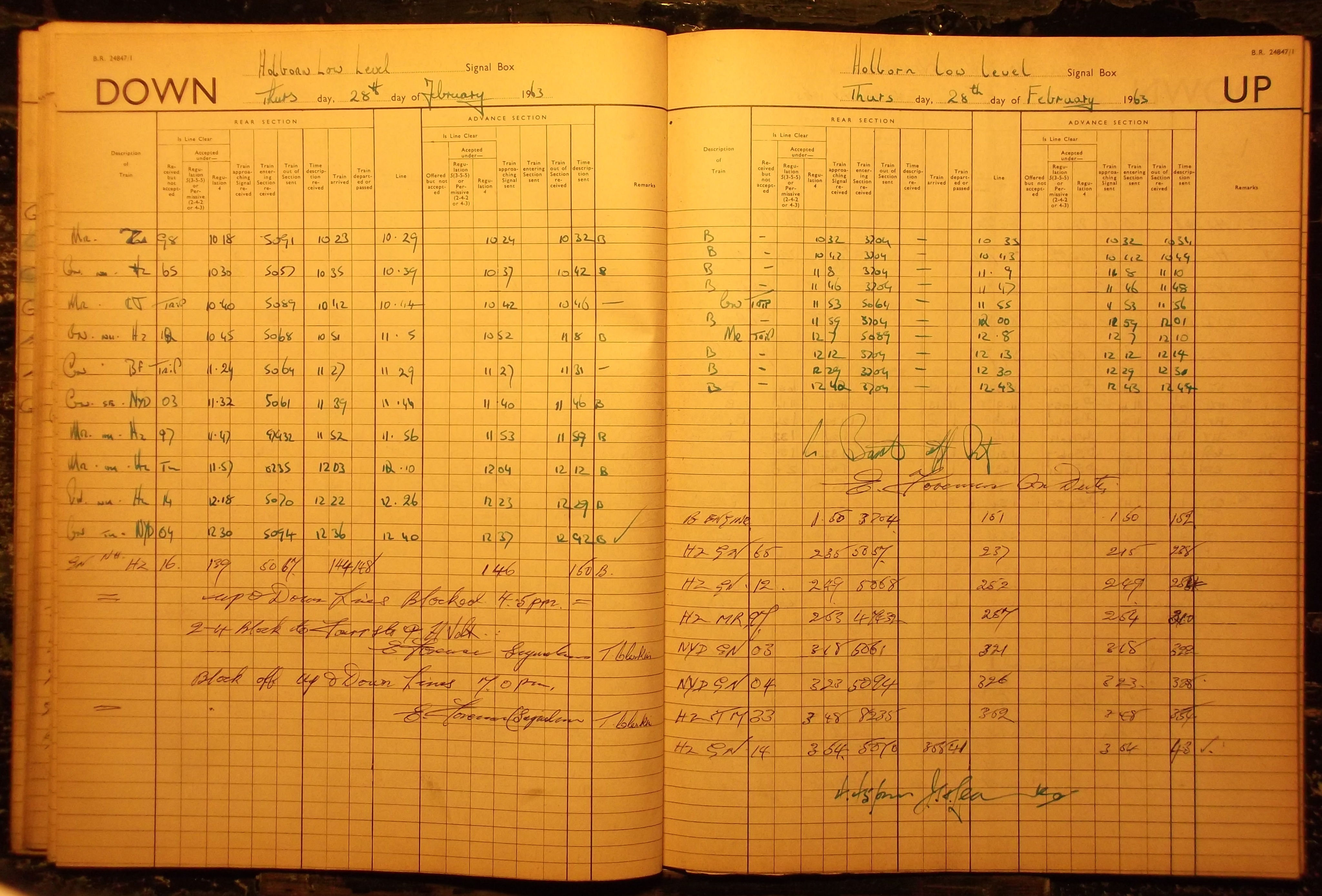
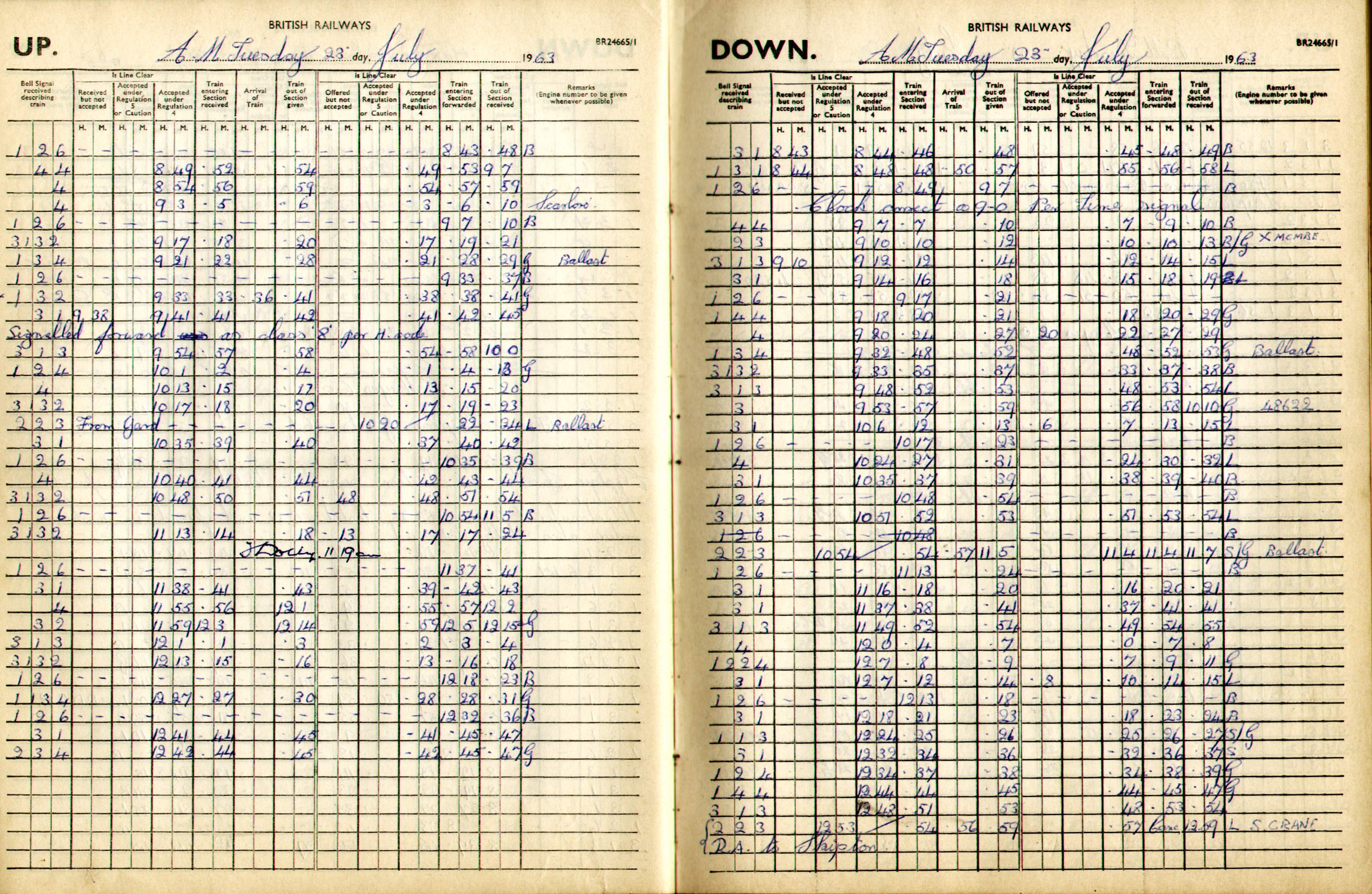
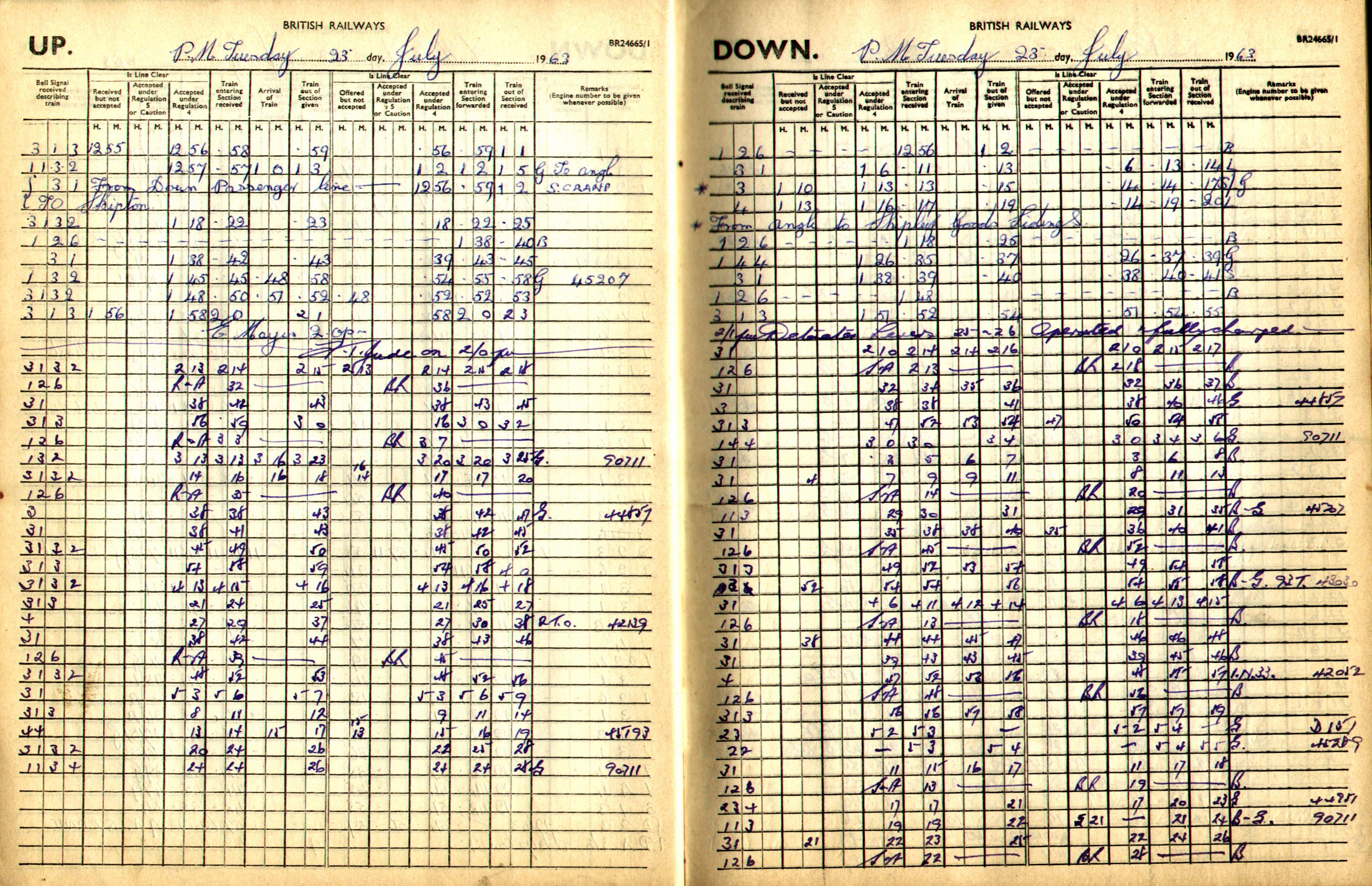
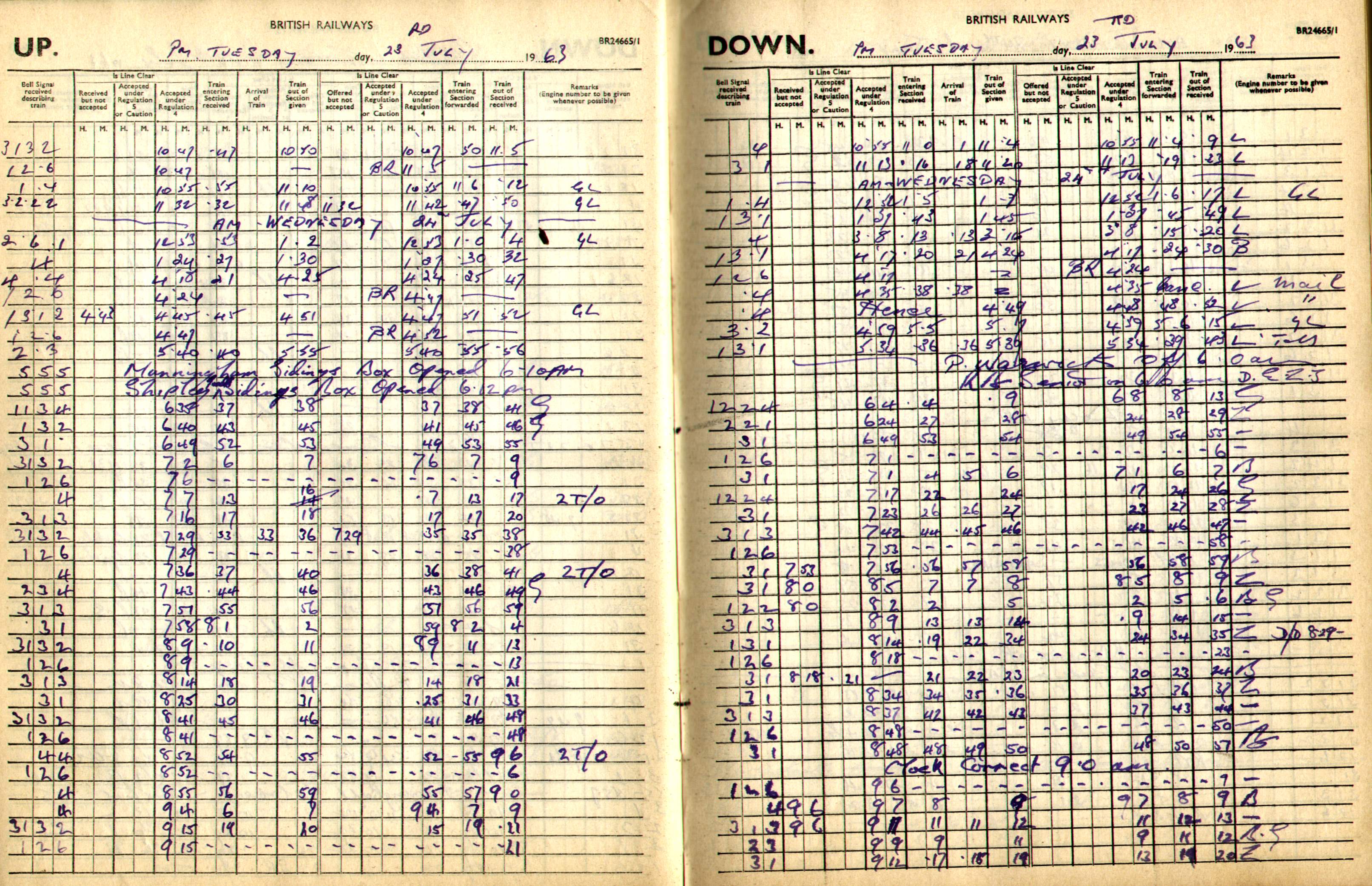
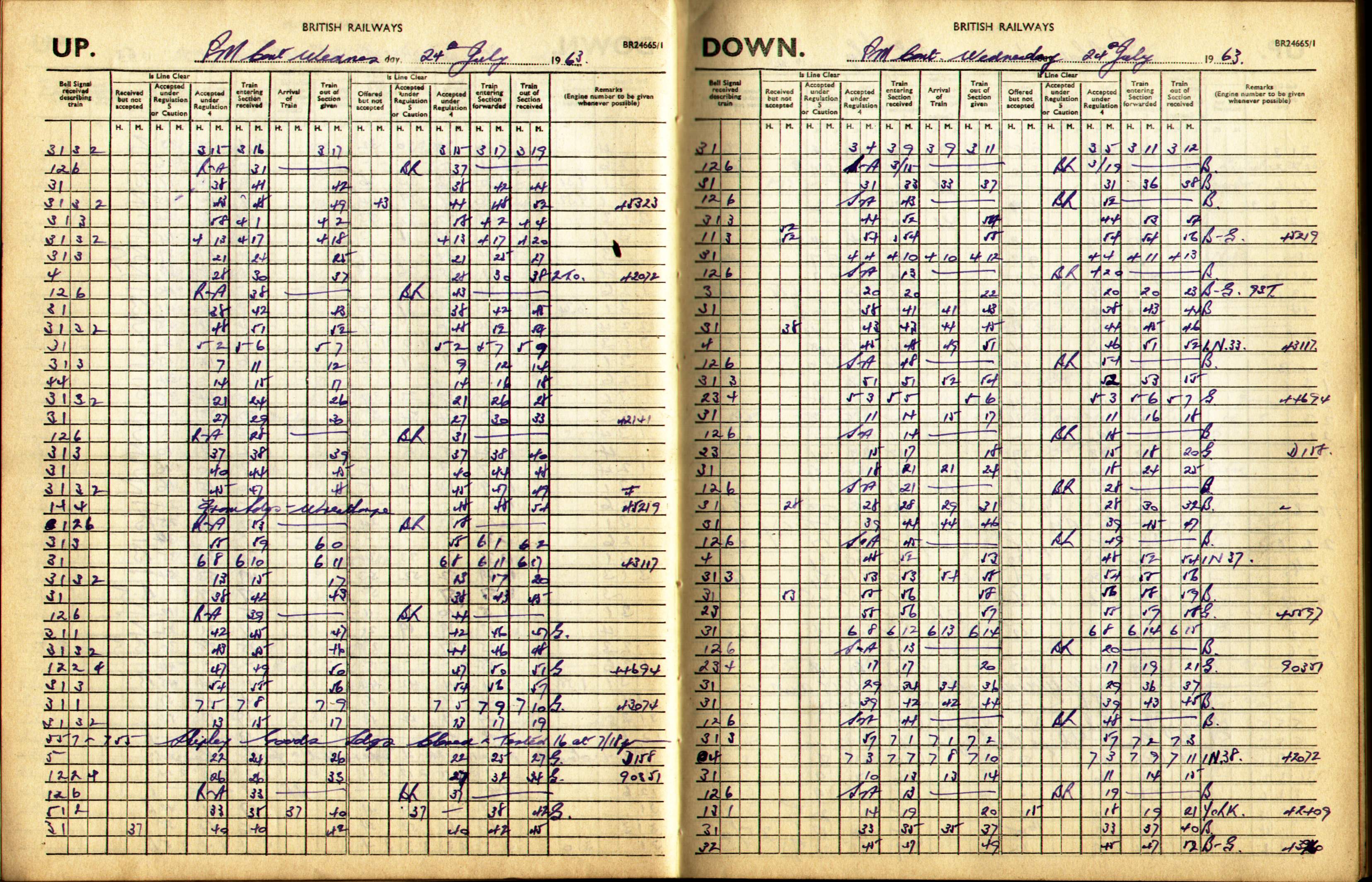
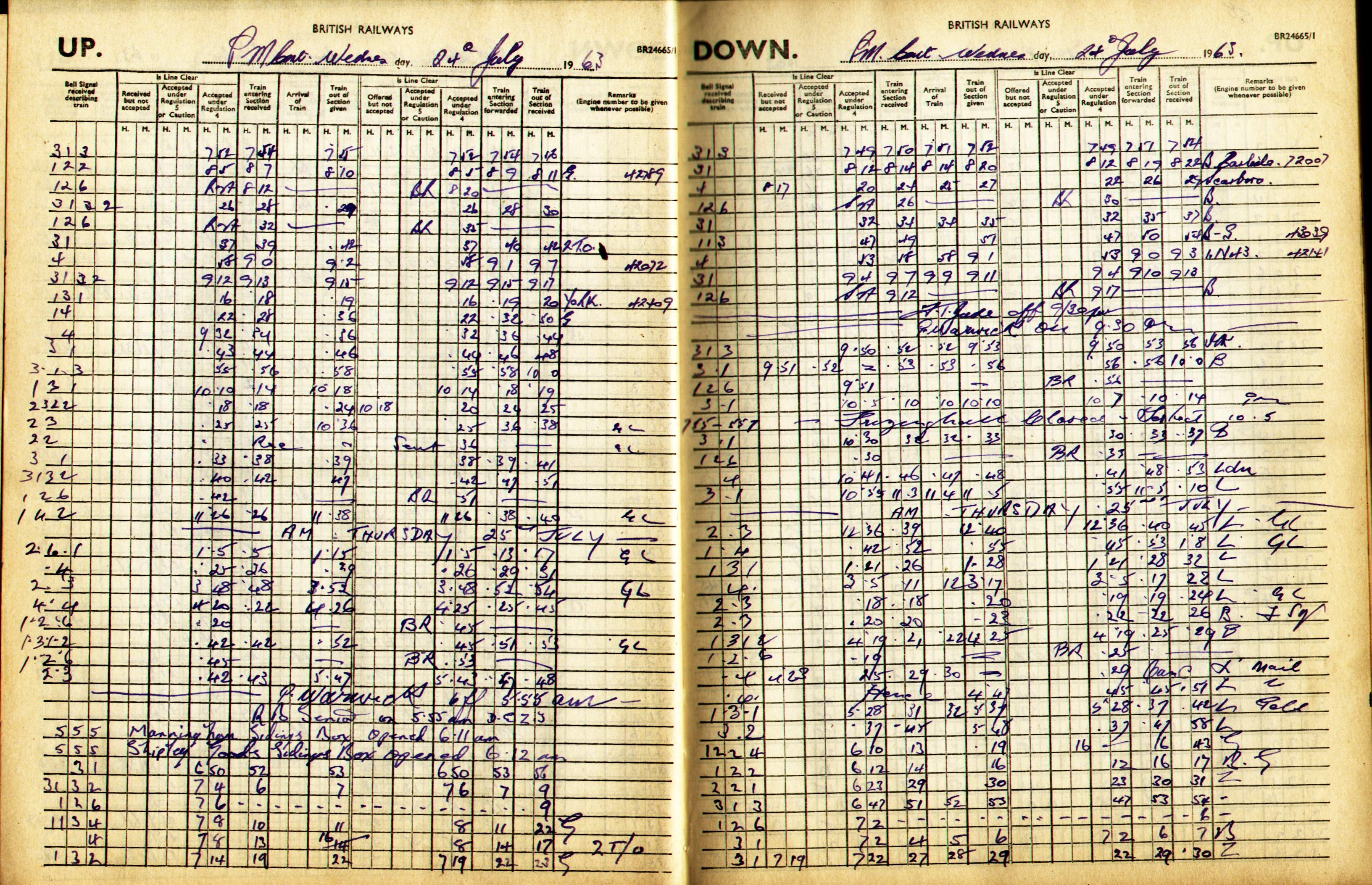
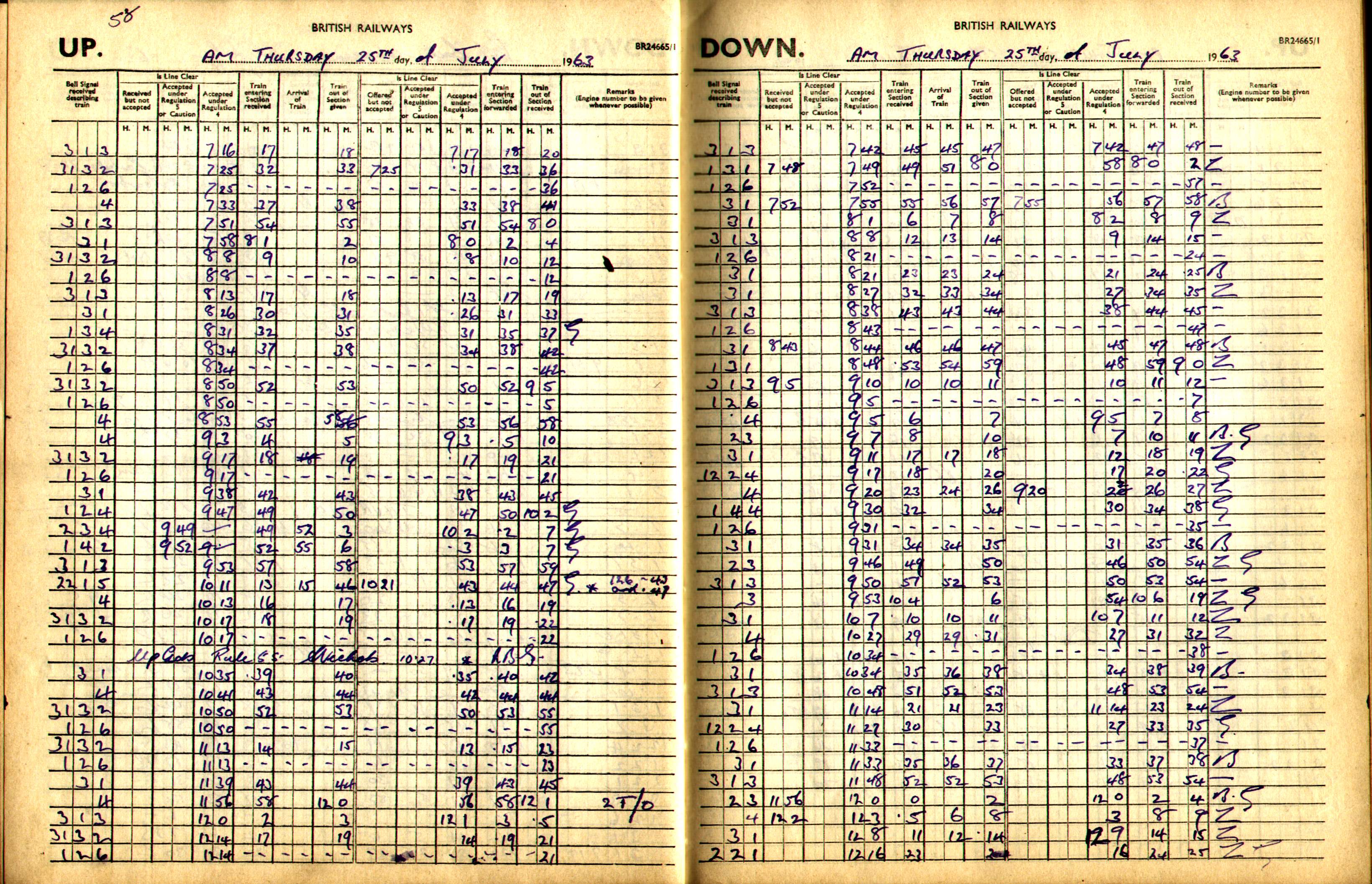
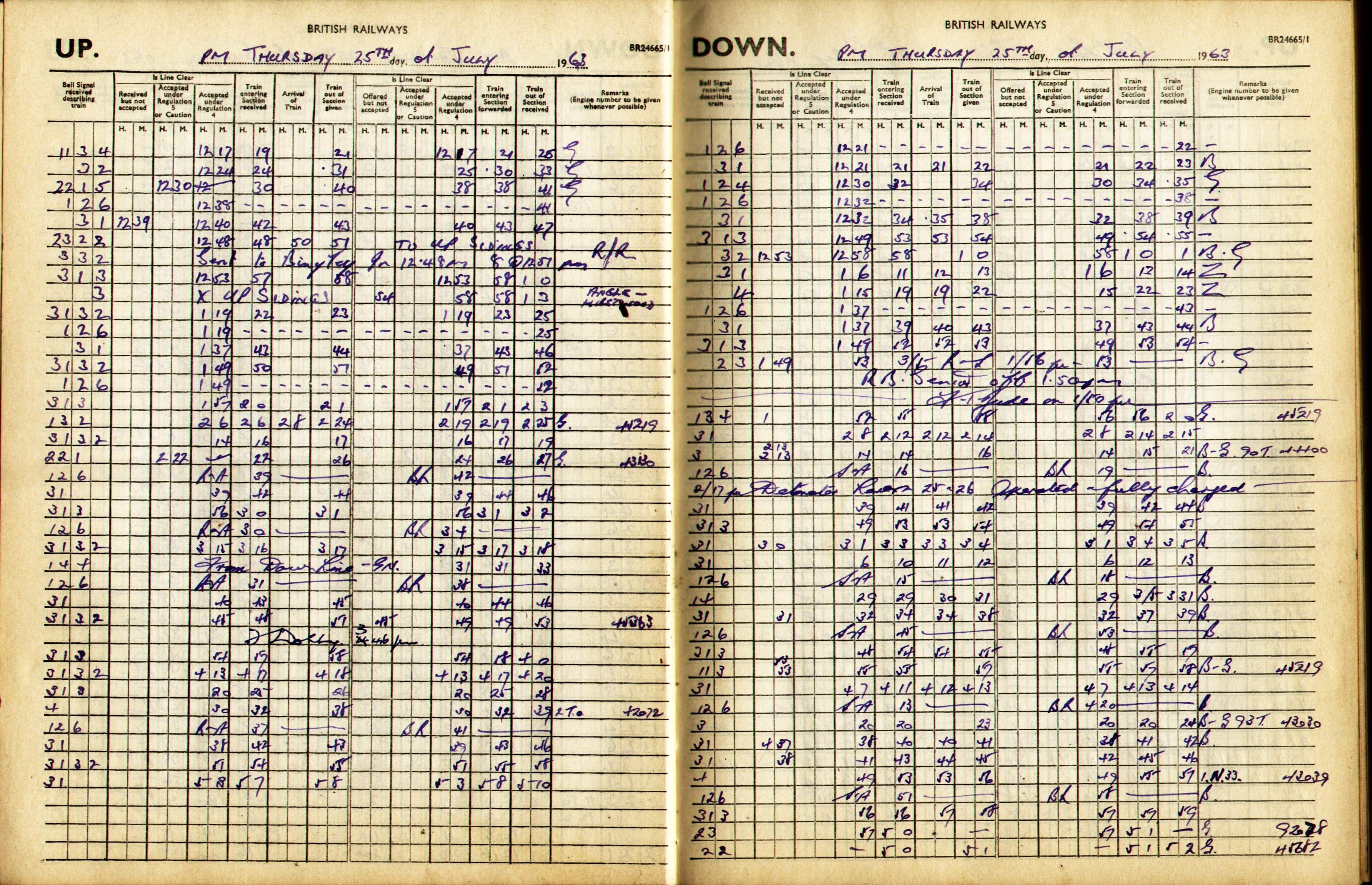
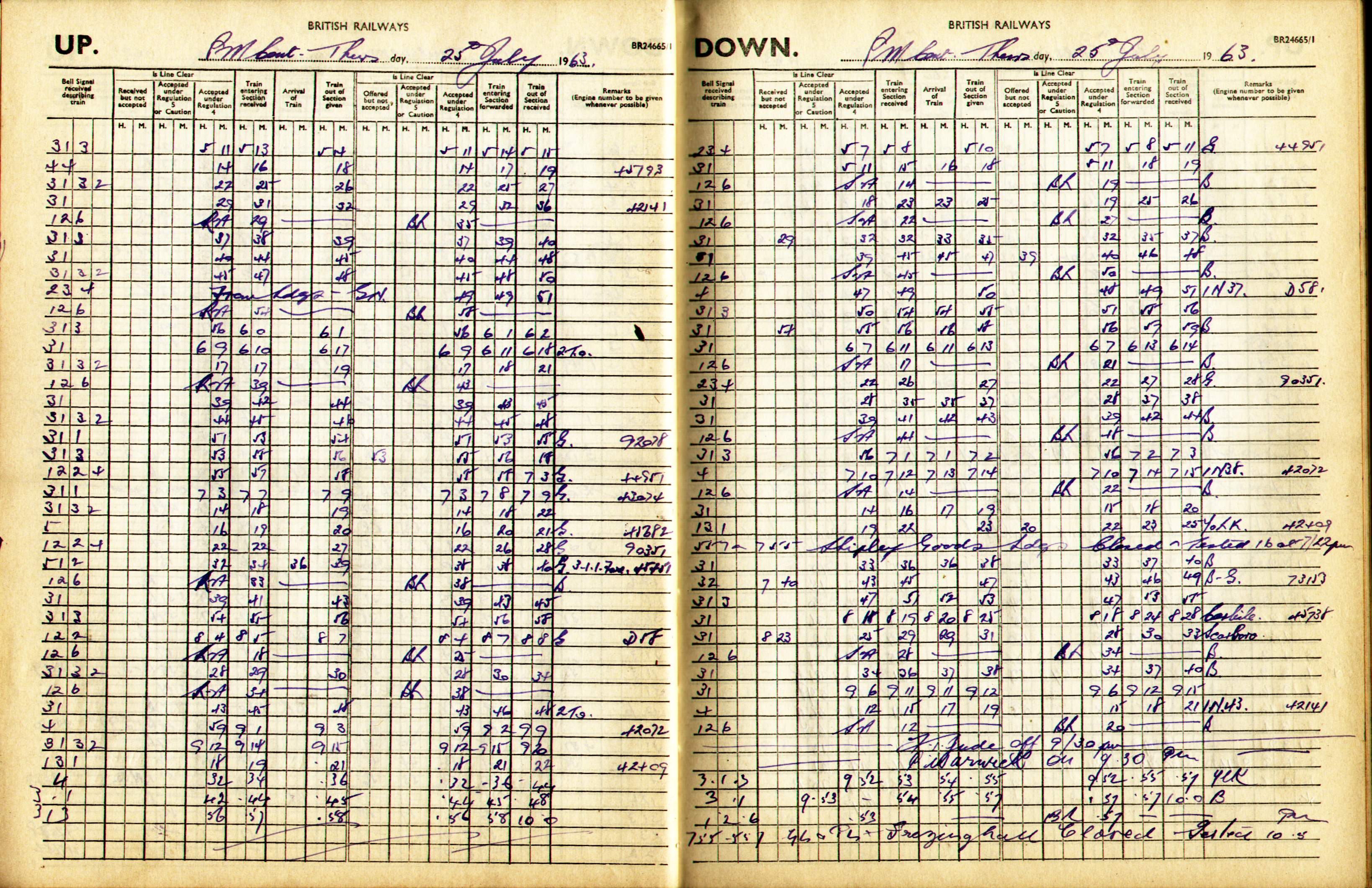
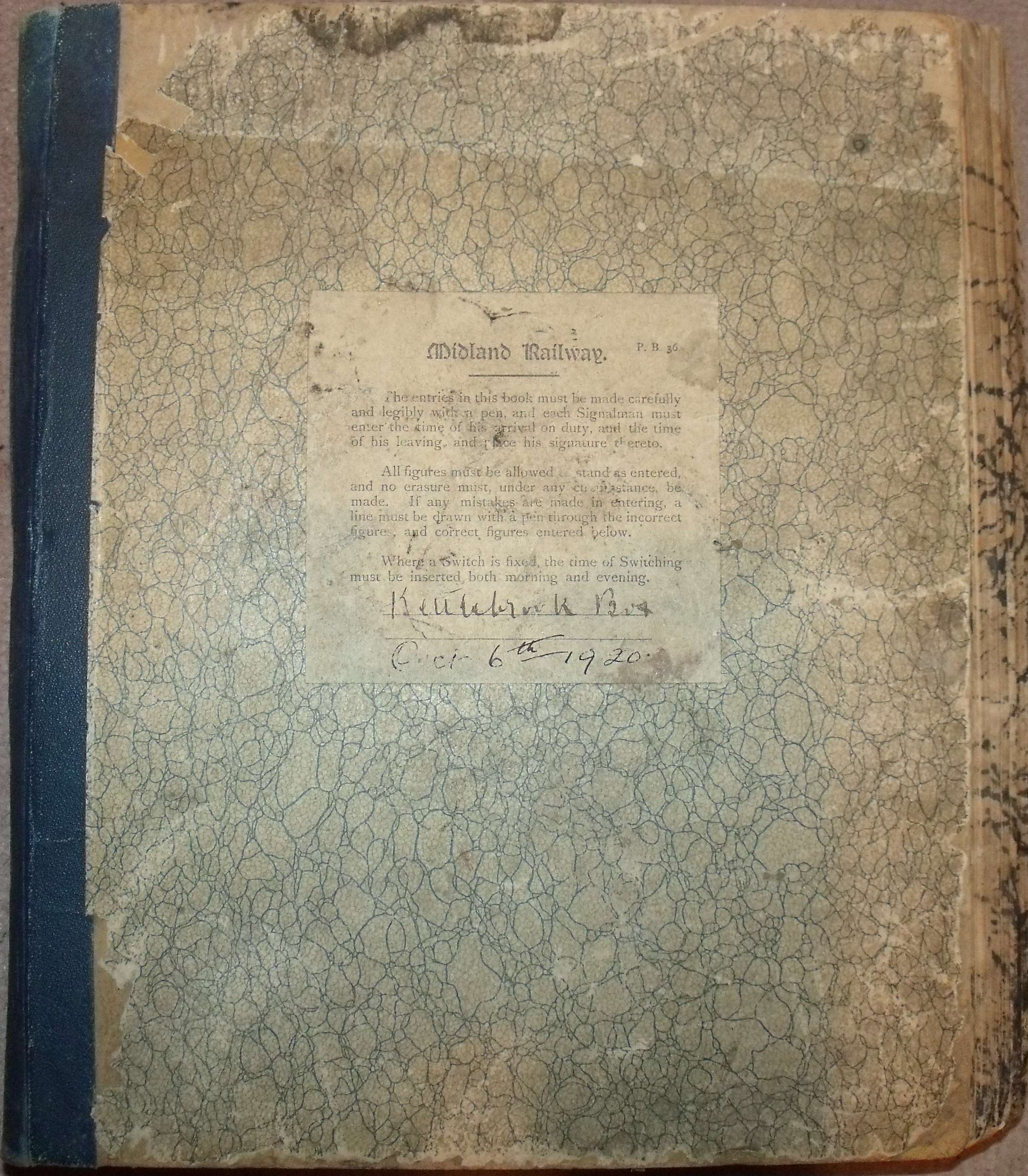
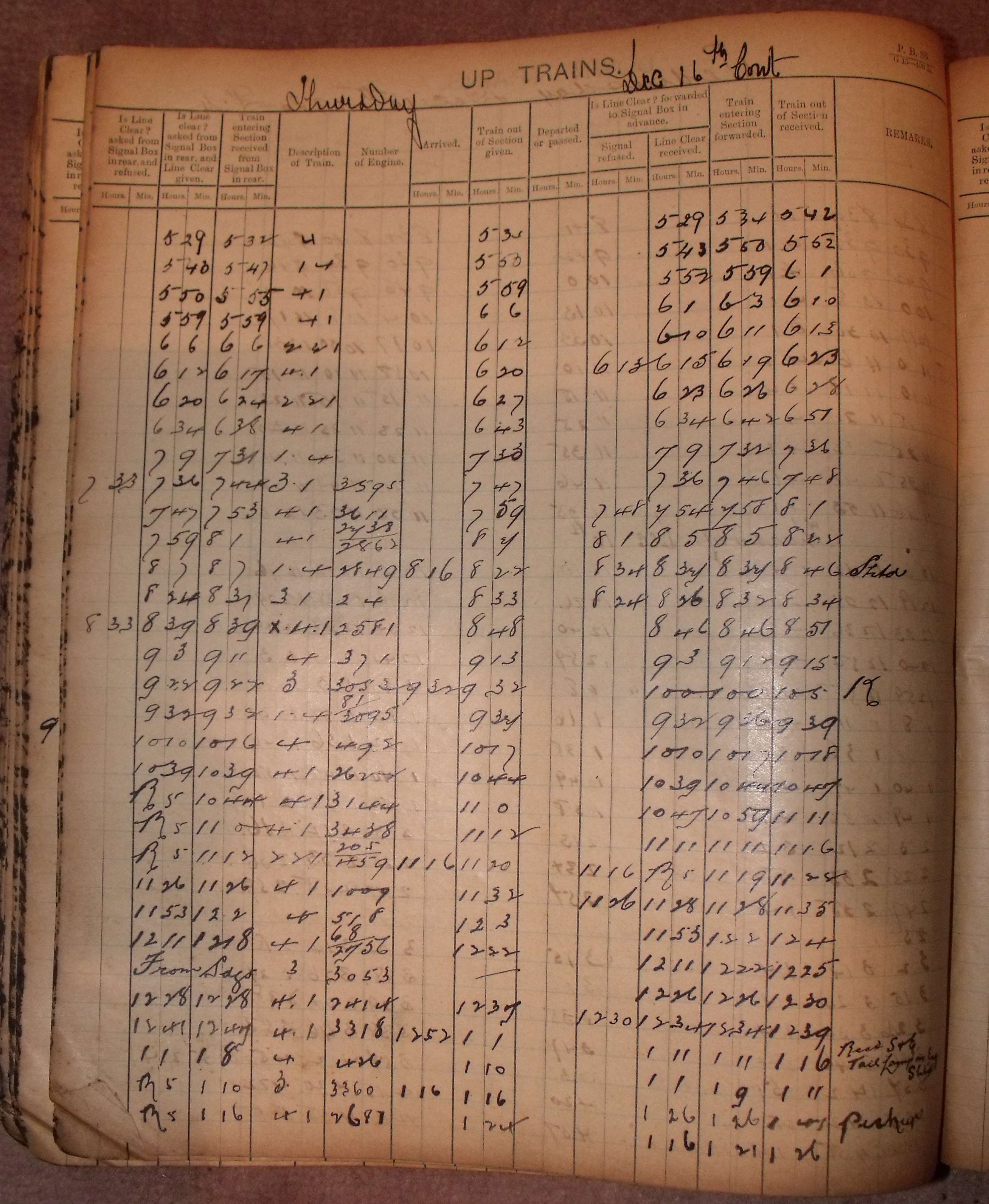
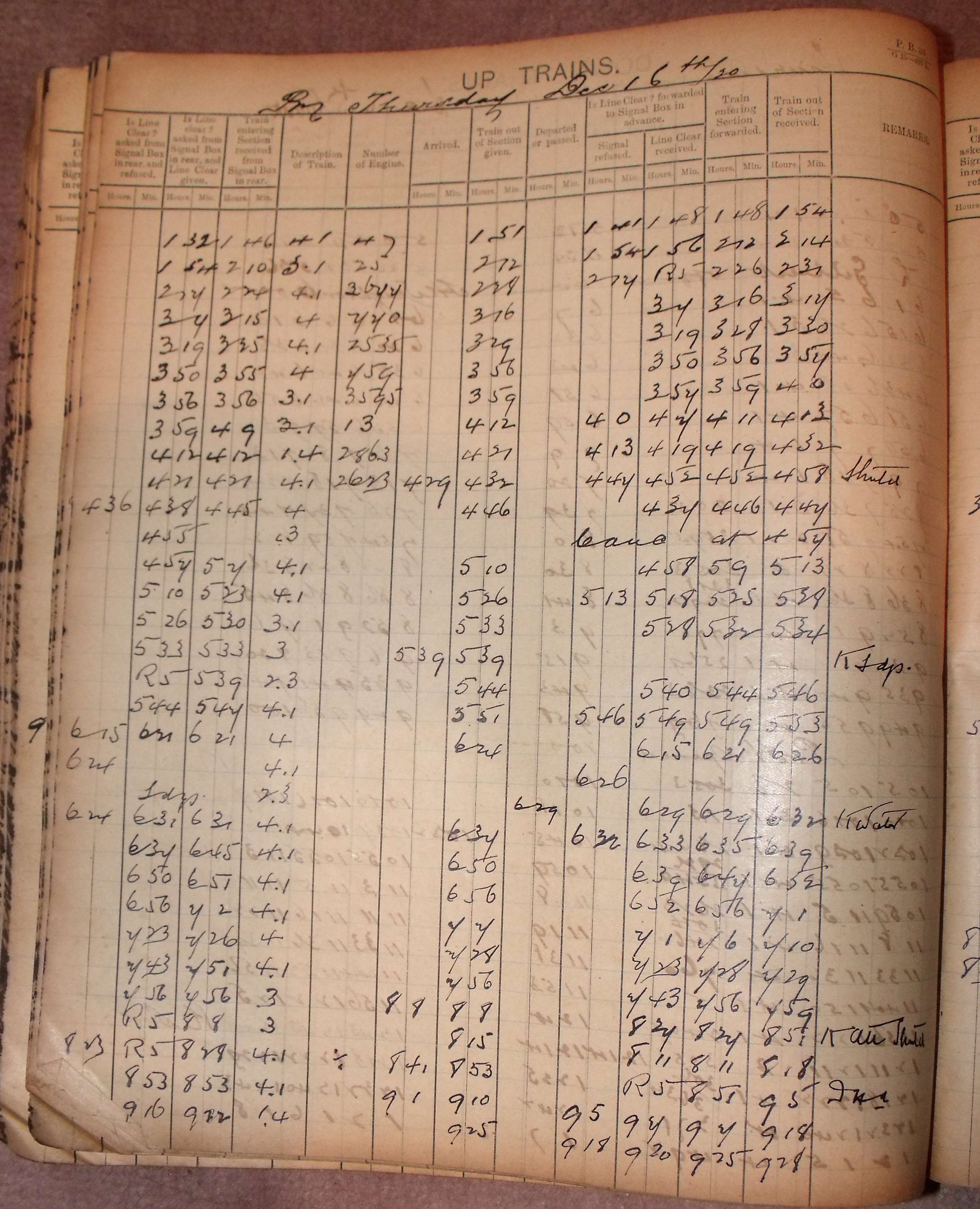
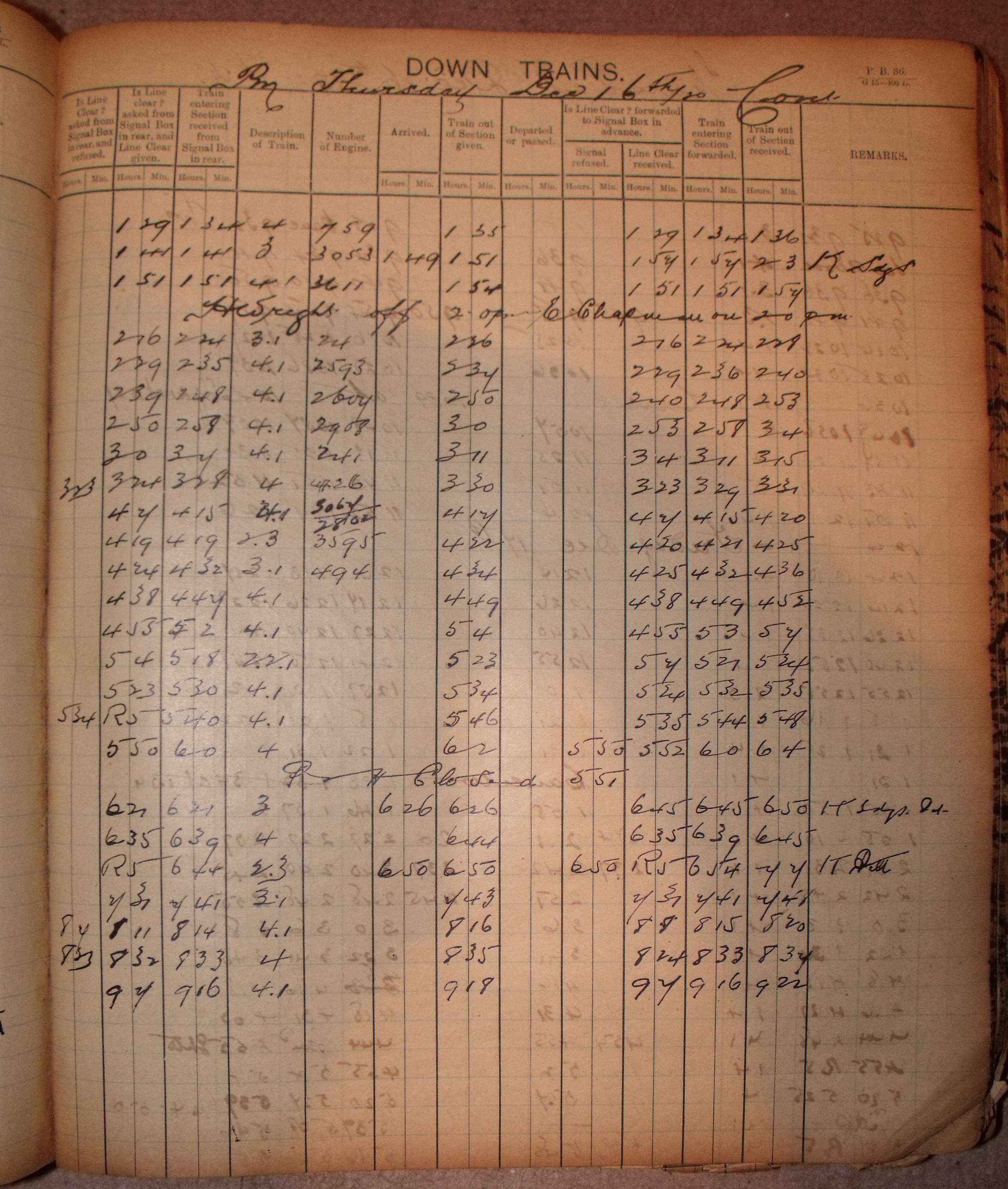
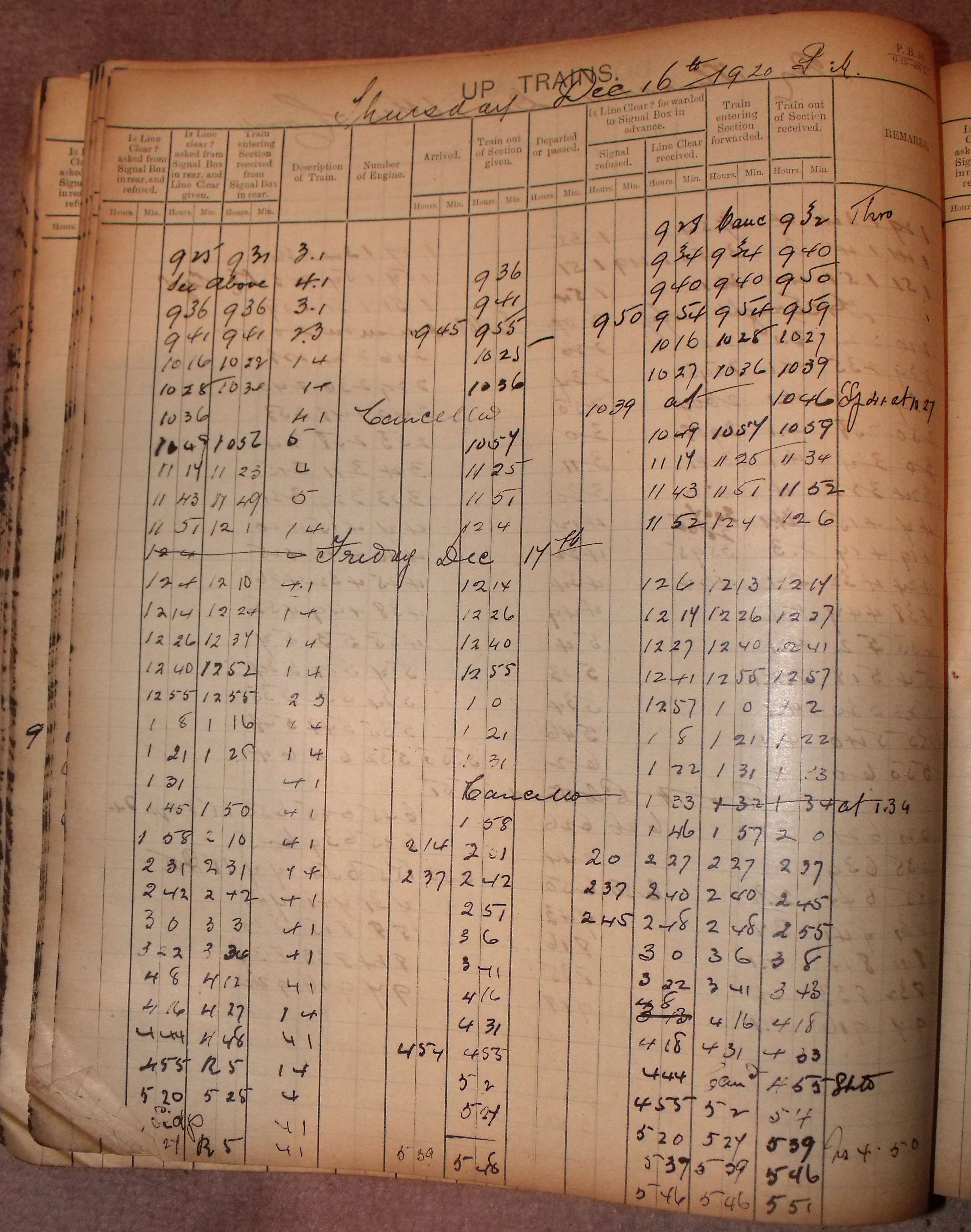
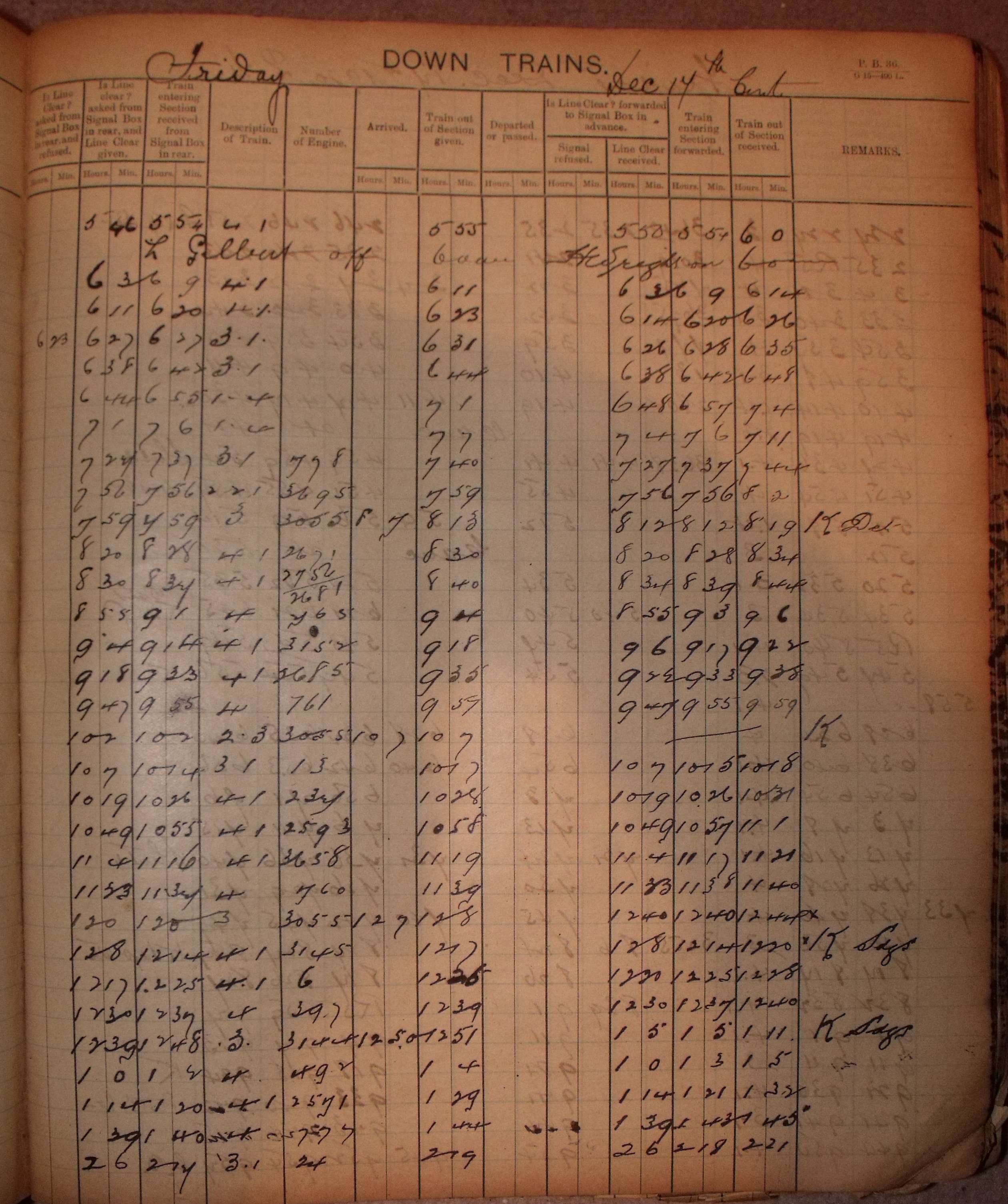
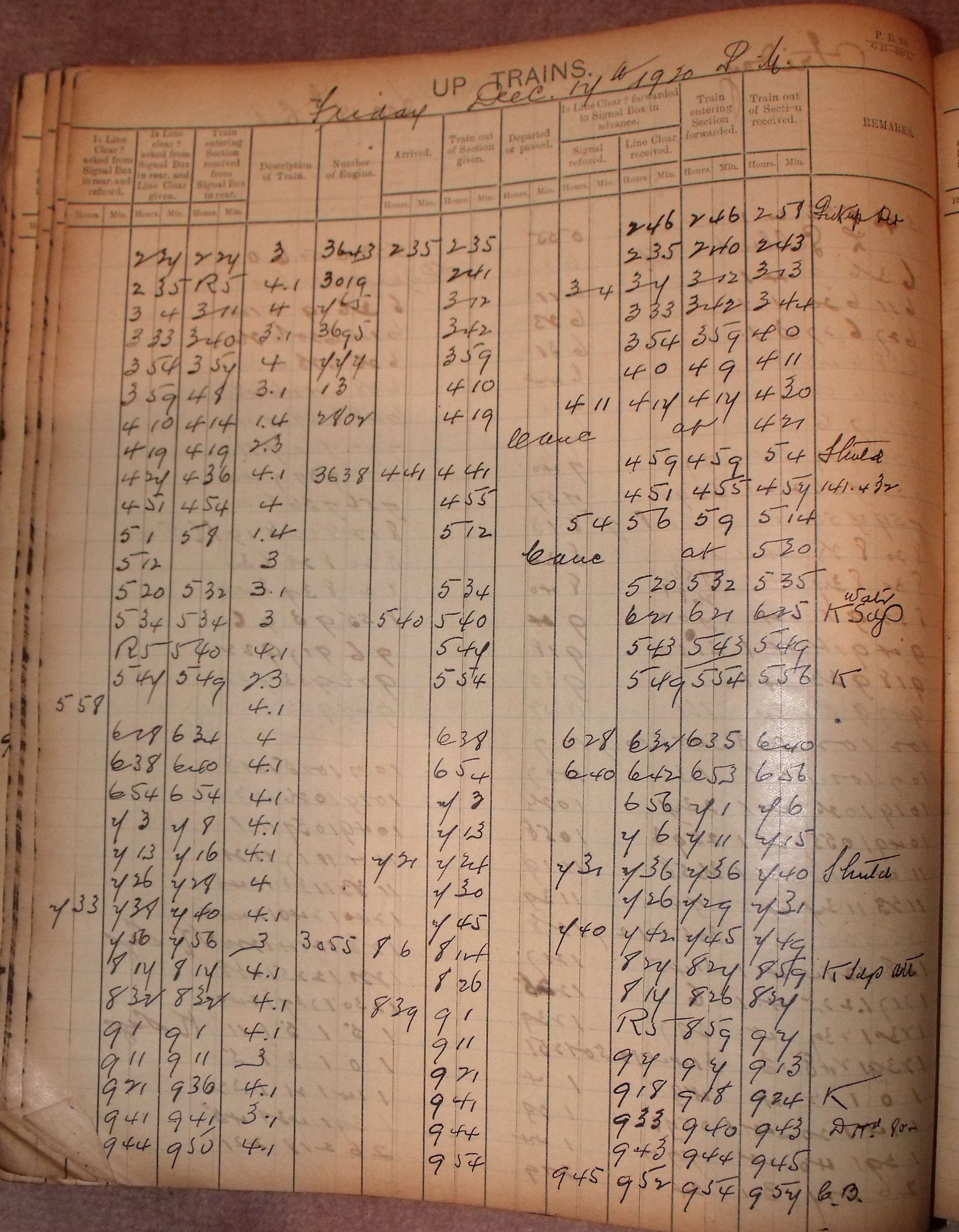
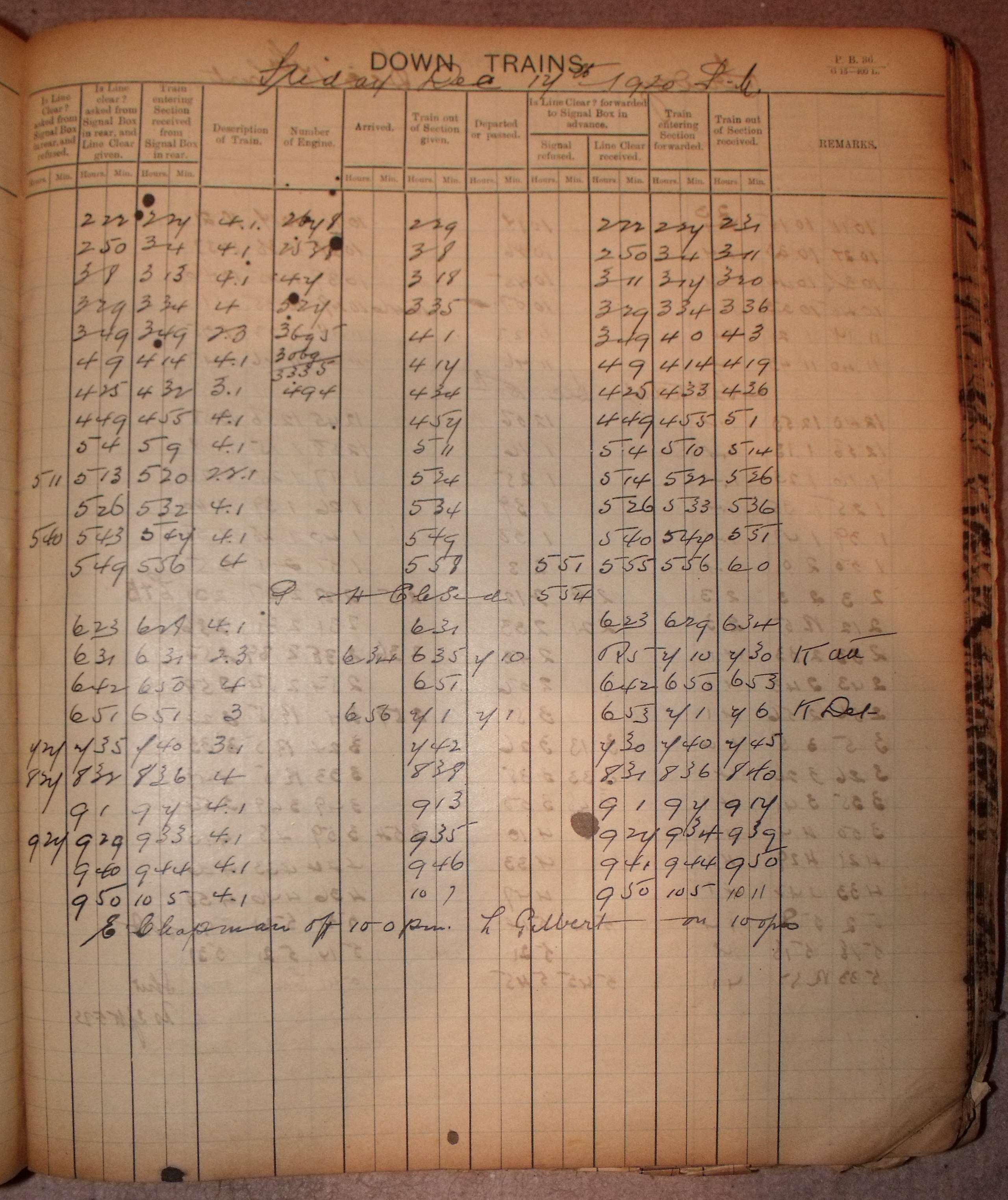
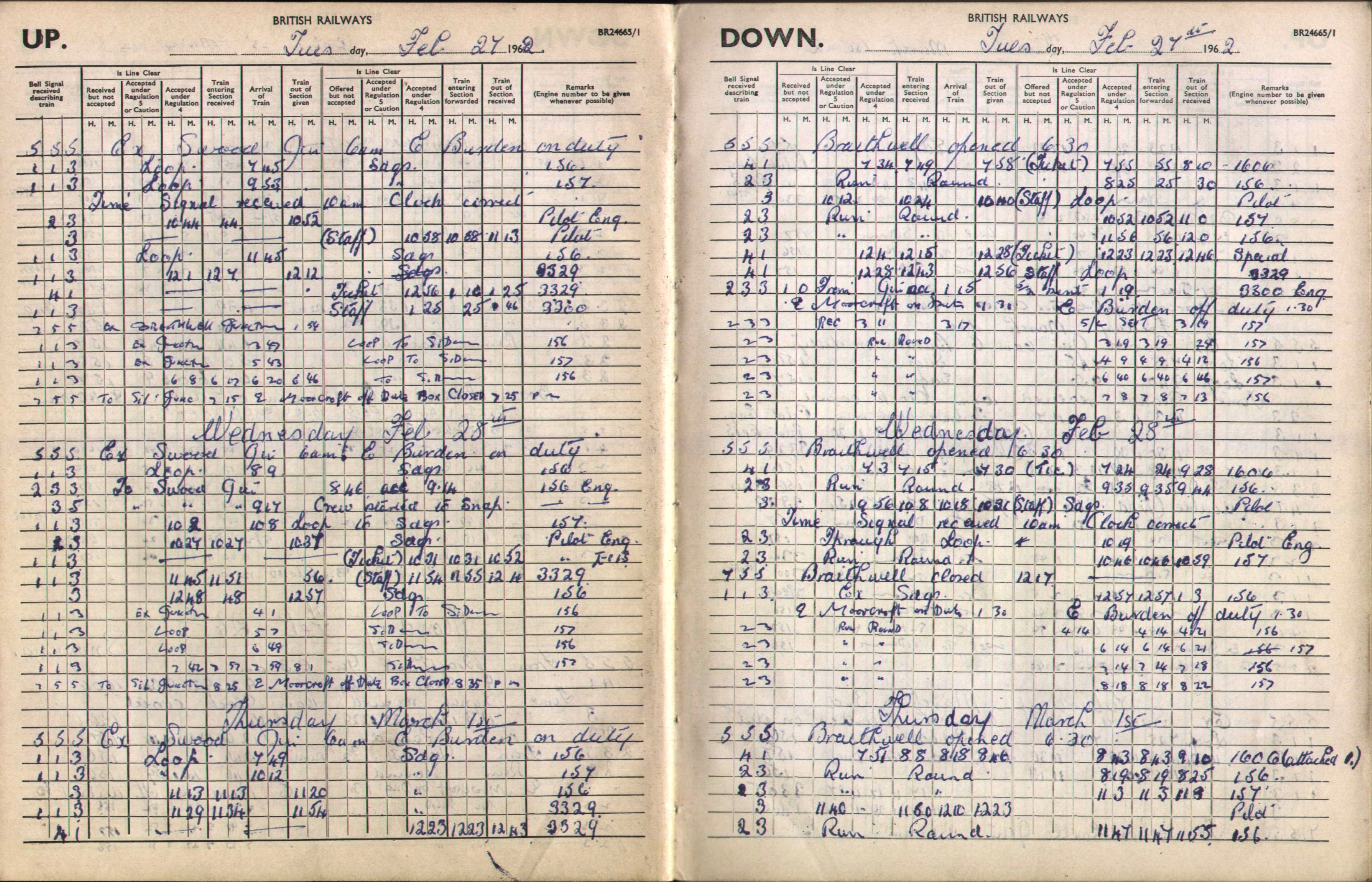
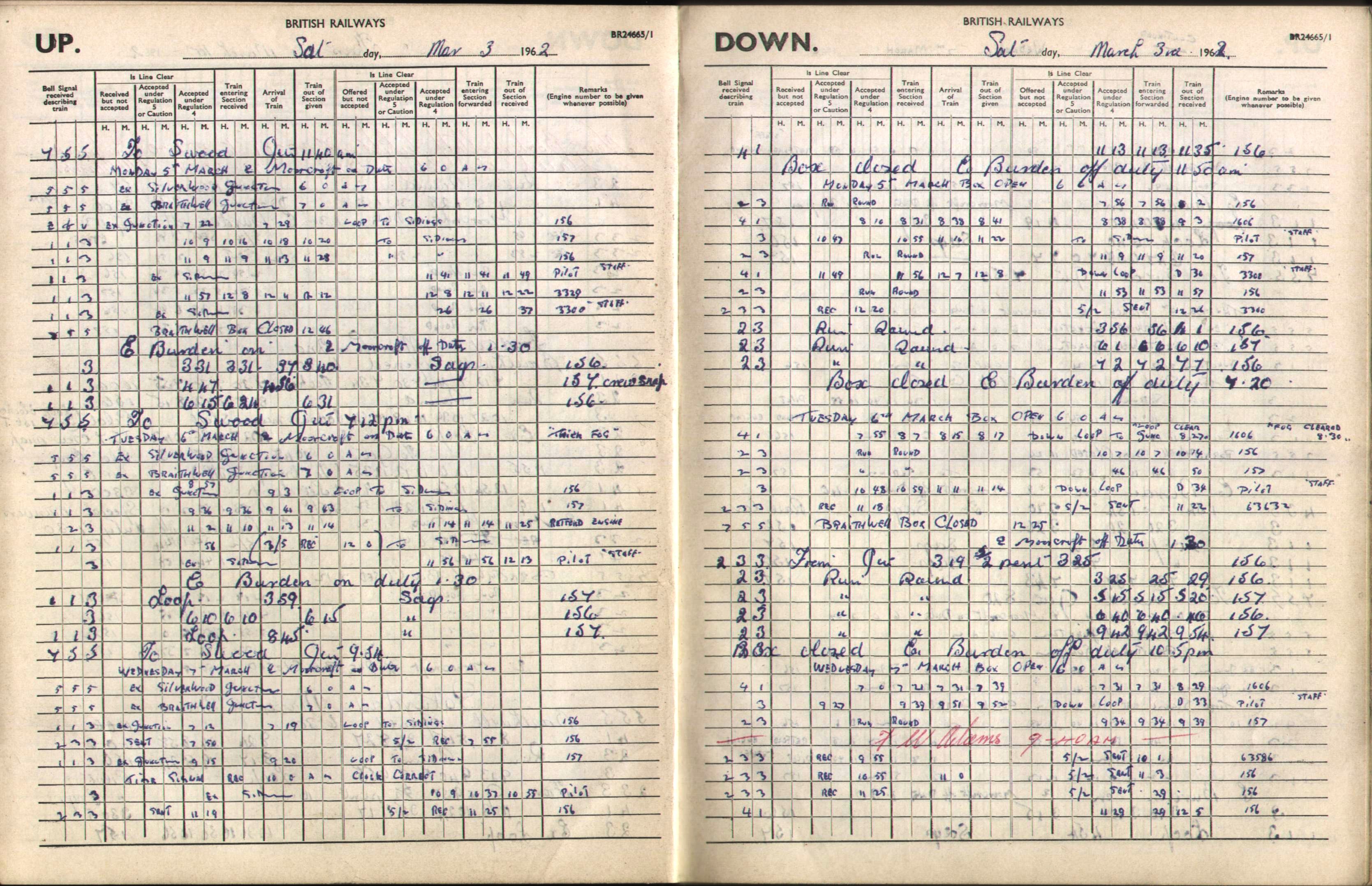
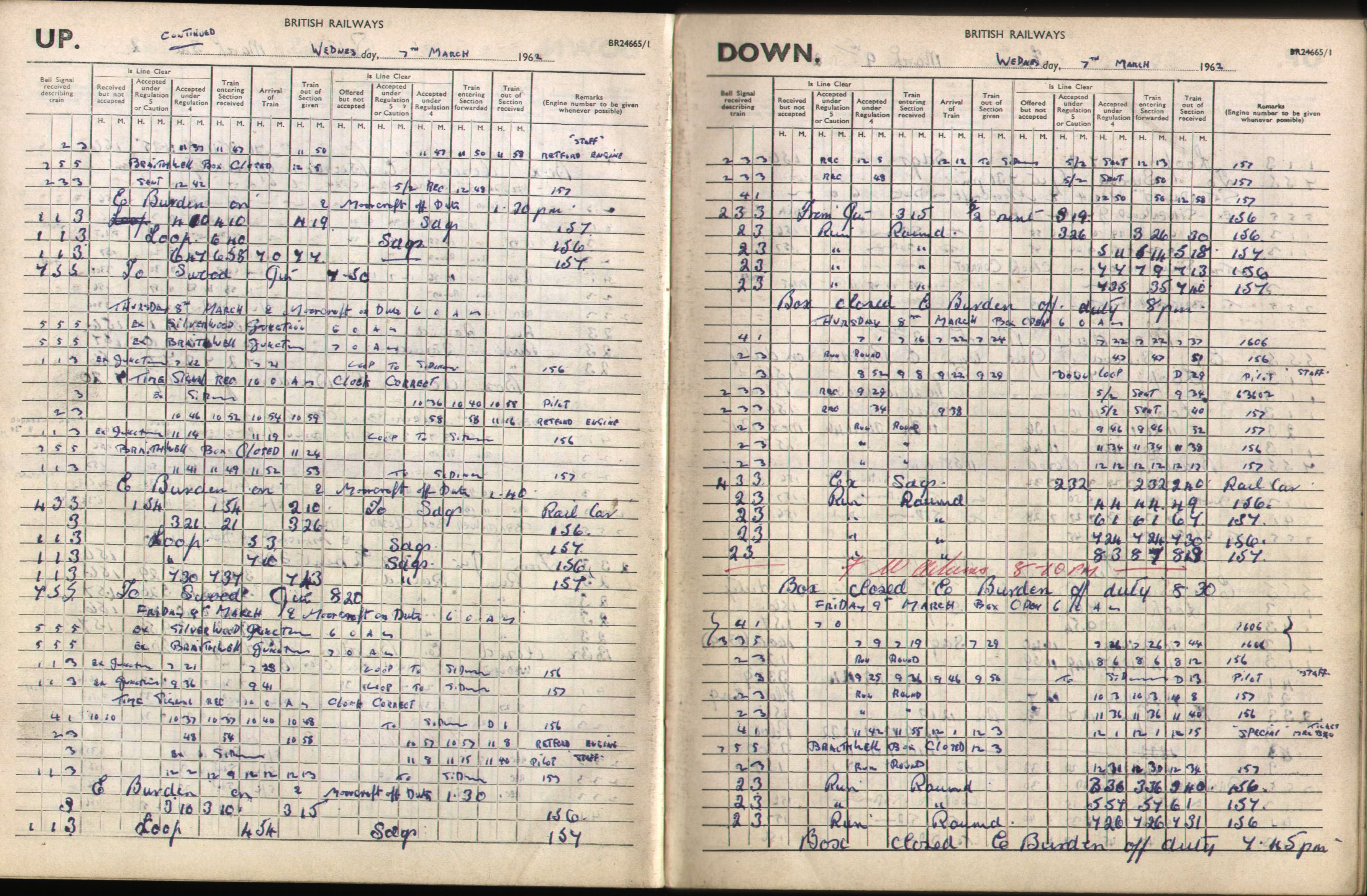
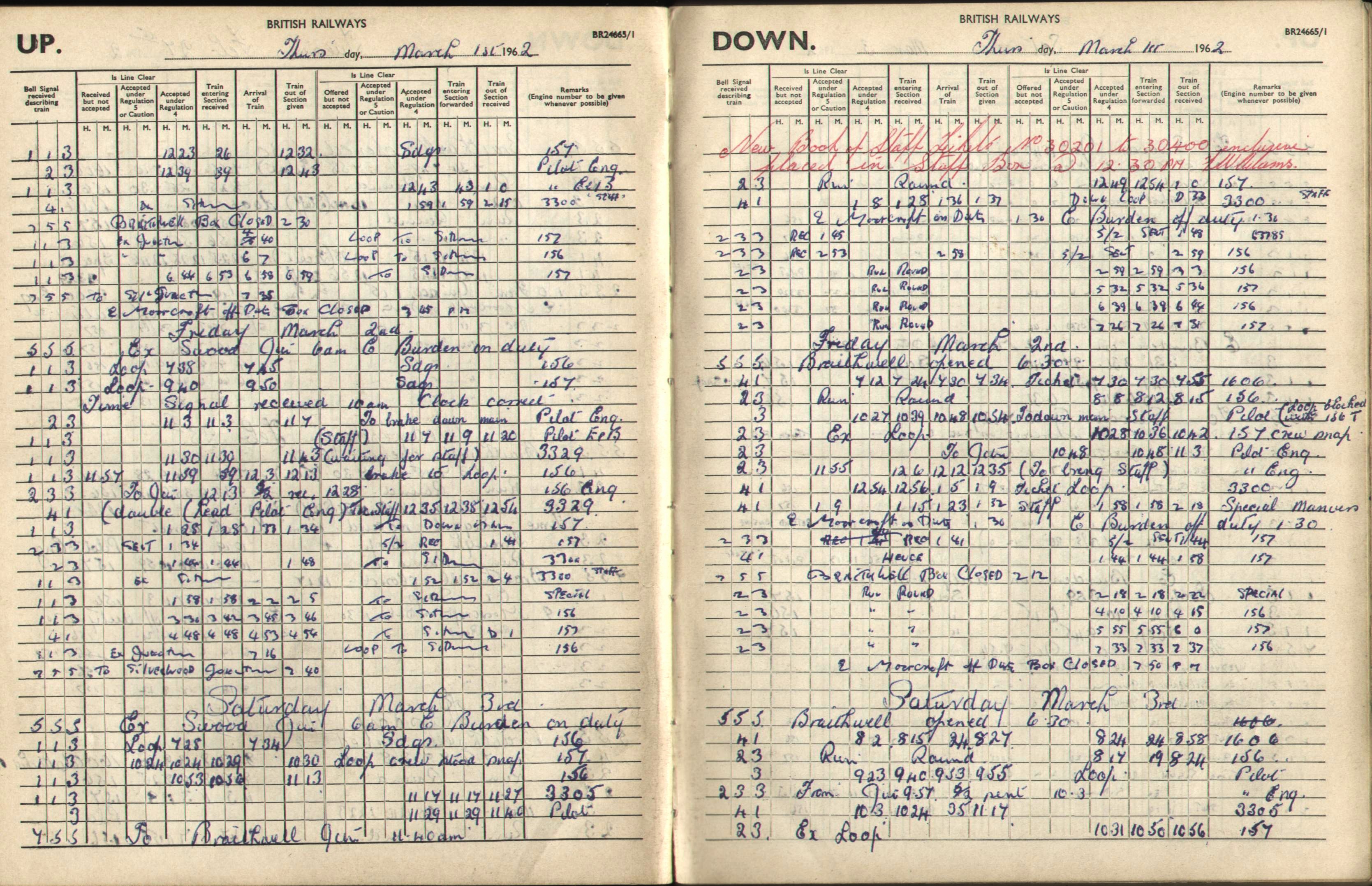
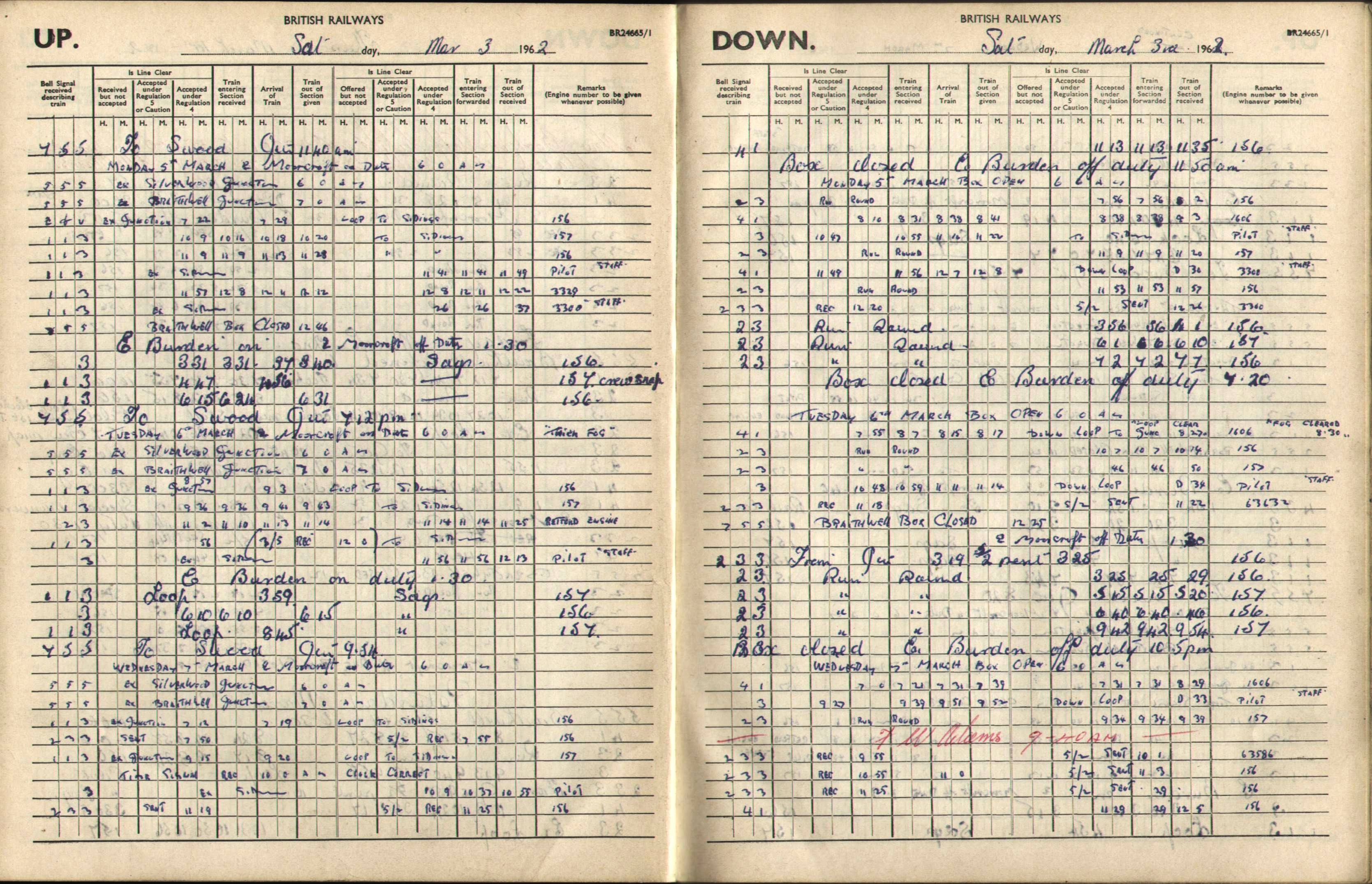
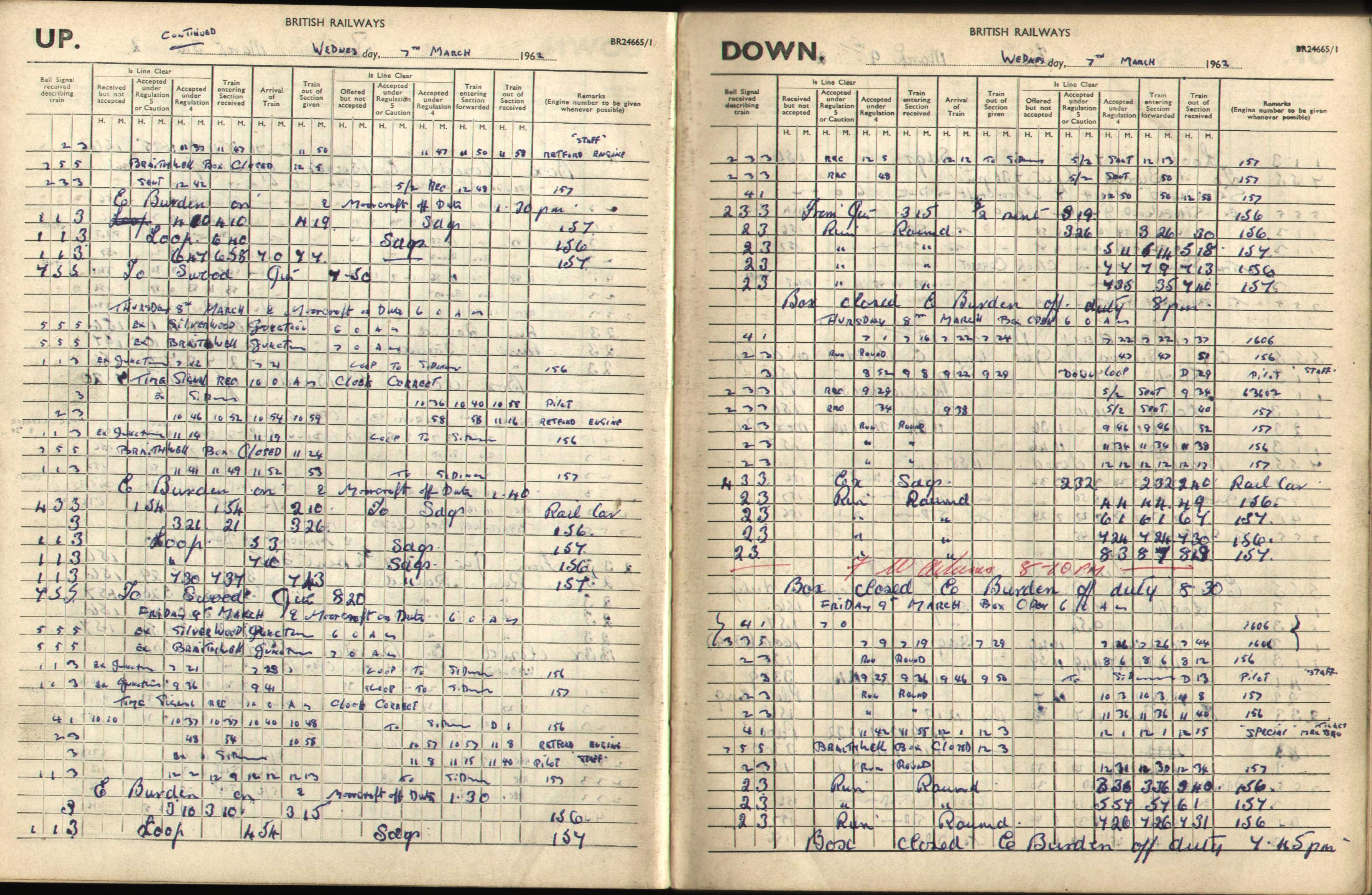
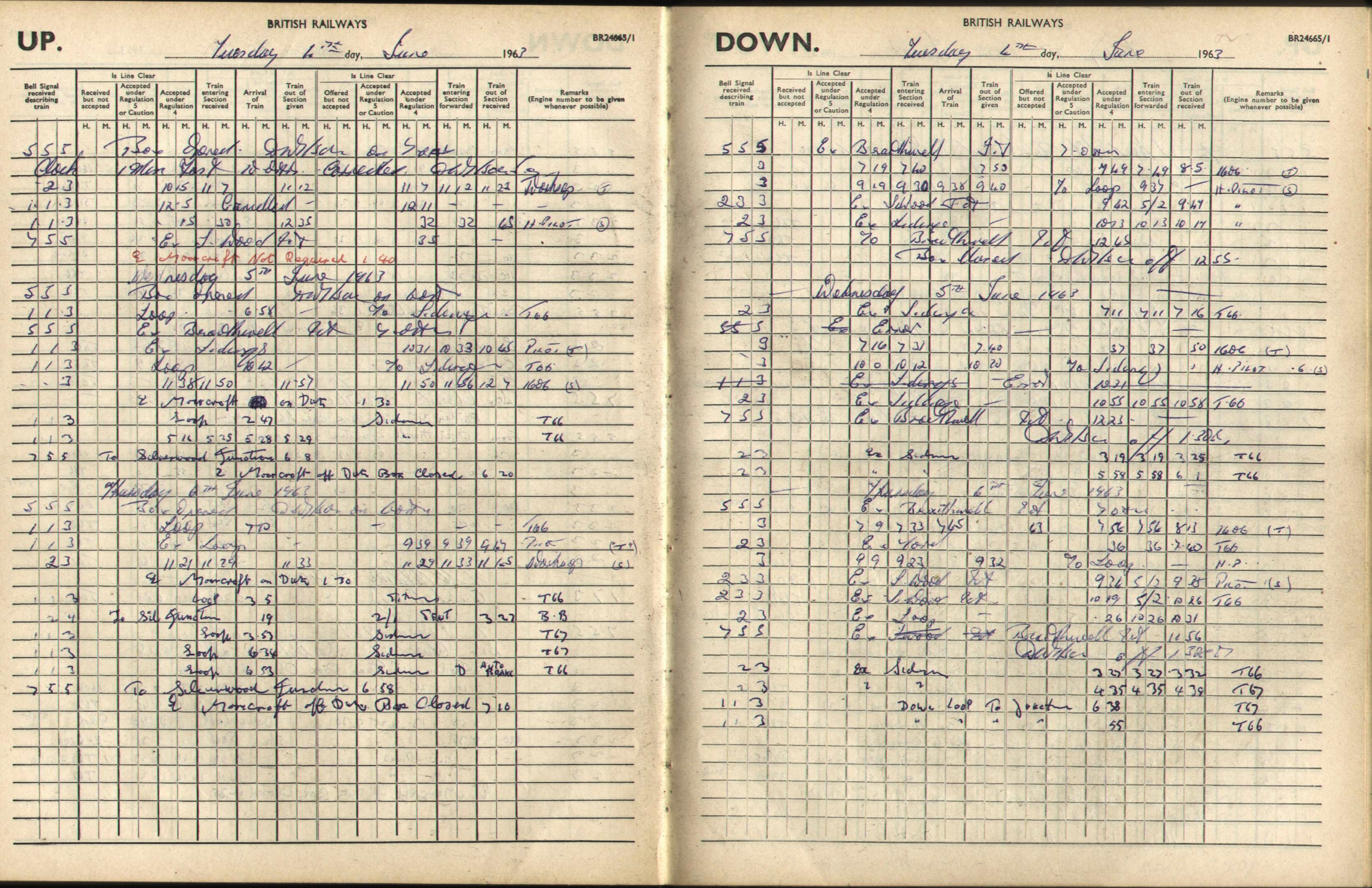
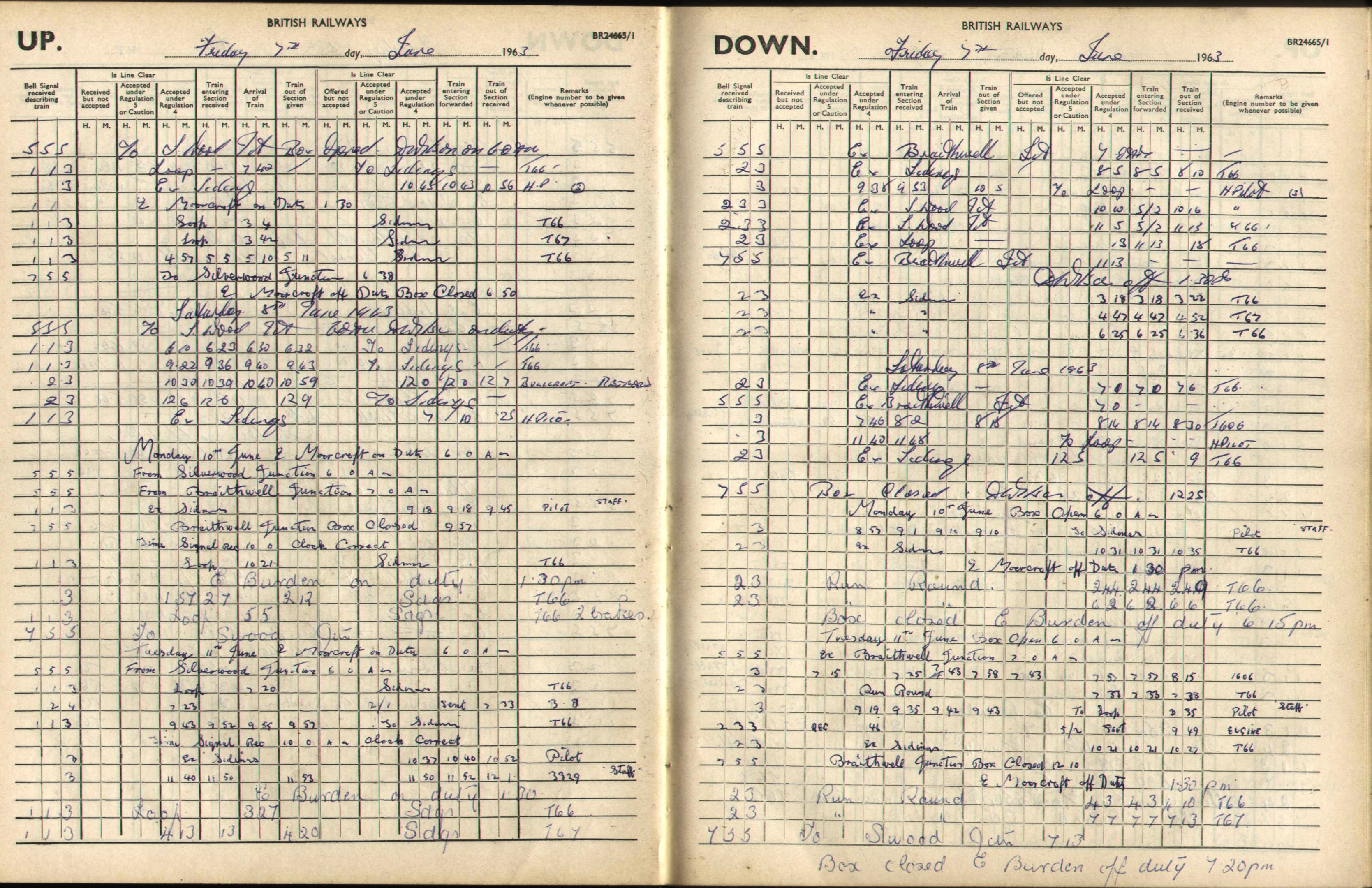
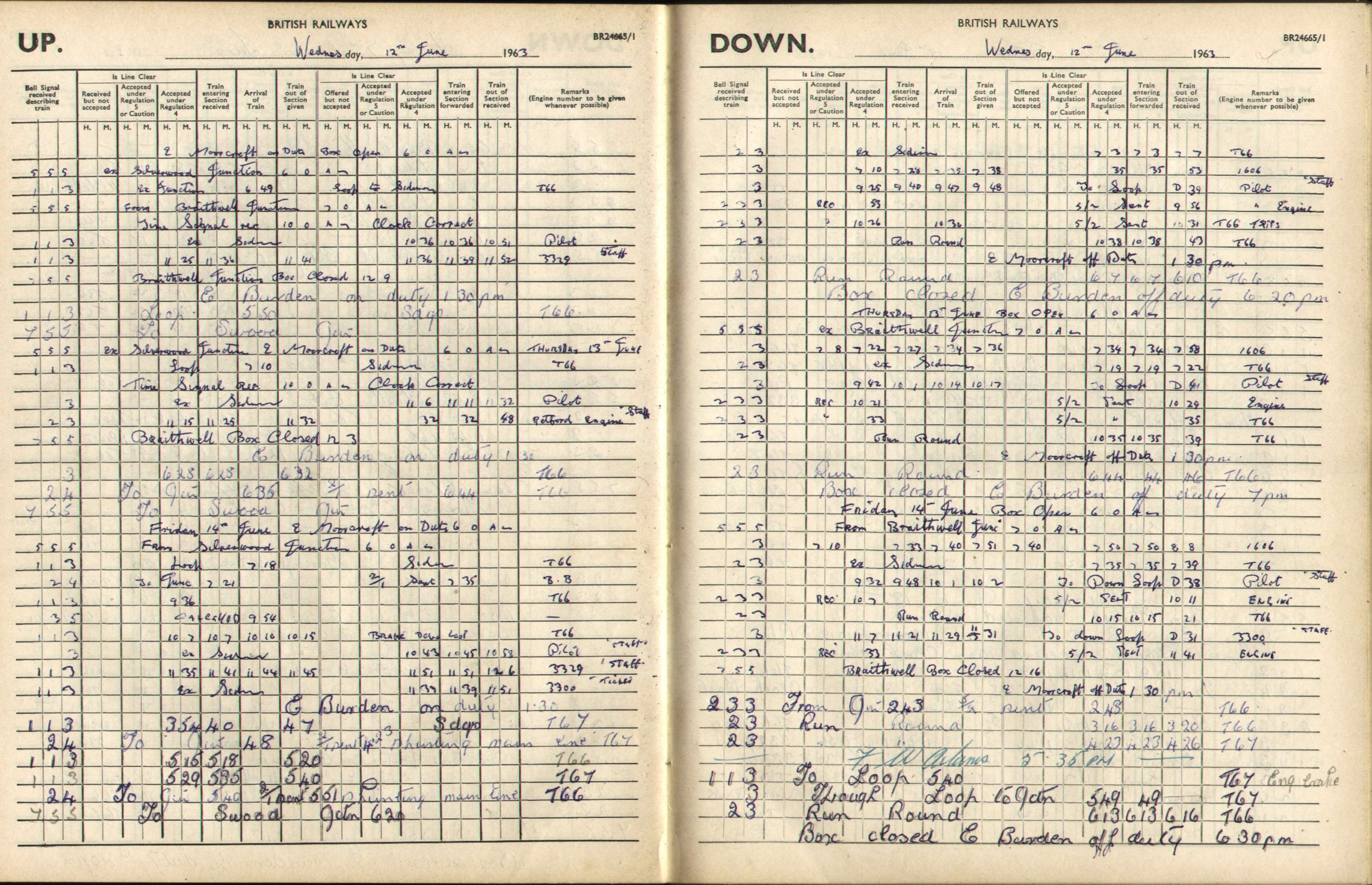
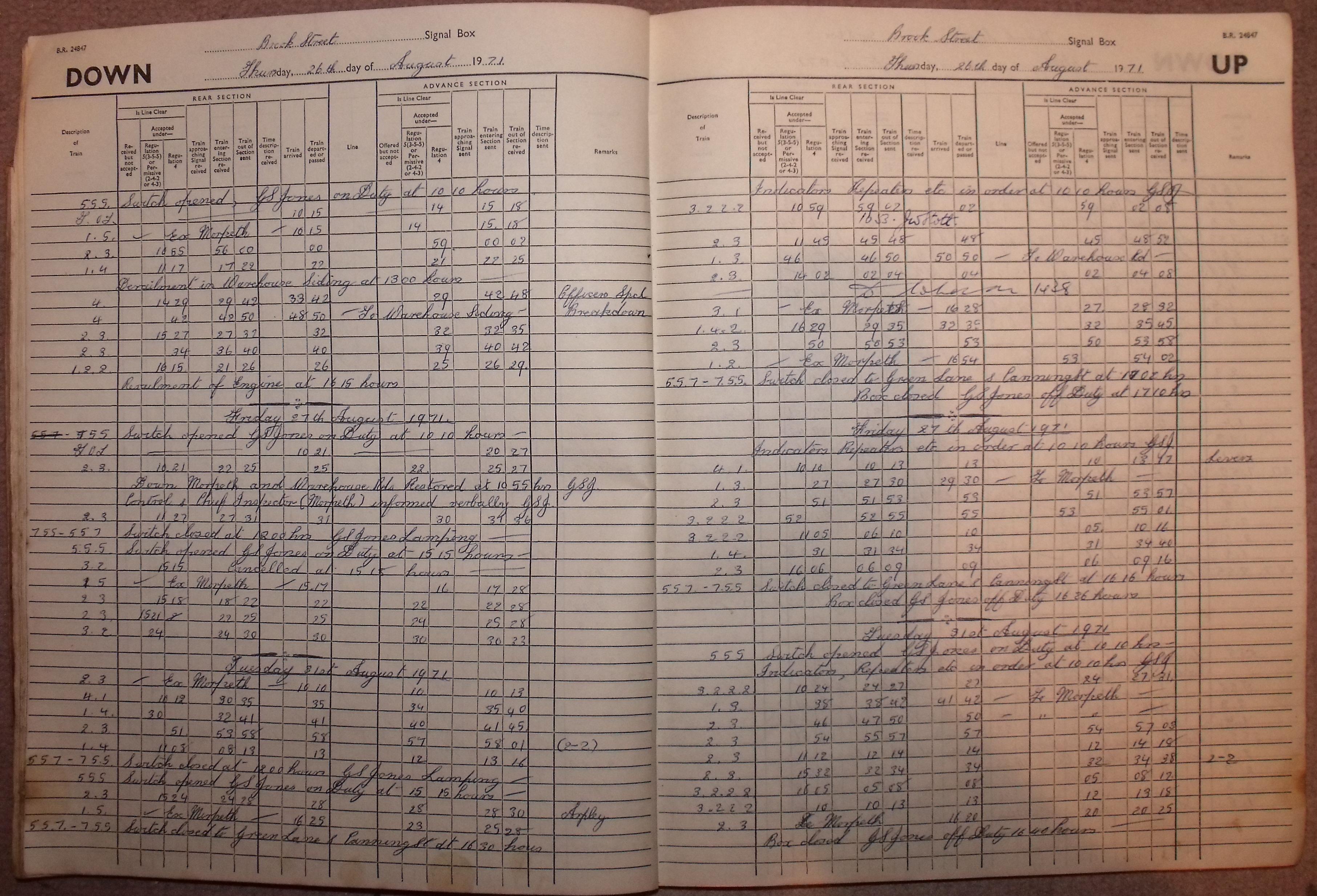
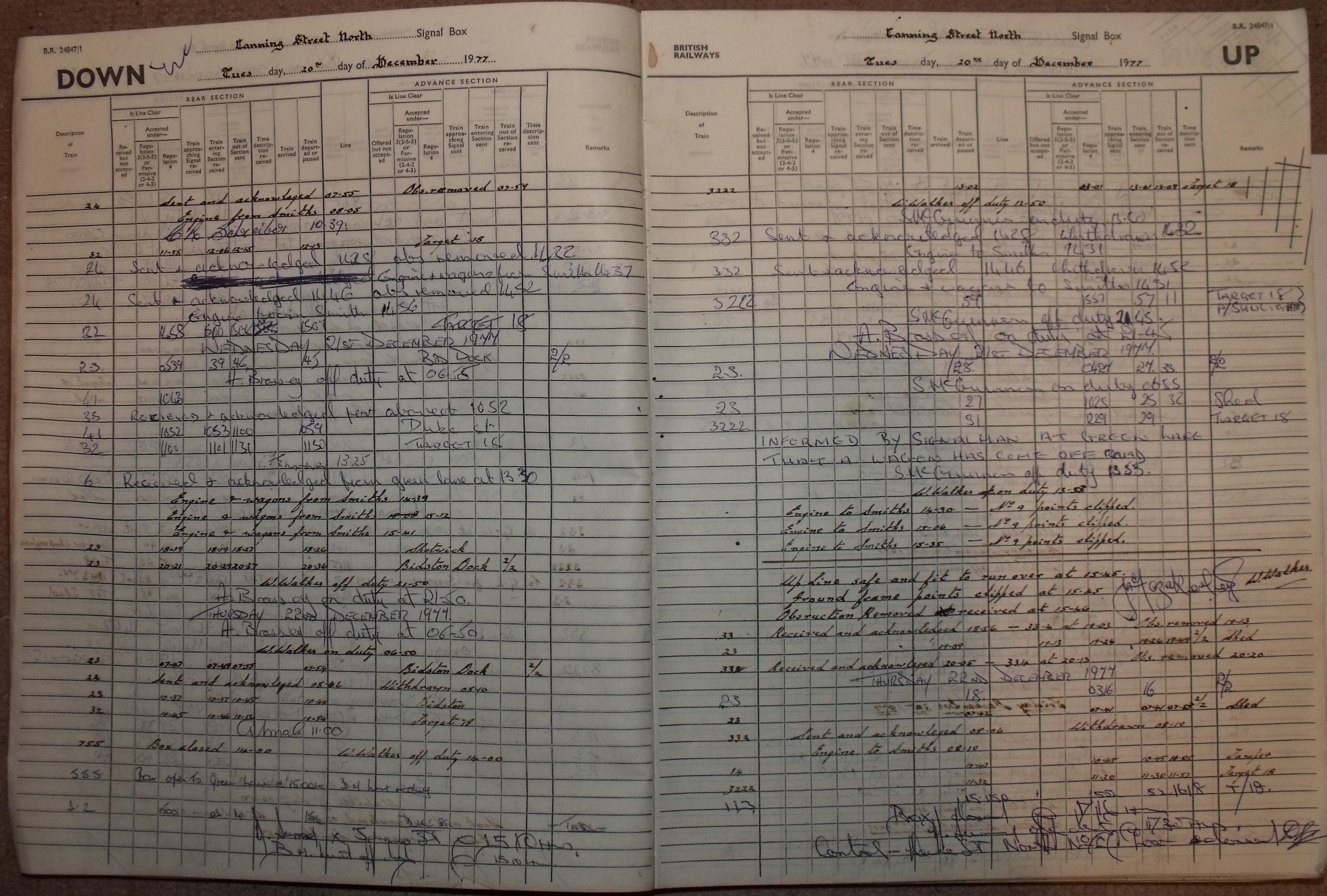
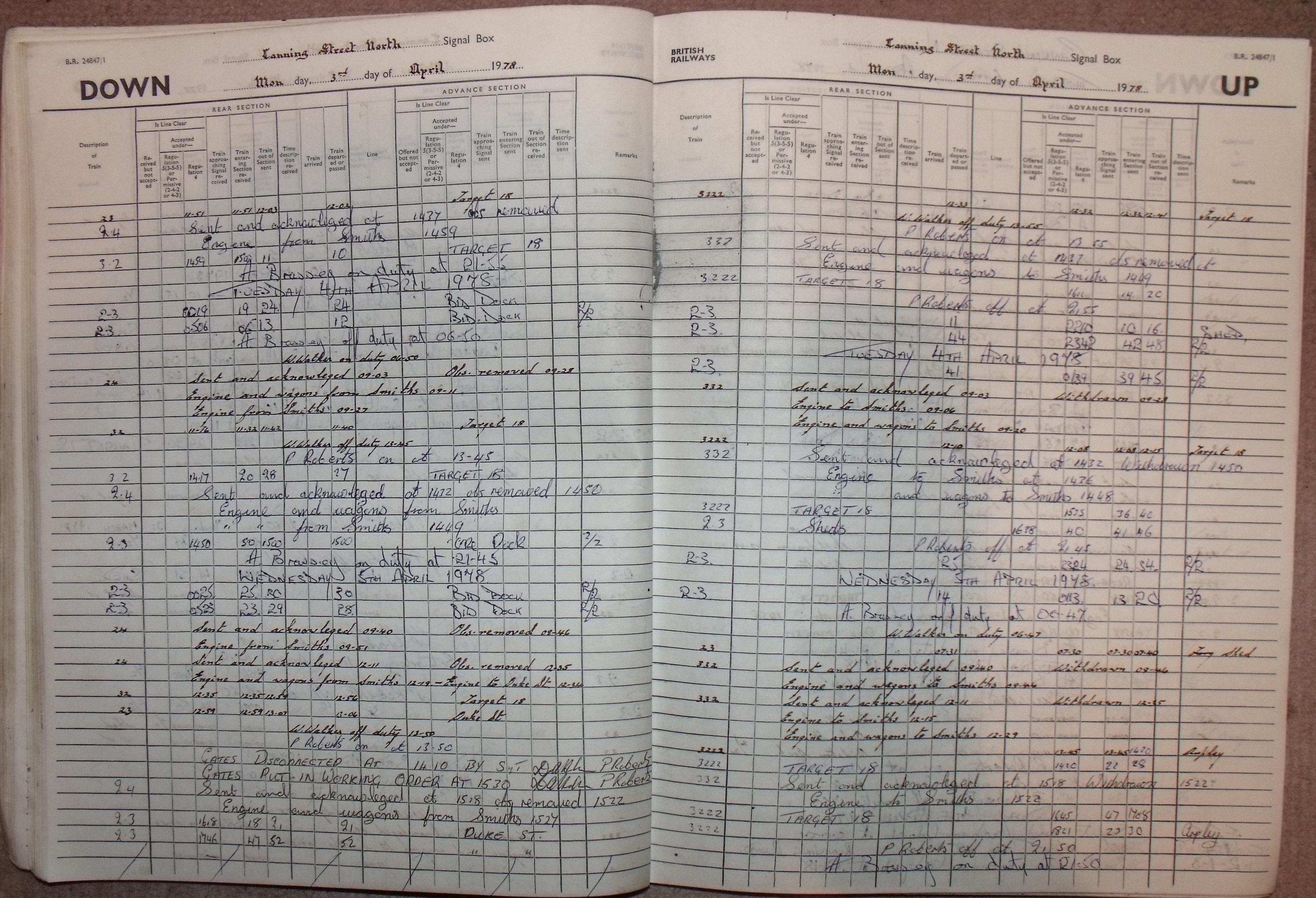
Signal box diagrams can show us what the track layout at a long-gone signal box was like, as as can photographs which may also show the scenery. But a completely different insight is given by surviving Train Registers, which record every train movement and every signal sent on the block bell. These are large files - typically around 700 kB each.Great Central Railway Blackmoor Crossing 12-13 Feb 1973 down line; up line 14-15 Feb 1973 down line; up line 16-16 Feb 1973 down line; up line Kendall Green Crossing Kendall Green was a level crossing and block post on the Worsborough Branch. The gates were worked by hand. Signalling consisted merely of a home signal in each direction and a trailing crossover; the diagram is shown in the signal box diagrams section of this web site. The box was operationally more interesting than the simple signalling might suggest. By the start of 1979, Wentworth Junction was switched out (it was abolished in May); and so the section between Kendall Green and West Silkstone Junction included both the famous Worsborough Bank (2 miles at 1 in 40) and also Strafford Crossing substation. The latter was of some importance. In the mid 1970's MGR coal trains had started running, hauled by a pair class 76 electric locomotives and banked by another pair. The current drawn on starting one of these trains at Wombwell Main (where the bankers were attached) was so great, that not just the next block section to Lewden Crossing, but the entire electrical section as far as Strafford Crossing substation had to be clear, before the train could start. These trains had the special bell code 3-4-2, so Wombell Main would offer 3-4-2 to Lewden Crossing; Lewden Crossing would offer 3-4-2 to Glasshouse Crossing; Glasshouse Crossing would offer 3-4-2 to Worsborough Bridge and finally Worsbrough Bridge would offer 3-4-2 to Kendall Green. If Kendall accepted, the bell signal went all the way back to Wombwell Main. These trains were signalled forward to West Silkstone Junction as bellcode 5. Originally, Wentworth Junction (just the other side of Strafford Crossing) made the decision to accept, but by 1979, a treadle (or similar) was installed at the site of Wentworth Junction, so Kendall Green would know when a train had passed the appropriate point. There are several references to 'cleared Wentworth xxxx hrs' in the train register. The above procedure is fairly well known, but careful examination of the register reveals a number of puzzles. First, it is clear that Kendall Green sent 2-1 (train out of section) to Worsborough Bridge, immediately a train with bell code 3-4-2 passed the box, and without waiting for it to reach the site of Wentworth Junction. If electrical supply issues were a problem, it might seem more logical to wait until the train reached Wentworth - otherwise there is nothing to stop Wombwell Main starting another train whilst the MGR is still in the electrical section. (One might also ask whether Wombwell Main was actually permitted to start another electric train, provided it was not another 3-4-2, since presumably the load on the electrical supply would be greatest when the 3-4-2 was starting.) Actually, Wombwell Main could be prevented from starting another train, if all the intermediate boxes had to have a train accepted by the box in advance before accepting from the box in rear. I do not know if this was the case. The register is ambiguous as to what did happen. On 1 May 1979, there is an example of Worsbrough Bridge offering Kendall a train straight after a 3-4-2, and the second train was refused. On the other hand, there are many examples of a light engine (bell code 2-3) being accepted straight after a 3-4-2; but this is always marked 0T70. So far as I know (someone correct me if I'm wrong!) this was the Dodworth trip, and therefore a diesel. Since it still has the bell code 2-3, this suggests the signlmen on the branch conferred by telephone. The Branch closed in 1981 - well within living memory - so I would be interested to hear from anyone who actually knows the answers to these questions, or worked in the signal boxes along this line. I would be very interested to see interior photographs; I understand most of the cabins had a pair of splendid Tyers permissive block instruments. The register is also quite rich in other 'goings on' - single line working, failed trains, electrical isolations etc, and provides a fascinating insight into day-to-day life on the Worsborough Branch. 12 January 1979 down line; up line pair of light engines turned back at Kendall Green 13 January 1979 down line; up line engineering work 15 January 1979 down line; up line single line working 16 January 1979 down line; up line 17 January 1979 down line; up line 31 January 1979 down line; up line signal failures; 6 bells to West Silkstone 1 February 1979 down line; up line 2 February 1979 down line; up line failed train 4 February 1979 down line; up line electrical isolation The following section contains the cryptic comment 'West Silkstone block being worked from Wentworth' - but does not actually say Wentworth Jn was opened with 5-5-5. Was this the last time Wentworth Junction was used? Was it due to a block failure? Or what was going on? 26 March 1979 down line; up line 27 March 1979 down line; up line 28 March 1979 down line; up line 29 March 1979 down line; up line block worked from Wentworth 30 March 1979 down line; up line 1 May 1979 down line; up line 2 May 1979 down line; up line 3 May 1979 down line; up line 4 May 1979 down line; up line 8 May 1979 down line; up line 9 May 1979 down line; up line 10 May 1979 down line; up line 11 May 1979 down line; up line Nottingham Victoria South 1961 The following 14 pages cover just 24 hours! Notice the extensive range of bellcodes. These are described on this card which came from Nottingham Victoria East (815 kB). The top right corner appears to be marked 'EAST BOX B1 B2 C1 C2 only'. The following line is marked A1 codes - AY (Annesley?) B1 codes - COLWICK C1 codes - ARK(WRIGHT) STREET' Nottingham Victoria South train register: 21 December 1961 down line; up line 21 December 1961 down line; up line 21 December 1961 down line; up line 21 December 1961 down line; up line 21 December 1961 down line; up line 21 December 1961 down line; up line 21 December 1961 down line; up line Penistone Goods - the Woodhead route when busy Note use of special train approaching signal for routing up trains - but where did this signal originate? (The next batch of files are about 1.2 Mb each, as I slightly enhanced the contrast to make them easier to read - maybe this was not a good idea!) 04 Dec 1969 am down line; up line 04 Dec 1969 pm down line; up line 05 Dec 1969 am down line; up line 05 Dec 1969 pm down line; up line Great Northern Railway Pinxton 2-3 September 1951 up line; down line 4 September 1951 up line; down line 5 September 1951 up line; down line 6 September 1951 up line; down line 7 September 1951 up line; down line 8 September 1951 up line; down line Seacroft A series of pages from August 1951. Seacroft was just outside Skegness, and operated as a block post when the line was busy. page_0 page_1 page_2 page_3 page_4 page_5 page_6 page_7 page_8 page_9 page_10 page_11 page_12 page_13 page_14 Lancashire and Yorkshire Railway Copy Pit A series of pages from September 1953. Copy Pit - later famous as one of the last strongholds of BR steam - was at the summit of the line between Todmorden and Burnley, and trains were banked in both directions. A signal box diagram can be found elsewhere on this site. page_0 page_2 page_3 page_4 page_5 page_6 page_7 page_8 page_9 page_10 page_11 page_12 page_13 page_14 page_15 page_16 page_17 page_18 page_19 page_20 page_21 page_22 page_23 page_24 page_25 page_26 page_27 page_28 page_29 page_30 page_31 London, Chatham and Dover Railway Holborn Low Level (Snow Hill) large files - about 2.5 Mb each 25 February 1963 26 February 1963 (a) 26 February 1963 (b) 27 February 1963 (a) 27 February 1963 (b) 28 February 1963 Midland Railway Bradford Junction (Shipley) - July 1963 page 1, 23 July page 2, 23 July page 3, 23 July page 4, 23 July page 5, 24 July page 6, 24 July page 7, 24 July page 8, 25 July page 9, 25 July page 10, 25 July Kettlebrook - a Midland Railway register from 1920 cover 16 Dec 1920 up line; down line 16 Dec 1920 up line; down line 16 Dec 1920 up line; down line 17 Dec 1920 up line; down line 17 Dec 1920 up line; down line Silverwood Sidings Staff and ticket working to Braithwell Junction; absolute block on main lines to Silverwood Junction, no block on loop to Silverwood junction. Files approx 1.6 Mb each: from 1962: page 1; page 2; page 3; page 4; page 5; page 6; from 1963: page 31; page 32; page 33; London and North Western Railway Brook Street note permissive working 20 August 1971 26 August 1971 1 September 1971 Canning Street North note use of 3-3-2 and 2-4 to put trains into Smith's private siding 20 December 1977 3 April 1978 6 April 1978
|
|